China has become a major sourcing base for global power distribution equipment. Its manufacturers supply transformers, switchgear, circuit breakers, busbars, protection relays, and digital monitoring systems. For buyers, the opportunity is substantial. The risk is equally real.
The International Energy Agency’s Electricity 2024 report projects average global electricity demand growth of 3.4% annually from 2024 to 2026. It also expects renewables to provide about 95% of additional electricity demand during this period. These figures place greater pressure on distribution networks, especially where solar, wind, batteries, and electric vehicles create two-way power flows.
J. Charles Smith, a recognized grid-integration expert, has warned, “The grid was not designed for two-way power flows.” That sentence matters. A supplier may offer an attractive price, yet lack suitable protection coordination or testing capacity. Cheap equipment can become expensive at the commissioning stage.
This guide evaluates China’s best power distribution suppliers through practical buyer criteria. These include IEC or IEEE compliance, factory testing, short-circuit ratings, temperature performance, delivery reliability, documentation, and after-sales service. We also consider project experience in industrial plants, commercial buildings, renewable facilities, and utility networks.
The details matter. A medium-voltage cabinet should arrive with clear wiring diagrams, tested interlocks, and traceable component records. A transformer should show verified losses, insulation performance, and maintenance requirements.
No supplier is perfect. Even experienced exporters can struggle with local approvals or communication. Therefore, global buyers should verify claims independently. Vendor audits, sample testing, reference projects, and contract-based quality controls remain essential. This article offers a practical starting point, not a substitute for engineering due diligence.
China Best Power Distribution Suppliers for Global Buyers
Power distribution suppliers provide more than switchboards and transformers. They support the complete path from load assessment to site commissioning. A capable supplier can develop low-voltage panels, medium-voltage switchgear, busbar systems, protection devices, and control cabinets. Each item should match the project’s voltage, fault level, climate, and installation method.
Detailed engineering is a major service. Suppliers may prepare single-line diagrams, wiring drawings, cable schedules, and equipment layouts. They also help buyers select enclosures for dust, humidity, or coastal salt exposure. Factory acceptance testing can verify insulation, protection settings, mechanical operation, and wiring accuracy. Third-party inspection adds useful independent evidence. It is not a luxury for complex projects.
Reliable suppliers understand international compliance. They should provide test reports, material records, manuals, spare-part lists, and certificates aligned with applicable IEC standards and local regulations. Export support may include reinforced packaging, shipping documents, remote technical guidance, and commissioning assistance. Small details matter. A loose terminal can delay an entire installation.
No supplier gets every drawing right on the first attempt. Experienced buyers should review heat calculations, short-circuit ratings, cable entries, and maintenance space carefully. One overlooked dimension may force expensive site modifications. Clear communication, traceable revisions, and realistic delivery schedules often reveal a supplier’s professional discipline better than a polished catalog.
China Best Power Distribution Suppliers for Global Buyers
China’s Power Distribution Supply Chain and Manufacturing Strengths
China’s power distribution supply chain combines metal processing, electrical components, assembly, and export logistics. This integration can shorten purchasing cycles and reduce coordination problems for global buyers. Copper busbars, galvanized steel cabinets, insulators, breakers, and monitoring devices often come from nearby industrial clusters. Details matter.
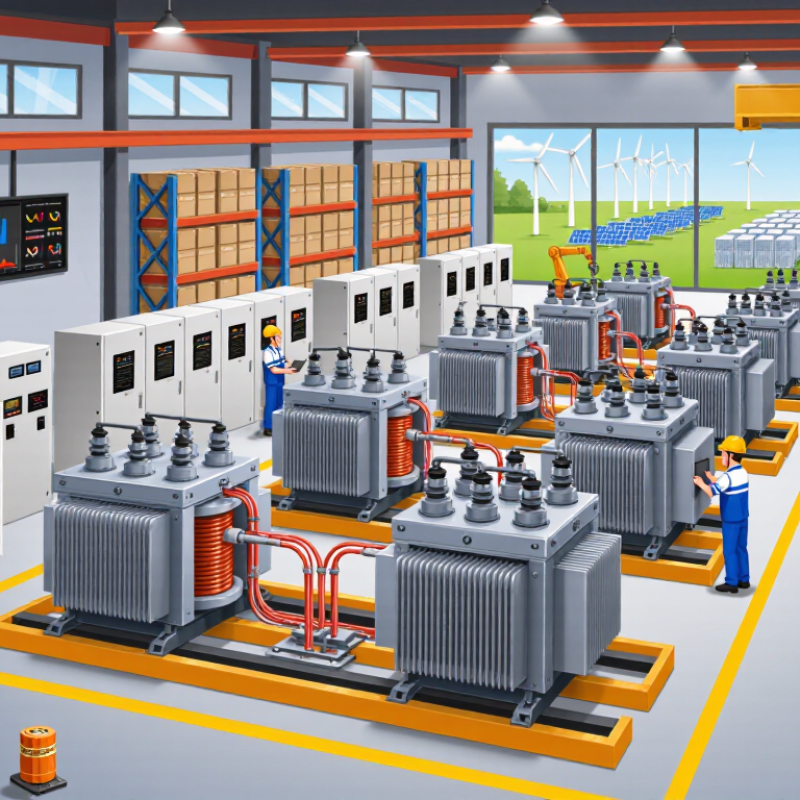
Experienced manufacturers usually control several stages internally. They cut and bend enclosures, plate surfaces, install wiring, and perform insulation checks on the same site. Many facilities also use programmable equipment for drilling, laser cutting, torque control, and routine quality inspection. These processes improve repeatability, especially for medium-voltage panels and customized low-voltage systems.
However, factory capability is not equal across the market. A low quotation may conceal weaker copper purity, thinner steel, or incomplete testing records. Buyers should review material certificates, wiring diagrams, protection settings, and sample inspection reports before placing large orders. Factory audits can reveal practical issues, such as poor cable labeling or crowded assembly benches. That takes discipline.
Reliable suppliers normally support standards-based production, including insulation resistance tests, dielectric tests, temperature checks, and functional simulations. They should explain applicable IEC requirements and provide traceable inspection documents. Export experience also matters because packaging, moisture protection, spare parts, and port handling affect field performance. Some production lines remain heavily dependent on manual work, which can create variation. This weakness deserves honest discussion, not polished promises.
| No. | Supply Chain Dimension | Typical Products or Capability | Verified Industry Fact | Buyer-Relevant Advantage | Reference Basis |
|---|---|---|---|---|---|
| 1 | Low-Voltage Distribution | Distribution boards, panelboards, motor-control centers, busbar trunking systems and automatic transfer equipment. | China commonly uses 220 V single-phase and 380 V three-phase low-voltage systems at 50 Hz. Export equipment can be configured for local voltage and frequency requirements. | Broad configuration flexibility for commercial buildings, factories, infrastructure and renewable-energy projects. | IEC 60038; GB/T 156 |
| 2 | Medium-Voltage Switchgear | Metal-enclosed switchgear, ring main units, load-break switches, vacuum circuit breakers and protection panels. | Medium-voltage distribution equipment is widely produced for common ratings such as 6 kV, 10 kV, 20 kV and 35 kV, subject to project specifications. | Suitable for utility distribution, industrial plants, rail systems, data centers and commercial power networks. | IEC 62271 series; GB/T 3906 |
| 3 | Distribution Transformers | Oil-immersed transformers, dry-type transformers, compact substations and specialized transformers for renewable projects. | Transformer designs can be supplied for different primary and secondary voltages, vector groups, impedance values, cooling methods and environmental conditions. | Multiple production configurations support customized grid, industrial and building applications. | IEC 60076 series; GB/T 1094 series |
| 4 | High-Voltage Equipment | High-voltage circuit breakers, disconnectors, instrument transformers, substations and transmission-related equipment. | China has engineering and manufacturing experience across high-voltage and ultra-high-voltage transmission projects, including systems at 1,000 kV AC and ±1,100 kV DC in national grid development. | Access to mature engineering capabilities for large-scale transmission and substation projects. | National grid project records; IEC 62271 series |
| 5 | Renewable-Energy Integration | Photovoltaic combiner boxes, inverter transformer stations, wind-power collection systems, battery-storage switchgear and grid-connection panels. | China has a large domestic renewable-energy manufacturing and installation base, creating demand for grid-connection, protection and energy-storage distribution equipment. | Strong availability of integrated electrical packages for solar, wind and energy-storage applications. | IEC 61439; IEC 62933; applicable national grid codes |
| 6 | Busbar and Conductive Components | Copper and aluminum busbars, laminated busbars, busbar trunking, cable accessories and connection hardware. | China has extensive non-ferrous metal processing, electrical-conductor fabrication and enclosure-manufacturing capacity supporting power-distribution assemblies. | Shorter sourcing paths for integrated panels, busbar systems and related components. | IEC 61439; IEC 60529 |
| 7 | Enclosures and Protection | Indoor and outdoor metal enclosures, stainless-steel cabinets, weatherproof cabinets and corrosion-protected structures. | Manufacturers can provide different ingress-protection levels, coating systems, materials, ventilation designs and cable-entry arrangements. | Adaptable designs for tropical, coastal, desert, high-humidity and industrial environments. | IEC 60529; ISO 12944 |
| 8 | Automation and Monitoring | Protection relays, remote terminal units, power meters, temperature monitoring, power-quality monitoring and supervisory-control interfaces. | Modern distribution systems can combine measurement, protection, communication and remote-control functions through standardized industrial communication protocols. | Improves fault visibility, preventive maintenance and operational control for remote installations. | IEC 61850; IEC 61557 series |
| 9 | Testing and Quality Control | Routine testing, dielectric tests, temperature-rise tests, mechanical-operation checks, insulation-resistance tests and functional verification. | Power-distribution assemblies are normally subject to design verification and routine verification requirements under the relevant product standard. | Buyers can require documented test reports, inspection plans, traceability records and pre-shipment inspections. | IEC 61439; IEC 62271; ISO 9001 |
| 10 | Export Customization | Customized voltage ratings, frequency, cable-entry direction, protection settings, enclosure dimensions, labeling, documentation and spare parts. | Export projects commonly require alignment with destination-country electrical codes, utility specifications, certification procedures and local installation practices. | Flexible engineering support for EPC projects, distributors, contractors and industrial end users. | IEC standards; destination-country regulations |
| 11 | Supply-Chain Integration | Sheet-metal fabrication, machining, copper processing, insulation materials, control components, assembly, testing and export packaging. | A broad domestic industrial base allows many power-distribution projects to source fabricated parts, electrical components and final assemblies within one manufacturing ecosystem. | Potentially shorter lead times, consolidated logistics and easier coordination for multi-product orders. | Supplier audit; production records; inspection documentation |
China’s power distribution suppliers increasingly cover medium-voltage switchgear, transformers, low-voltage panels, busbar systems, and smart monitoring devices. The IEA’s Electricity 2024 report projects global electricity demand will grow by an average of 3.3% annually from 2024 to 2026. This growth increases demand for compact, reliable distribution equipment in factories, data centers, renewable projects, and commercial buildings. Buyers should examine rated voltage, short-circuit withstand, temperature rise, enclosure protection, and service access. Small details matter.
Technical capability is more than catalog depth. Experienced suppliers should provide design drawings, protection coordination studies, routine test reports, and traceable component records. IEC 62271 series requirements are relevant for medium-voltage assemblies, while IEC 61439 supports low-voltage switchgear verification. The Global Energy Monitor reported that utility-scale solar and wind capacity continued expanding rapidly in 2024, creating more demand for grid connection equipment and reactive power management. Suppliers should therefore demonstrate experience with harmonic control, remote monitoring, and fluctuating loads.
Factory audits can reveal practical weaknesses. Inspect busbar joints, cable bending space, labeling, torque records, and simulated fault-test procedures. Ask for tested samples, not only brochures. Some suppliers still present strong laboratory data but weak after-sales response, especially across time zones. That gap matters. A better assessment combines certification review, witnessed testing, spare-parts planning, and references from comparable climates. Specifications can still leave blind spots; humidity, dust, installation skill, and local grid behavior may change actual performance.
Choosing China’s best power distribution suppliers requires more than comparing prices. The International Energy Agency’s Electricity 2024 report expects global electricity demand to grow by about 3.4% annually from 2024 to 2026. This growth increases pressure on delivery schedules, equipment reliability, and after-sales support.
Ask suppliers for verified factory records, third-party test reports, and project references in similar climates. Check compliance with applicable IEC standards, local electrical codes, and utility requirements. Review short-circuit ratings, temperature-rise results, IP protection, insulation levels, and harmonic performance. A professional audit should inspect copper connections, busbar finishing, enclosure sealing, and routine testing procedures. Small details matter.
The World Bank’s Logistics Performance Index 2023 shows that customs, infrastructure, and shipment tracking strongly affect international delivery results. Request a realistic production schedule, packing photographs, spare-parts lists, and a clear warranty process. Factory acceptance testing should include documented measurements, not only photographs. Price comparisons can mislead when freight, commissioning, and replacement parts are excluded. No checklist is perfect. I would still recheck drawings after approval, because one overlooked terminal position can delay an entire installation. Supplier communication also deserves measurement: response time, revision control, and the quality of technical answers reveal more than polished brochures.
This illustrative evaluation framework helps international buyers compare power distribution suppliers without relying on brand reputation. The weighting emphasizes compliance, lifecycle reliability, project execution, and total cost. Buyers should verify certificates, test reports, references, factory capacity, and after-sales commitments during due diligence.
China Best Power Distribution Suppliers for Global Buyers
Reliable power distribution sourcing begins with compliance, not a low quotation. Experienced suppliers should provide product specifications, test reports, material records, and traceable serial numbers. Requirements may differ by destination, so buyers should verify applicable standards before placing an order. A clear technical review prevents costly changes later. Details matter.
Quality control should be visible at several stages. Ask about incoming material inspection, assembly checks, insulation testing, and final routine tests. Factory audits can reveal storage problems, weak labeling, or inconsistent workmanship. For larger projects, independent inspection or witnessed testing adds confidence. Still, no supplier is perfect. Some reports may look complete while practical communication remains slow. That gap matters.
Pricing should include more than the unit cost. Compare tooling, packaging, testing, inland transport, freight terms, and replacement parts. A cheaper enclosure may need stronger export packaging after damage occurs during handling. Suppliers with export experience should support commercial invoices, packing lists, shipping marks, manuals, and destination-specific documents. They should also explain lead times honestly and respond when specifications change. Clear English helps, but written drawings and approval records are safer. Buyers can request samples, confirm payment milestones, and review production photos before shipment. These steps require effort, yet they reduce misunderstandings and make the final cost easier to control.
Our mission is to develop cutting-edge clean energy technology and provide next-generation solar inverters.
(888) 598-9901
nep-usa@site_ea168614-f5f4-4298-bd5b-880b4cf8d99d