- Spanish-Latin America
- Japanese-JP
- Chinese
- Europe
- Português-BR

Tech Support
(888) 598-9901
Hours: Mon-Fri 8AM-8PM EST
nep-usa@site_ea168614-f5f4-4298-bd5b-880b4cf8d99d
Why Do Global Buyers Choose a Spinning Filter?
Why do global buyers choose a Spinning Filter when many filtration technologies are available? The answer often begins with practical factory experience. In food processing, chemical production, and water treatment, operators need stable filtration with limited downtime. A well-designed Spinning Filter can separate particles while supporting continuous production. Its rotating screen helps reduce surface buildup and maintain a more consistent flow. This matters when a blocked filter can delay filling lines, cleaning cycles, or export schedules. Buyers also examine screen accuracy, housing materials, pressure limits, and cleaning access. Small details matter.
Reliability comes from evidence, not attractive product photos. Experienced purchasers request flow data, test results, material certificates, and clear maintenance instructions. They compare performance under real temperatures, viscosities, and contamination levels. A responsible supplier should explain both strengths and limitations. A Spinning Filter is not perfect for every fluid. Incorrect mesh selection can reduce capacity or increase cleaning frequency. Installation errors can create leaks, even with strong equipment. That part is sometimes overlooked. Global buyers also consider technical support, spare parts, delivery consistency, and compliance with relevant industrial requirements. These factors build confidence across different markets and operating conditions. Still, published specifications may not match every plant. On-site testing remains valuable. The best purchasing decision combines documented performance with operator feedback, careful engineering review, and realistic expectations.
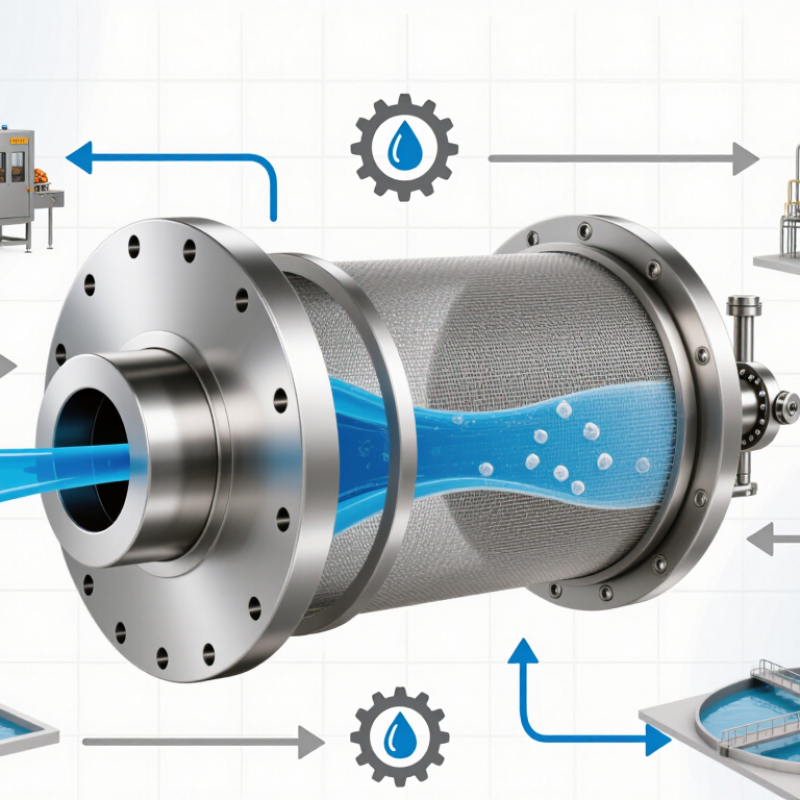
What Is a Spinning Filter and How Does It Work?
Why Do Global Buyers Choose a Spinning Filter?
A spinning filter removes suspended solids while fluid moves through a rotating screen or cylindrical mesh. The incoming liquid enters the filter chamber, while the screen turns at a controlled speed. Clean liquid passes through the openings. Larger particles remain on the screen and move toward a collection area.
In practical plant operation, rotation helps limit surface buildup and supports steadier flow. Some designs also use centrifugal force to separate heavier particles. Performance depends on mesh size, flow rate, particle shape, and fluid temperature. A fine screen may improve separation, but it can clog faster. This trade-off is easy to overlook. Buyers often choose spinning filters because they support continuous processing, occupy limited floor space, and reduce frequent manual cleaning. They can serve water treatment, food processing, chemical production, and other controlled industrial applications.
Tips: Match the screen opening with real particle data, not assumptions. Check pressure difference and outlet flow during operation. Clean the collection area regularly. A filter may look efficient while hidden buildup reduces capacity. Keep maintenance records, too. They reveal problems earlier. Start with a small trial when the fluid changes. Mistakes happen. 天天中彩票不
Get in touch
Our mission is to develop cutting-edge clean energy technology and provide next-generation solar inverters.
Phone
(888) 598-9901
nep-usa@site_ea168614-f5f4-4298-bd5b-880b4cf8d99d
