- Spanish-Latin America
- Japanese-JP
- Chinese
- Europe
- Português-BR

Tech Support
(888) 598-9901
Hours: Mon-Fri 8AM-8PM EST
nep-usa@site_ea168614-f5f4-4298-bd5b-880b4cf8d99d
Why Choose DIP LED Displays for Outdoor Use?
Outdoor screens face a harsher test than indoor displays. Sunlight washes out colors, rain reaches cabinet seams, and heat builds behind dark modules. DIP LED technology is often selected for these conditions because its discrete, through-hole LEDs can deliver strong brightness and robust physical construction. Still, “outdoor-ready” is not a performance guarantee. Cabinet sealing, power design, ventilation, and maintenance access matter just as much.
Industry research from Omdia tracks continuing investment in large-format LED displays, while market reports from firms such as TrendForce examine demand across outdoor advertising and public venues. These reports provide useful market context, but they do not prove that every DIP product will perform well. Buyers should compare measured brightness, pixel pitch, refresh rate, and ingress-protection ratings, then test a sample in the actual viewing conditions. A sunny roadside billboard and a shaded stadium fascia have different needs.
That is where a DIP LED display outdoor specification deserves careful scrutiny. Look closely at the module face: are the LEDs evenly bright, and can a technician replace a damaged pixel without dismantling a whole panel? Small details count. I could not verify a published, attributable quotation from a named DIP outdoor-display expert, so I will not invent one. This guide instead focuses on checkable product criteria and recognized industry reporting—because dependable buying advice should be specific, and open about what it cannot confirm.
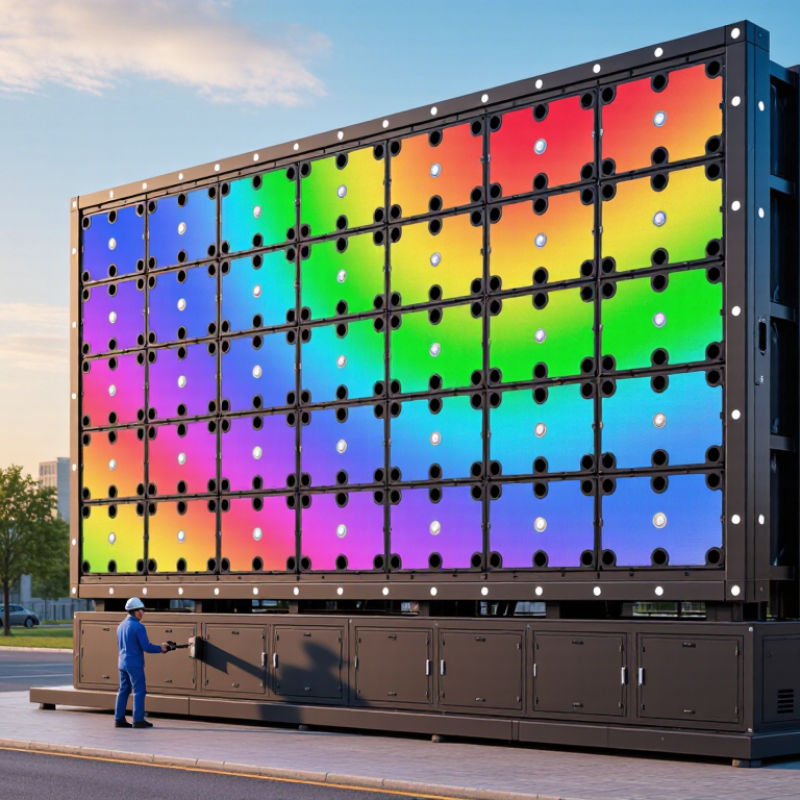
DIP LED Display Technology and Its Core Components
DIP LED displays use separate red, green, and blue lamps mounted through holes in a circuit board. This structure gives each pixel a clearly defined light source. In outdoor settings, the larger lamp packages can produce strong, visible output under bright daylight. They are also relatively easy to inspect: a technician can often spot a failed pixel or damaged solder joint without specialized imaging equipment. Small details matter.
The display’s core components work together. LED lamps create the image, while the printed circuit board connects each pixel and carries electrical signals. Driver ICs control brightness and refresh timing. A power supply converts incoming electricity into stable operating voltages, and connectors distribute power and data between modules. Heat still accumulates. A well-designed cabinet needs a practical path for heat to escape, along with suitable protection against rain, dust, and moisture at joints and cable entries.
The front mask helps separate pixels and can reduce unwanted light reflection. The cabinet supports the modules and shields internal parts, but seals and drainage require regular attention. During maintenance, check for loose connectors, corrosion, uneven brightness, and blocked ventilation. DIP technology is not flawless: its pixel pitch can look coarse at close viewing distances, and a bright display may consume substantial power. Actual performance depends on component quality, installation, and operating conditions, so specifications should be checked against the site.
Get in touch
Our mission is to develop cutting-edge clean energy technology and provide next-generation solar inverters.
Phone
(888) 598-9901
nep-usa@site_ea168614-f5f4-4298-bd5b-880b4cf8d99d
