- Spanish-Latin America
- Japanese-JP
- Chinese
- Europe
- Português-BR

Tech Support
(888) 598-9901
Hours: Mon-Fri 8AM-8PM EST
nep-usa@site_ea168614-f5f4-4298-bd5b-880b4cf8d99d
Why Choose Carbon Graphite Rods for Industrial Applications?
Industrial plants demand materials that remain stable under heat, electrical load, and chemical exposure. Carbon Graphite Rods often meet these demands in furnaces, heating systems, laboratory equipment, and electrochemical processes. Their combination of electrical conductivity, thermal resistance, and low thermal expansion supports dependable operation. They can also perform well where metals may corrode or deform.
In practical plant evaluations, engineers examine more than conductivity. Rod diameter affects current capacity and heat distribution. Surface finish influences contact quality. Grade selection determines resistance to oxidation and chemical attack. A graphite rod placed near an open flame may wear faster than expected. That detail matters. Proper shielding, controlled atmosphere, and accurate temperature limits can extend service life. Small installation errors still create large performance problems.
Carbon Graphite Rods are also relatively easy to machine for custom assemblies. However, they remain brittle and can crack during careless handling. They are not ideal for every environment. Moisture, mechanical vibration, and high oxygen levels may reduce reliability. Technical datasheets should be checked against actual operating conditions. Independent inspection can verify dimensions, density, electrical resistance, and visible defects. This evidence supports better purchasing decisions.
A thoughtful specification includes load requirements, working temperature, exposure conditions, and expected service hours. It should also consider replacement access and maintenance costs. Some applications may need coated or higher-density grades. Others may benefit from a different material entirely. The best choice depends on tested performance, not assumptions. That is the practical reason many industries continue evaluating graphite for demanding equipment.
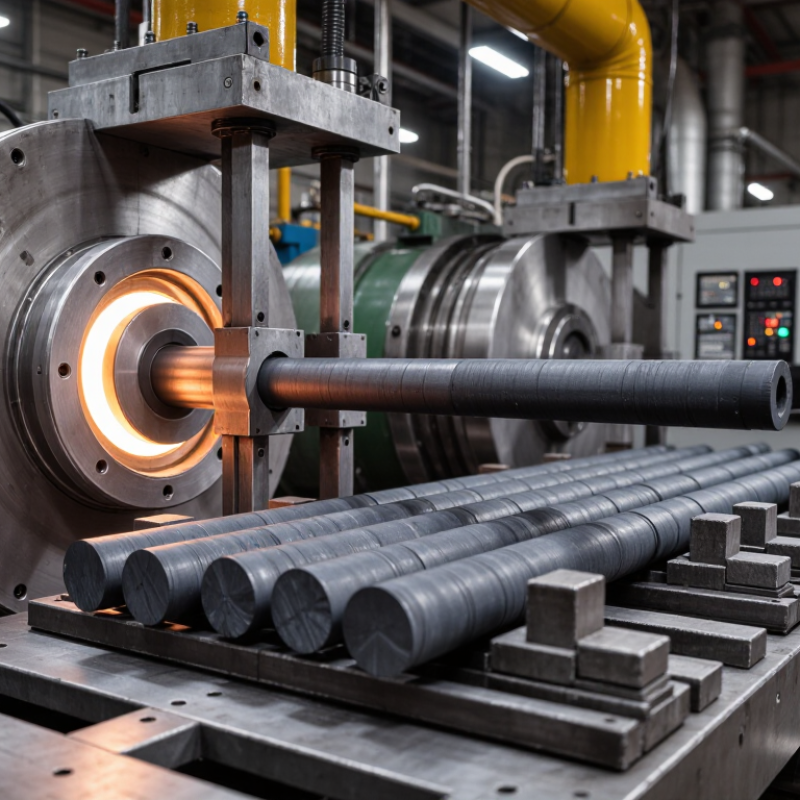
What Are Carbon Graphite Rods?
Carbon graphite rods are engineered conductors made from carbon-rich materials, usually petroleum coke and pitch. Manufacturers shape the mixture, bake it, and heat-treat it at very high temperatures. This process creates an ordered graphite structure with useful electrical and thermal properties. Some grades are further impregnated to reduce porosity. That detail matters in furnaces, electrolysis equipment, laboratory heating systems, and electrical contacts.
The material is not simply “carbon in rod form.” Grade, density, grain size, and treatment change its performance. A dense rod may resist chemical attack, while a porous rod can oxidize or wear faster in hot air. According to the U.S. Geological Survey’s Mineral Commodity Summaries 2024, global natural graphite mine production reached about 1.6 million metric tons in 2023. The figure shows the scale of graphite supply, but it does not guarantee consistent rod quality. Processing still decides much of the final performance.
The International Energy Agency’s Global Critical Minerals Outlook 2024 identifies graphite as an important material in modern energy technologies and highlights concentrated processing capacity as a supply risk. For industrial buyers, that means testing is essential. Check electrical resistivity, bulk density, flexural strength, ash content, and maximum working temperature. In practical use, a rod should maintain stable contact inside a hot chamber without cracking or shedding particles. Yet no grade is perfect. Oxidation remains a weakness, and supplier data can be incomplete. Independent verification is worth the extra time.
Get in touch
Our mission is to develop cutting-edge clean energy technology and provide next-generation solar inverters.
Phone
(888) 598-9901
nep-usa@site_ea168614-f5f4-4298-bd5b-880b4cf8d99d
