- Spanish-Latin America
- Japanese-JP
- Chinese
- Europe
- Português-BR

Tech Support
(888) 598-9901
Hours: Mon-Fri 8AM-8PM EST
nep-usa@site_ea168614-f5f4-4298-bd5b-880b4cf8d99d
Why Do You Need Acid Storage Cabinets?
Acids are easy to underestimate when they sit quietly in a bottle. A cracked cap, a corroded shelf, or one careless transfer can turn routine storage into a spill, damaged equipment, or a worker exposure. Acid Storage Cabinets provide a dedicated, corrosion-resistant place to contain and organize compatible containers. They also help teams keep acids away from incompatible materials. That separation matters.
The risk is not theoretical. The NIOSH Pocket Guide to Chemical Hazards lists a recommended exposure limit of 1 mg/m³ for sulfuric acid and an immediately dangerous to life or health value of 15 mg/m³. These figures describe airborne exposure, not cabinet performance or a universal storage rule. Still, they show why preventing leaks and limiting contact deserve serious attention. A cabinet is one practical layer of control, not a substitute for ventilation, training, or suitable protective equipment.
Choosing one takes more than checking its label. Consider the acids being stored, container sizes, spill containment, ventilation needs, and the cabinet maker’s material-compatibility guidance. Nitric acid, for example, may require separation from other acids because it is an oxidizer. Check the safety data sheets and your site’s procedures before deciding. A cabinet cannot fix poor segregation. And no cabinet removes the need to inspect bottles and shelves. Storage plans can look tidy on paper; real labs are messier. That is worth remembering when asking why acid storage cabinets are needed.
What Acid Storage Cabinets Are and How They Work
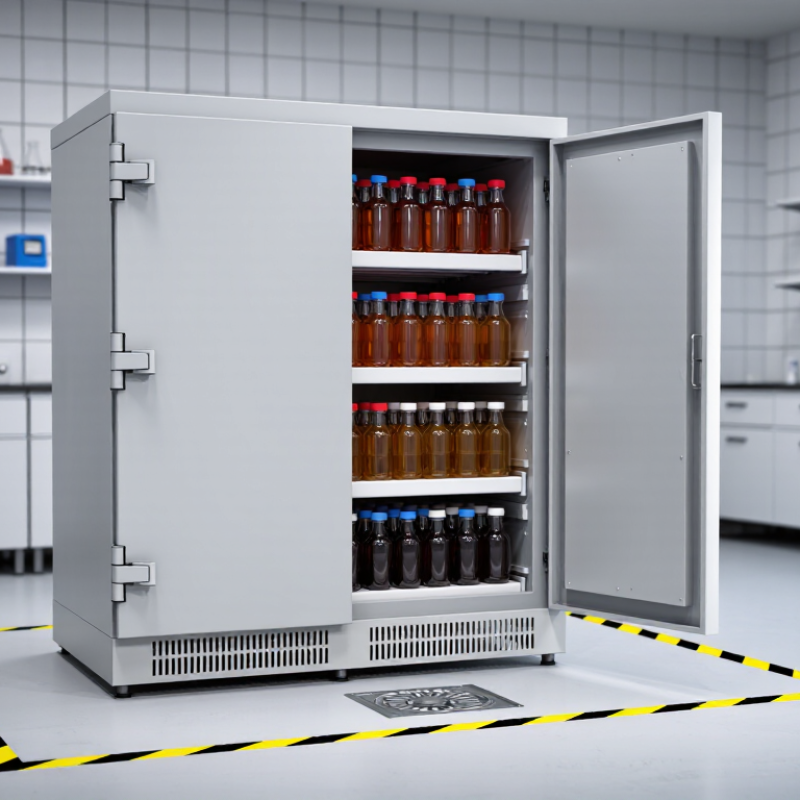
An acid storage cabinet is a purpose-built enclosure for keeping compatible corrosive liquids in a controlled, clearly organized space. It differs from ordinary metal shelving, which may corrode after repeated contact with drips or vapors. Cabinet materials and coatings are selected to resist chemical damage, but compatibility still depends on the particular acid and cabinet design. Check the product guidance before placing containers inside.
The cabinet helps by containing small leaks and reducing the chance of accidental contact. Many designs include corrosion-resistant shelves and a bottom sump that can hold spills. Some have doors that close securely and labels that make hazards easier to recognize. Simple details matter. A bottle should stand upright, with its label facing outward, and containers should not crowd the shelf. Acids that can react with each other need separate, appropriate storage rather than one shared cabinet. Ventilation is not automatically safer; changing a cabinet’s design can affect its performance, so follow the manufacturer’s instructions. Even with good equipment, a quick visual check can miss a slow leak.
That is a useful reminder: safe storage takes routine attention, not just a sturdy cabinet.
Get in touch
Our mission is to develop cutting-edge clean energy technology and provide next-generation solar inverters.
Phone
(888) 598-9901
nep-usa@site_ea168614-f5f4-4298-bd5b-880b4cf8d99d
