- Spanish-Latin America
- Japanese-JP
- Chinese
- Europe
- Português-BR

Tech Support
(888) 598-9901
Hours: Mon-Fri 8AM-8PM EST
nep-usa@site_ea168614-f5f4-4298-bd5b-880b4cf8d99d
What Is a Silicone Universal Lid?
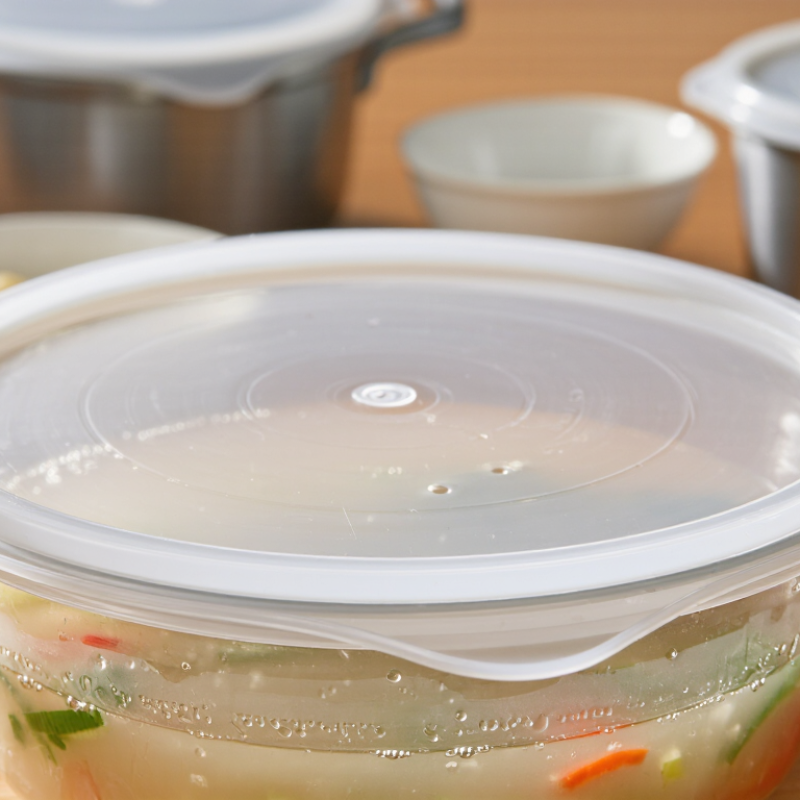
A Silicone Universal Lid is a flexible cover designed to seal bowls, cups, pans, and containers of different sizes. It usually uses stretchable, food-contact silicone that grips a rim through tension and surface contact. Unlike a rigid lid, it can bend around uneven edges and follow shallow curves. Picture a clear cover pulled across a mixing bowl, with its center slightly lowered over cooling soup. That simple design can reduce splashes, protect leftovers, and limit refrigerator odors.
In real kitchens, performance depends on more than the label. A reliable lid should feel smooth, hold its shape, and fit without excessive force. Reputable manufacturers provide material details, care instructions, and temperature guidance. Those details matter when the lid touches hot food or enters a microwave. Always check the product instructions, because silicone formulas and construction methods vary. A loose seal may fail on oily rims, textured cookware, or containers with sharp edges. It is not a miracle cover. Hand washing may also remove odors better than a quick dishwasher cycle. I have found that testing one lid over several bowl sizes reveals its practical limits quickly. Yet personal testing is not enough; independent safety information and clear manufacturer documentation deserve attention. This guide examines how a Silicone Universal Lid works, where it performs well, and what buyers should question before choosing one. Some designs promise universal compatibility, but that phrase can be imperfect. Fit, durability, cleaning, and safe temperature use deserve a closer look.
Definition and Basic Features of a Silicone Universal Lid
A silicone universal lid is a flexible, reusable cover designed to fit containers of different shapes and diameters. Unlike rigid caps, it stretches across bowls, cups, cans, and cut fruit. Its soft silicone edge creates pressure against the rim. This helps reduce air exposure, spills, and refrigerator odors. Many models include a pull tab for easier removal, while some provide a central section for controlled stretching. The fit is practical, not magical.
Basic features include food-contact silicone, elasticity, water resistance, and tolerance for moderate temperature changes. However, “heat-resistant” does not mean every lid suits ovens, boiling liquids, or direct flames. Users should check the stated temperature range and inspect the seal on clean, dry rims. The U.S. Food and Drug Administration’s 21 CFR 177.2600 outlines requirements for rubber articles contacting food, but compliance depends on the specific material and manufacturing process.
Market demand also reflects changing storage habits. Grand View Research has reported steady annual growth of roughly 4% for the global food storage container market through 2030. The 2023 United Nations Environment Programme report states that plastic pollution could fall by 80% by 2040 through reuse, recycling, and reduced consumption. A universal silicone lid may support reuse, but its environmental value depends on long service life. Silicone can still be discarded. That part deserves more honest attention.
A reliable lid should remain flexible without becoming sticky, cracked, or strongly odorous. Slight stretching is normal. Excessive stretching is a warning.
Get in touch
Our mission is to develop cutting-edge clean energy technology and provide next-generation solar inverters.
Phone
(888) 598-9901
nep-usa@site_ea168614-f5f4-4298-bd5b-880b4cf8d99d
