- Spanish-Latin America
- Japanese-JP
- Chinese
- Europe
- Português-BR

Tech Support
(888) 598-9901
Hours: Mon-Fri 8AM-8PM EST
nep-usa@site_ea168614-f5f4-4298-bd5b-880b4cf8d99d
Why Is a Turbo Intercooler Important?
A turbocharger compresses incoming air, helping an engine breathe more air for combustion. Compression also raises the air’s temperature. A Turbo Intercooler reduces that heat before the charge enters the engine, supporting denser intake air and more consistent performance. The effect is practical: after a hard pull, hot air can leave an engine feeling less responsive, especially when airflow through the cooling system is limited. That difference matters.
Intercoolers are not magic. Their results depend on design, airflow, ambient temperature, and the engine’s calibration. An undersized unit may struggle during repeated acceleration, while an unnecessarily large or poorly matched design can bring added weight, packaging challenges, or pressure loss. The phrase “colder is always better” sounds convincing, but it leaves out these trade-offs. Small details count.
This article explores how intercooling works, why charge temperature affects performance, and what drivers should consider when choosing or maintaining an intercooler. It also looks at real-world clues, such as heat soak, damaged fins, loose hoses, or unexpected boost changes. A single symptom rarely proves that the intercooler is at fault. Checks should be interpreted alongside the vehicle’s specifications and other system data. Not by itself. Understanding those limits helps separate useful upgrades from expensive guesses—and gives owners a clearer basis for discussing changes with a qualified technician.
What a Turbo Intercooler Is
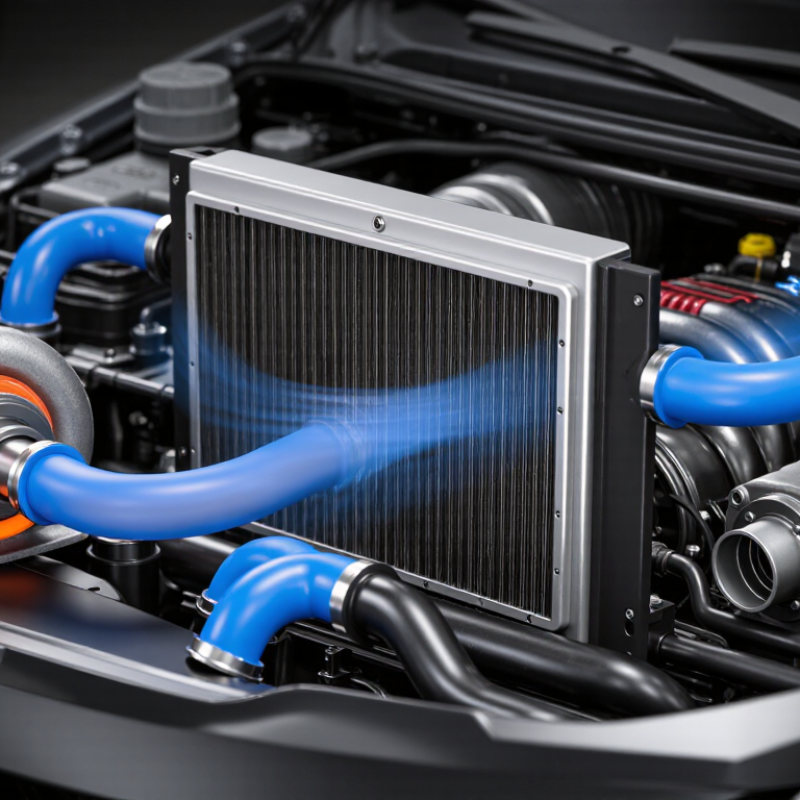
A turbo intercooler is a heat exchanger in a turbocharged engine’s air path. The turbo compresses incoming air, and compression raises its temperature. The intercooler removes some of that heat before the air reaches the engine’s intake manifold. Cooler air is denser, so the engine can receive more oxygen in a given volume. That can help support efficient combustion, though the intercooler does not create extra power by itself.
Many vehicles use an air-to-air intercooler, which passes heat from the compressed air to outside air flowing across its fins. Others use an air-to-liquid design, which circulates coolant through a separate heat exchanger. You may spot an air-to-air unit near the front of a vehicle, where it gets airflow. Its core contains narrow passages and thin fins. The name can be confusing: it cools intake air, not the engine’s coolant. Size, airflow, and operating conditions all affect how well it works.
Tips: Keep the intercooler’s exterior fins clear of leaves and packed dirt, and check for damaged hoses or loose connections. A boost leak can reduce performance even when the core looks clean. Avoid judging its condition by appearance alone; a technician can pressure-test the system when symptoms persist. I’d be cautious about assuming a larger unit is always better, since fit and airflow matter too.
Get in touch
Our mission is to develop cutting-edge clean energy technology and provide next-generation solar inverters.
Phone
(888) 598-9901
nep-usa@site_ea168614-f5f4-4298-bd5b-880b4cf8d99d
