- Spanish-Latin America
- Japanese-JP
- Chinese
- Europe
- Português-BR

Tech Support
(888) 598-9901
Hours: Mon-Fri 8AM-8PM EST
nep-usa@site_ea168614-f5f4-4298-bd5b-880b4cf8d99d
What Are the Top Types of Wood Drying Equipment in 2026?
Wood Drying Equipment is not a one-size-fits-all purchase. A small furniture shop may need a compact, carefully controlled kiln, while a sawmill handling thick hardwood boards may prioritize capacity, airflow, and predictable drying schedules. The right choice affects more than speed. It can influence moisture consistency, energy use, and the risk of checking or warping.
The USDA Forest Products Laboratory’s Wood Handbook explains how moisture content and drying conditions affect wood behavior. It offers a technical foundation for comparing conventional, dehumidification, vacuum, and solar kilns. Those systems differ in heat source, operating conditions, investment, and suitability for particular loads. Numbers alone can mislead; the board species, thickness, starting moisture, and target use all matter. Details matter.
This guide compares the leading equipment types in 2026, focusing on practical trade-offs rather than sales claims. It also considers what industry reports can—and cannot—tell buyers about performance. Samuel V. Glass, a wood science researcher and contributor to the USDA Forest Products Laboratory’s Wood Handbook, is a relevant technical authority on wood behavior. Rather than inventing a direct quotation or unsupported market statistic, this introduction draws on the handbook’s documented principles. The comparisons ahead should still be checked against equipment specifications and real operating data. A kiln that works beautifully for one mill may be a costly mismatch for another.
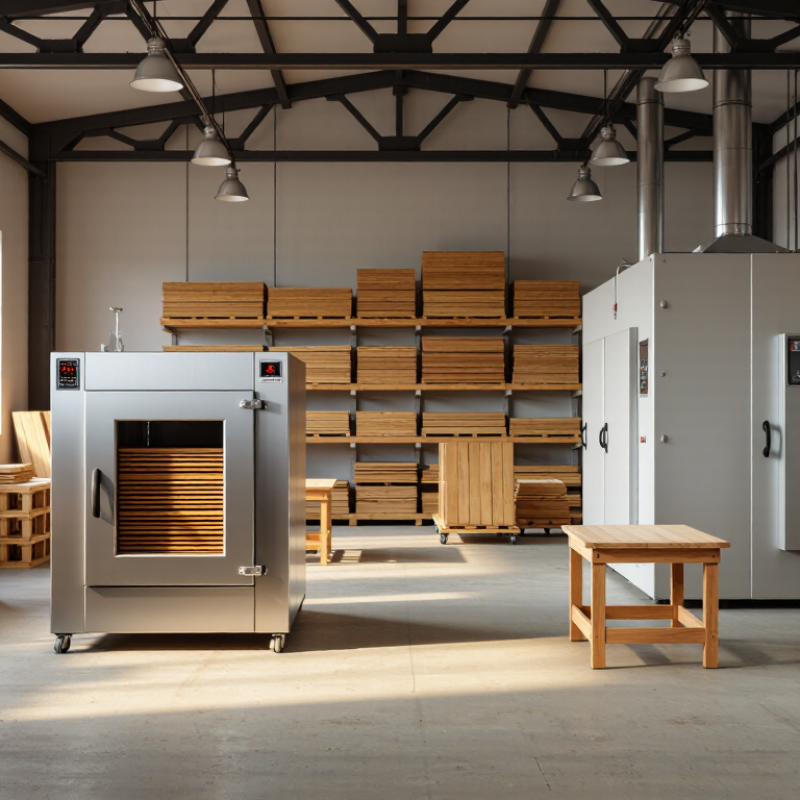
How Wood Drying Equipment Works and Why It Matters
Wood Drying Equipment works by moving heat and moisture in a controlled way. In a conventional kiln, heated air warms stacked boards while fans push air through the gaps. Vents or dehumidification systems remove water vapor. Operators adjust temperature, humidity, and airflow as the wood dries. The goal is even moisture removal, not simply fast drying. A hot surface can hide a wet core.
The USDA Forest Products Laboratory’s Wood Handbook (FPL-GTR-282, 2021) explains how moisture content affects wood’s dimensions and performance. As boards lose moisture below the fiber saturation point, they shrink; uneven drying can cause checks, warping, or internal stress. Vacuum and radio-frequency systems can shorten drying cycles for some applications, while solar kilns use sunlight and need careful weather management. No method suits every species, thickness, or production schedule. Real workshops still face trade-offs.
Tips: Weigh sample boards and check moisture at several points, not just near the surface. Keep sticker spacing consistent so air reaches each layer. Record each batch’s settings. Small details matter. The Wood Handbook is a useful technical reference, but local species and mill conditions still deserve testing. A perfect schedule on paper may disappoint in the yard.
Get in touch
Our mission is to develop cutting-edge clean energy technology and provide next-generation solar inverters.
Phone
(888) 598-9901
nep-usa@site_ea168614-f5f4-4298-bd5b-880b4cf8d99d
