We use our own and third-party cookies to improve our services. If you continue browsing, we will consider that you accept this use. Read More

OK

English-US
  • Spanish-Latin America
  • Japanese-JP
  • Chinese
  • Europe
  • Português-BR

Tech Support

(888) 598-9901
Hours: Mon-Fri 8AM-8PM EST

E-mail

nep-usa@site_ea168614-f5f4-4298-bd5b-880b4cf8d99d

Top 10 Low Melt Polyester Staple Fiber Suppliers

Choosing a reliable Low Melt Polyester Staple Fiber supplier requires more than comparing prices. Fiber performance can affect bonding strength, fabric softness, production speed, and finished product consistency. This guide introduces ten suppliers worth evaluating across these practical criteria. Their capabilities may serve manufacturers of nonwoven fabrics, automotive interiors, filtration media, mattresses, and thermal insulation. Each supplier should be reviewed through technical documents, sample testing, and direct communication. A polished website is not enough.

Important details often appear in small specifications. Check melting temperature, denier range, fiber length, crimp, color options, packaging, and recommended blending ratios. Ask whether production batches include quality reports and traceability records. Delivery reliability also matters. A delayed container can interrupt an entire production schedule. Experienced buyers should request samples that match their actual machinery, not only laboratory conditions. Machine temperature, pressure, and residence time can change bonding results.

This overview aims to support a practical and balanced supplier comparison. It considers manufacturing experience, customization capacity, quality management, export support, and customer feedback. However, no ranking can replace your own validation. Supplier information may change, and published claims require careful checking. Some companies may offer excellent fiber but limited technical support. Others may respond quickly but lack stable capacity during peak seasons. That is the part many comparisons miss. Treat this list as a starting point, not a final decision. Your process requirements should remain the strongest evidence.
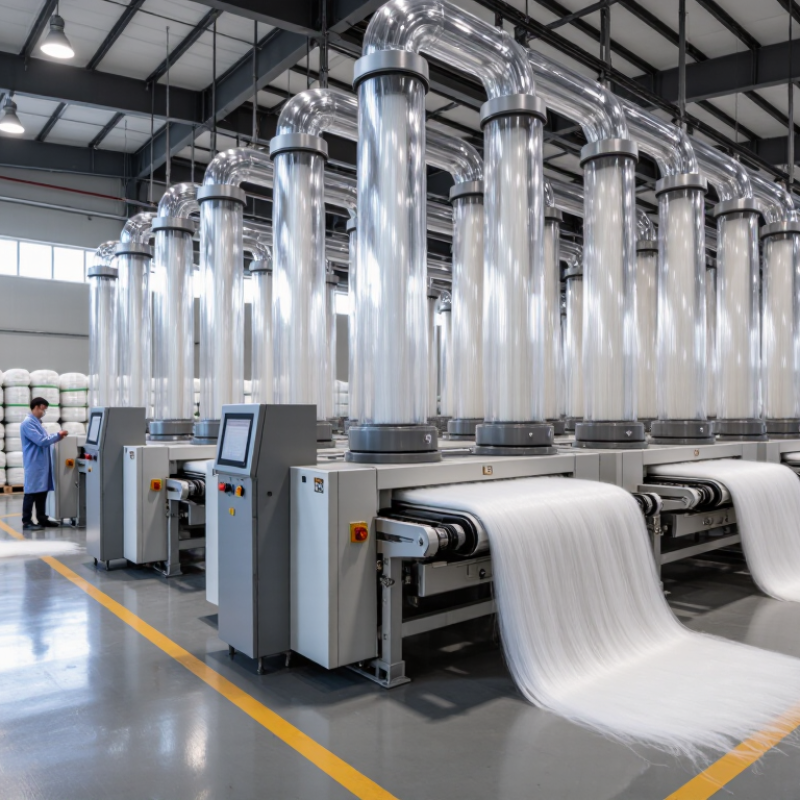
Top 10 Low Melt Polyester Staple Fiber Suppliers

What Is Low Melt Polyester Staple Fiber?

What Is Low Melt Polyester Staple Fiber?

Low melt polyester staple fiber is a thermoplastic fiber engineered to soften below standard polyester processing temperatures. It is commonly produced as a sheath-core fiber. The outer sheath melts first, while the polyester core retains strength and structure. This allows manufacturers to create bonded webs without adding liquid adhesives.

Typical softening or melting ranges depend on polymer design, cross-section, and finish. Many commercial grades activate between 110°C and 180°C. Processors use them in automotive insulation, furniture padding, filtration media, and hygiene components. The fiber may appear ordinary in a bale, but heat changes its function. It becomes a controlled bonding element.

Market scale matters. Textile Exchange’s Materials Market Report 2024 estimated polyester represented about 59% of global fiber production in 2023, equal to approximately 73 million tonnes. That figure includes many polyester types, not only low melt grades. It shows the material platform is extensive, but it does not prove every supplier offers consistent bonding performance. Specifications can be surprisingly loose.

In practical testing, I would check activation temperature, shrinkage, tensile retention, fiber length, and oil content. A sample that bonds well in a laboratory oven may behave differently on a fast production line. This is often overlooked. Buyers should request test conditions, not just a melting-point number. Product labels also deserve caution, because “low melt” can describe different copolymer designs across suppliers.

How to Evaluate Low Melt Polyester Staple Fiber Suppliers

Choosing among the top 10 low melt polyester staple fiber suppliers requires more than comparing prices. Check the melting range, fiber length, denier, crimp, and moisture content. These details affect bonding strength, web uniformity, and production waste. Ask for recent technical data sheets and batch-specific certificates of analysis. Generic documents are not enough.

Samples matter. Request several lots, not one carefully selected package. Test them under your actual temperature, pressure, and production speed. Record melting behavior, shrinkage, odor, color, and fiber dispersion. A supplier should explain deviations clearly. Visit the facility when possible, or request a live production audit. Review raw material traceability, laboratory equipment, storage conditions, and packaging protection. Damp cartons can create avoidable problems.

Reliable suppliers also communicate during difficult periods. Ask about lead times, minimum order quantities, backup capacity, and shipment records. Confirm whether technical staff can support trials after delivery. A low quotation may hide unstable quality or costly delays. I would not judge a supplier from one successful test. Results can change between seasons, machines, and operators. No supplier file is perfect. That is worth remembering. Keep a written scorecard, compare evidence, and leave room for a controlled second trial before approving regular orders.

Top 10 Low Melt Polyester Staple Fiber Suppliers

The top 10 low melt polyester staple fiber suppliers are best compared by evidence, not promotional claims. Textile Exchange’s Materials Market Report 2024 estimates polyester represented about 57% of global fiber production in 2023. That scale supports steady raw material access, but it does not guarantee consistent bonding performance.

A capable supplier should disclose melting-point ranges, fiber denier, cut length, crimp, moisture, and thermal shrinkage. Independent laboratories can verify these details through ISO or ASTM-based testing. For automotive interiors, filtration media, and thermal insulation, small variations can change web strength and line speed. Ask for batch records and production samples.

Data matters here.

MarketsandMarkets identifies growing demand for specialty fibers in lightweight automotive and nonwoven applications. Supplier comparisons should therefore examine recycled-content claims, energy use, lead times, and technical support. A practical trial might use a 4–6 millimeter fiber blend, then measure bonding temperature, tensile strength, and odor after heating. Some published specifications appear overly neat; real batches may drift. That is worth challenging. The strongest supplier is not always the largest one, but the one that documents repeatable results, responds quickly to failed trials, and explains limitations clearly.

Supplier Capabilities, Product Grades, and Industry Applications

Top 10 Low Melt Polyester Staple Fiber Suppliers should be assessed beyond price and catalog size. Strong suppliers provide stable melting points, consistent denier, controlled fiber length, and reliable crimp. They should also support custom blends, trial quantities, color matching, and documented quality testing. In production, small variations can affect web formation and bonding strength.

Product grades often include low, medium, and high melting ranges. Some fibers soften near 110°C, while others require higher processing temperatures. Available options may include solid, hollow, siliconized, flame-retardant, and recycled-content grades. These fibers serve thermal insulation, automotive interiors, filtration media, mattress padding, hygiene products, and construction nonwovens. Application advice matters. A technically suitable grade may still perform poorly on a fast production line.

Tips: Request a recent test report, safety data sheet, and batch traceability record. Test samples using your actual temperature, pressure, and line speed. Check shrinkage after bonding. Do not rely only on melting-point data. A polished datasheet can hide inconsistent fiber opening or weak bonding. That is an easy mistake. Also review packaging, moisture control, lead times, and technical response speed. No supplier fits every application, and an apparently minor grade mismatch can create costly rework.

Top 10 Low Melt Polyester Staple Fiber Suppliers

Supplier Capabilities, Product Grades, and Industry Applications

The chart compares typical melting-point ranges for common low-melt polyester staple fiber grades. Lower-melting copolyester grades are generally selected for thermal bonding, nonwoven fabrics, filtration media, automotive interiors, mattress layers, and hygiene products.

Industry reference values are typical ranges and may vary according to polymer composition, denier, staple length, crimp, finish, and supplier customization. Common supplier capabilities include solid and hollow fibers, different cut lengths, customized denier, siliconized or non-siliconized finishes, and sheath-core bicomponent structures.

How to Select the Right Supplier for Your Requirements

Selecting among the Top 10 Low Melt Polyester Staple Fiber Suppliers requires more than comparing prices. Textile Exchange’s Materials Market Report 2024 reports that polyester represented 57% of global fiber production in 2023, reaching about 71 million tonnes. This scale increases supplier choices, but not necessarily quality.

Define your process before requesting quotations. Confirm melting range, denier, cut length, crimp, sheath-core structure, color, moisture, and packaging. Ask for recent certificates of analysis and samples from several production lots. Test bonding performance with your actual temperature, pressure, and dwell time. Small differences can change web strength or shrinkage. They matter.

Check production capacity, minimum order quantity, lead time, and batch traceability. Request evidence for quality systems and relevant restricted-substance controls. A reliable supplier should explain how it manages recycled content, if applicable. Textile Exchange reports that recycled polyester accounted for approximately 12.5% of polyester production in 2023, so recycled-content claims deserve verification. Do not rely on a polished brochure. Visit the plant when practical, review test records, and compare independent laboratory results. Cost still matters, but a cheaper fiber may create rejected rolls, unstable bonding, and slower production. I would not pretend every supplier can provide perfect consistency. Weather, storage, and machine settings can influence results. Build a trial order into your decision, and record what failed.

Top 10 Low Melt Polyester Staple Fiber Suppliers - How to Select the Right Supplier for Your Requirements

Rank Supplier Profile Primary Supply Region Typical Melting Point Range Common Fiber Specifications Cross-Section Options Available Finishes Quality and Compliance Documents Typical MOQ Typical Lead Time Best Fit for Buyer Requirements
1 Supplier Profile A East Asia Approximately 110–180°C, depending on copolymer design 1.5–15 dtex; 3–64 mm cut length Solid, hollow, and bicomponent sheath-core Hydrophilic, siliconized, antistatic, and low-shrinkage Technical data sheet, batch test report, SDS, and origin documentation 500–1,000 kg 20–35 days for standard grades Large-volume nonwoven, automotive, filtration, and thermal-bonding programs
2 Supplier Profile B South Asia Approximately 100–170°C for common low-melt grades 1.5–7 dtex; 6–51 mm cut length Solid and sheath-core Standard, slick, hydrophilic, and flame-retardant options COA, SDS, REACH-related declarations, and restricted-substance statement 300–800 kg 25–40 days Cost-sensitive mattress, furniture, hygiene, and general nonwoven applications
3 Supplier Profile C Southeast Asia Approximately 120–180°C 2–12 dtex; 6–64 mm cut length Solid, hollow, and crimped fiber Siliconized, hydrophilic, and dope-colored options COA, process-control records, SDS, and product traceability information 500 kg 20–30 days Export-oriented buyers requiring stable quality and flexible fiber blending
4 Supplier Profile D Western Europe Approximately 110–190°C 1.7–17 dtex; 3–60 mm cut length Solid and bicomponent sheath-core Low-shrinkage, antistatic, flame-retardant, and hydrophilic CE-related technical files where applicable, SDS, COA, and chemical compliance declarations 1,000–2,000 kg 30–50 days Regulated markets, technical textiles, and buyers prioritizing documentation
5 Supplier Profile E North America Approximately 120–180°C 1.5–15 dtex; 6–51 mm cut length Solid, hollow, and crimped formats Standard, slick, and low-shrinkage finishes Domestic compliance statements, COA, SDS, and lot traceability 1,000–2,500 kg 15–30 days from local stock; longer for custom grades Short replenishment cycles and regional customers seeking local support
6 Supplier Profile F East Asia Approximately 105–175°C 1.2–6 dtex; 3–51 mm cut length Solid and fine-denier sheath-core Hydrophilic, antistatic, and soft-touch finishes COA, SDS, fiber cross-section data, and quality inspection report 200–500 kg 25–45 days Fine-fiber nonwovens, soft composites, filtration media, and sample development
7 Supplier Profile G Middle East Approximately 110–180°C 2–15 dtex; 6–64 mm cut length Solid and hollow Standard, siliconized, and hydrophilic finishes COA, SDS, origin certificate, and general chemical-compliance declaration 500–1,000 kg 25–40 days Regional distribution, blended fiber products, and price-focused sourcing
8 Supplier Profile H Eastern Europe Approximately 120–185°C 1.7–13 dtex; 6–64 mm cut length Solid, hollow, and crimped fiber Low-shrinkage, antistatic, and flame-retardant options COA, SDS, test-method references, and regional chemical-compliance files 750–1,500 kg 30–45 days Industrial nonwovens and buyers needing moderate customization
9 Supplier Profile I South America Approximately 115–175°C 2–15 dtex; 6–64 mm cut length Solid and sheath-core Standard, hydrophilic, and siliconized finishes COA, SDS, product specification, and lot identification records 500–1,000 kg 30–50 days Local and regional users seeking reduced import complexity
10 Supplier Profile J Multi-region Export Supplier Approximately 100–190°C across standard and specialty grades 1.5–20 dtex; 3–64 mm cut length Solid, hollow, crimped, and bicomponent options Hydrophilic, antistatic, low-shrinkage, and flame-retardant finishes COA, SDS, technical data sheet, packing list, and export documentation 300–1,000 kg 25–45 days Buyers comparing multiple grades, destinations, and customized specifications
Supplier Selection Checklist: Confirm the required melting or softening range, fiber denier, cut length, cross-section, crimp, finish, shrinkage, bonding temperature, moisture content, packaging format, minimum order quantity, lead time, test methods, and applicable chemical or product-compliance documentation before placing a purchase order.

Get in touch

Our mission is to develop cutting-edge clean energy technology and provide next-generation solar inverters.

Phone

(888) 598-9901

E-mail

nep-usa@site_ea168614-f5f4-4298-bd5b-880b4cf8d99d
