- Spanish-Latin America
- Japanese-JP
- Chinese
- Europe
- Português-BR

Tech Support
(888) 598-9901
Hours: Mon-Fri 8AM-8PM EST
nep-usa@site_ea168614-f5f4-4298-bd5b-880b4cf8d99d
Top 10 HEPA Air Filter Suppliers for Global Buyers
Clean air is now a procurement priority for hospitals, laboratories, manufacturers, and building operators. The World Health Organization’s 2022 air quality update reports that 99% of the global population breathes air exceeding its recommended limits. That figure highlights the need for dependable filtration, but it does not make every HEPA product interchangeable.
The U.S. Department of Energy’s widely cited HEPA benchmark is 99.97% particle removal at 0.3 microns. Buyers should still check which test method and classification apply. Standards such as EN 1822 and ISO 29463 help classify high-efficiency filters, while actual performance depends on the product, installation, and operating conditions. A specification sheet is only a starting point. Details matter.
This guide to the Top 10 HEPA Air Filter Suppliers for Global Buyers offers a practical starting point for comparing manufacturers and distributors. It considers product range, documented testing, manufacturing capacity, customization, traceability, and support for international orders. The search phrase “Air Filter Hepa” may lead buyers to many listings, but a familiar label alone proves little. Ask for current test reports, confirm the rated airflow and pressure drop, and clarify replacement availability before ordering. No supplier is perfect for every project; lead times and service can vary by region. That part is easy to overlook. The comparison aims to inform due diligence, not replace technical review by qualified facility or filtration professionals.
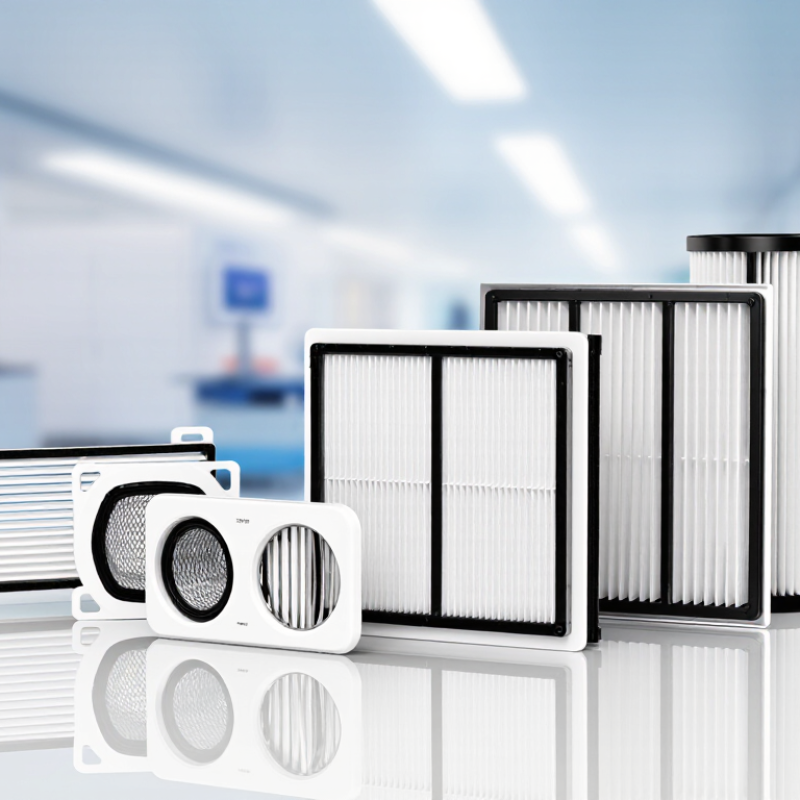
HEPA Basics: The U.S. DOE Benchmark of 99.97% Efficiency at 0.3 µm
The U.S. Department of Energy benchmark commonly associated with HEPA filters is 99.97% efficiency at 0.3 micrometers. In practical terms, a properly tested filter captures at least 99,970 of every 100,000 particles of that test size under specified conditions. The figure is useful, but it is not a promise of identical results in every air-cleaning unit.
The 0.3 µm size is a benchmark, not a particle-size cutoff. Filters can also capture particles both smaller and larger, though performance depends on the filter design and test method. Numbers need context. A supplier’s efficiency claim should be supported by clear test documentation, including the tested filter configuration and operating conditions. Ask whether the result applies to the filter media alone or to the assembled filter, where gaps around seals can affect performance. That detail matters.
For global buyers, compare airflow resistance as well as capture efficiency. A dense filter may meet the benchmark yet restrict airflow in equipment not designed for it. Check dimensions, gasket placement, and replacement compatibility against the actual housing. Even careful specifications can leave questions; a report may not reflect the way a filter performs after installation or as dust accumulates. Reliable sourcing starts with verifiable test evidence and realistic operating requirements.
Get in touch
Our mission is to develop cutting-edge clean energy technology and provide next-generation solar inverters.
Phone
(888) 598-9901
nep-usa@site_ea168614-f5f4-4298-bd5b-880b4cf8d99d
