- Spanish-Latin America
- Japanese-JP
- Chinese
- Europe
- Português-BR

Tech Support
(888) 598-9901
Hours: Mon-Fri 8AM-8PM EST
nep-usa@site_ea168614-f5f4-4298-bd5b-880b4cf8d99d
Top 10 Green Energy Solar Suppliers for Global Buyers
Global buyers face a crowded solar market, with suppliers promising lower costs, faster delivery, and cleaner power. This guide examines ten leading companies in the green energy solar sector. It considers manufacturing capacity, product reliability, certifications, warranty terms, project experience, and international logistics.
Price alone is not enough.
A low quotation may hide weak after-sales support, unclear testing records, or costly shipping delays. Buyers should review module efficiency, degradation rates, inverter compatibility, and performance guarantees. They should also confirm compliance with local grid rules and procurement standards. These details matter on a rooftop in Rotterdam, a farm in Kenya, or an industrial site in Mexico.
Fatih Birol, Executive Director of the International Energy Agency, said, “Solar PV is becoming the new king of electricity markets.” His observation reflects a major shift, but rapid growth creates new risks. Supplier capacity can change quickly. Product quality may vary between factories. Even respected brands need careful evaluation.
This overview uses practical buying criteria rather than promotional claims. It highlights companies with visible technical records, broad market reach, and credible support structures. However, no supplier is perfect. Some may offer excellent modules but limited regional service. Others may provide strong warranties but higher prices. Buyers must match supplier strengths with project conditions, budget limits, and long-term operating plans.
The ranking is a starting point, not a final decision. Independent verification remains essential.
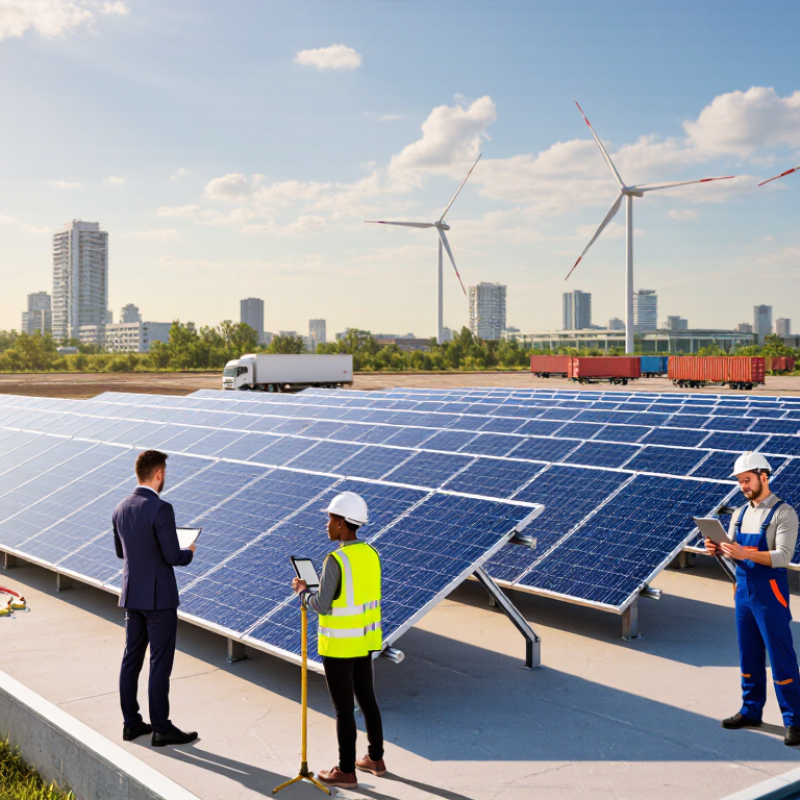
What Defines a Green Energy Solar Supplier for Global Buyers
Top 10 Green Energy Solar Suppliers for Global Buyers
What Defines a Green Energy Solar Supplier for Global Buyers
A credible green energy solar supplier offers more than efficient panels. The supplier should provide verified lifecycle data, factory audits, and transparent material records. According to IRENA’s Renewable Capacity Statistics 2024, global solar capacity reached about 1,419 GW by the end of 2023. This rapid expansion increases pressure on suppliers to prove environmental claims, not merely repeat them. Buyers should request product carbon footprints, recycling plans, and evidence of responsible mineral sourcing.
Technical reliability matters equally. A qualified supplier should explain temperature coefficients, degradation rates, warranty conditions, and testing standards clearly. The IEA’s Renewables 2024 report expects solar power to deliver around 80% of global renewable capacity growth through 2030. That scale makes long-term performance essential. A panel that loses output quickly can create hidden costs and additional waste. Site-specific design support also matters, especially in dusty, humid, or coastal regions.
Documentation can still be imperfect. I treat impressive sustainability language cautiously when test reports lack dates or independent verification. A serious supplier welcomes difficult questions. It should share production locations, shipment records, and corrective actions after quality failures. Delivery consistency, local service capability, and compliance with destination-country rules further separate dependable suppliers from aggressive sellers. The strongest candidates for global buyers combine measurable environmental progress with honest limitations.
Top 10 Green Energy Solar Suppliers for Global Buyers - What Defines a Green Energy Solar Supplier for Global Buyers
| Rank | Anonymous Supplier | Primary Supply Region | Main Product Focus | Module Efficiency | Product Warranty | Manufacturing Standard | Environmental Management | Supply-Chain Transparency | Recyclability / Take-Back | Global Buyer Suitability |
|---|---|---|---|---|---|---|---|---|---|---|
| 1 | Supplier A | East Asia | Utility-scale mono-crystalline modules | 22.5%–23.5% | 12–15 years product 25–30 years performance |
IEC 61215 / IEC 61730 | ISO 14001-aligned | High | Documented partner network | Excellent |
| 2 | Supplier B | Southeast Asia | Residential and commercial rooftop modules | 21.5%–23.0% | 12–15 years product 25 years performance |
IEC 61215 / IEC 61730 | ISO 14001 certified | High | Regional collection options | Excellent |
| 3 | Supplier C | Europe and North America | Low-carbon modules and distributed generation systems | 20.5%–22.5% | 12–20 years product 25–30 years performance |
IEC / UL compliance | ISO 14001 certified | Very high | Formal take-back program | Excellent |
| 4 | Supplier D | East Asia and Australia | High-output bifacial solar modules | 22.0%–23.5% | 12–15 years product 30 years performance |
IEC 61215 / IEC 61730 | ISO 14001-aligned | Medium-high | Available through distributors | Very good |
| 5 | Supplier E | South Asia | Cost-competitive mono-facial modules | 20.0%–22.0% | 10–12 years product 25 years performance |
IEC 61215 / IEC 61730 | Environmental controls in place | Medium-high | Limited regional coverage | Very good |
| 6 | Supplier F | East Asia and Middle East | Large-format utility modules | 21.5%–23.0% | 12–15 years product 25–30 years performance |
IEC 61215 / IEC 61730 | ISO 14001-aligned | Medium-high | Project-based arrangements | Very good |
| 7 | Supplier G | Europe and Latin America | Specialized rooftop and off-grid systems | 19.5%–21.5% | 10–15 years product 25 years performance |
IEC / regional approvals | ISO 14001 certified | Very high | Established local programs | Very good |
| 8 | Supplier H | North America | Domestic-content and commercial modules | 20.0%–22.5% | 12–25 years product 25–30 years performance |
IEC / UL compliance | ISO 14001-aligned | High | Regional recycling partners | Very good |
| 9 | Supplier I | East Asia and Africa | High-temperature and off-grid modules | 19.5%–21.5% | 10–12 years product 25 years performance |
IEC 61215 / IEC 61730 | Environmental procedures documented | Medium | Distributor-led collection | Good |
| 10 | Supplier J | Southeast Asia and Europe | Flexible procurement and private-label supply | 19.5%–22.0% | 10–15 years product 25 years performance |
IEC 61215 / IEC 61730 | ISO 14001-aligned | Medium | Contract-dependent | Good |
Related Posts
-
How to Choose Solar Panels for Electricity Needs?
-
Why Choose Solar Electric Energy for Your Home?
-
10 Essential Tips for Maximizing Rooftop Solar Power Efficiency
-

2026 Best Solar Electric Systems for Sustainable Energy Solutions?
-

China Top 10 Energy Rates Trends You Should Know About?
-

How Can China Best Products Help You Save on Energy?
Get in touch
Our mission is to develop cutting-edge clean energy technology and provide next-generation solar inverters.
Phone
(888) 598-9901
nep-usa@site_ea168614-f5f4-4298-bd5b-880b4cf8d99d
