We use our own and third-party cookies to improve our services. If you continue browsing, we will consider that you accept this use. Read More

OK

English-US
  • Spanish-Latin America
  • Japanese-JP
  • Chinese
  • Europe
  • Português-BR

Tech Support

(888) 598-9901
Hours: Mon-Fri 8AM-8PM EST

E-mail

nep-usa@site_ea168614-f5f4-4298-bd5b-880b4cf8d99d

10 Tips for Choosing the Best Ground Screws

Choosing the right Ground Screws starts below the surface. Soil type, moisture, frost depth, load requirements, and corrosion exposure all affect performance. A screw that turns easily into dry, firm soil may behave very differently in wet clay or loose fill. Small details matter.

The scale of modern solar development makes reliable foundations increasingly important. The International Energy Agency’s Renewables 2024 report states that global renewable capacity additions reached nearly 560 gigawatts in 2023, with solar photovoltaic power accounting for about three-quarters of the increase. That figure does not measure ground-screw installations, but it shows why foundation choices deserve careful attention. A rushed specification can lead to difficult installation, uneven support, or costly rework.

There is no verified expert quotation supplied here, so assigning a sentence to a named Ground Screws specialist would risk inventing a source. That deserves a pause. This guide instead focuses on practical checks: confirm site conditions, match the screw to the expected loads, review material and coating specifications, and ask how installation quality will be documented. These ten tips are a starting point, not a substitute for site-specific engineering. Soil can surprise you. Verify before you install.
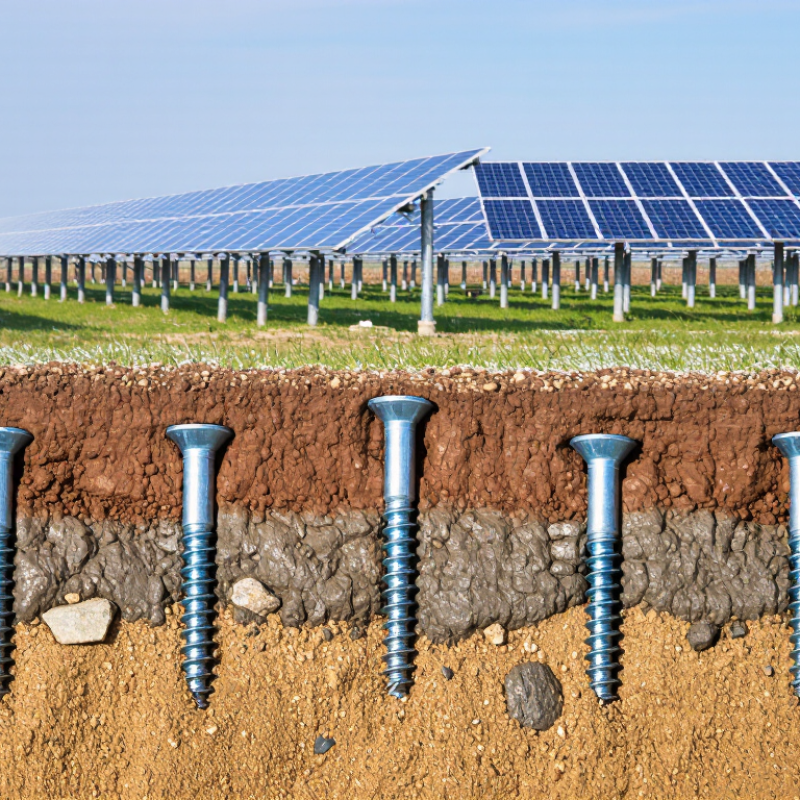
10 Tips for Choosing the Best Ground Screws

Ground Screw Basics: Types, Components, and Common Uses

Ground screws are steel shafts with helical plates that cut into soil and transfer loads below the surface. A typical assembly includes the shaft, one or more helices, a top bracket, and corrosion protection. Unlike poured concrete footings, installation usually needs no curing time, but performance still depends on soil strength, frost depth, drainage, and installation torque. A muddy garden bed and dense gravel can demand very different screw lengths. Small detail, big consequence.

Uses range from decks, fences, signs, and sheds to solar-panel frames. NREL’s 2023 U.S. Solar Photovoltaic System and Energy Storage Cost Benchmark models a 100-MWdc utility-scale solar plant, illustrating how extensive ground-mounted systems can be. That report concerns project costs, not a universal foundation design; site-specific testing remains essential. For larger structures, engineers may use torque readings and load tests to verify capacity. Soil can be stubborn. And unpredictable.

Tip: Match the screw’s shaft, helix size, and length to the expected load and ground conditions. Ask for a geotechnical assessment where soil is uncertain, and check the bracket’s fit before installation. One practical caution: a screw that turns easily is not automatically secure. Confirm the installer records embedment depth and installation torque, then inspect exposed steel for coating damage. I would not choose by price alone; replacing a poorly sized foundation can mean disturbing the structure above it.

Assess Soil Conditions, Drainage, and Site Access

Before selecting ground screws, check the soil beyond the dry surface. The USDA-NRCS Soil Survey Manual classifies saturated hydraulic conductivity from very low, below 0.01 micrometers per second, to very high, above 1,000. That range signals how sharply infiltration can vary across a site. NRCS hydrologic soil groups also sort soils into four categories, A through D, by runoff and infiltration behavior. Treat these maps as screening tools, not a substitute for probing or a site assessment. A gravelly top layer may hide soft, wet soil below. Small clues matter.

Drainage and access affect installation as much as the screw specification. After rain, look for standing water, muddy ruts, and water flowing toward the work area. Check after rain. A low spot may need a different installation plan or further evaluation before equipment arrives. Walk the actual access route: note gate width, overhead branches, turning space, and room to stage materials. A compact machine may reach the work zone but still lack space to align and operate safely. The USDA-NRCS Web Soil Survey can help identify mapped soil limitations, but its boundaries do not capture every change on a small parcel. Verify questionable areas on site, and record soil layers, moisture, and installation torque as work proceeds; torque alone does not confirm capacity.

Match Screw Size and Capacity to Structural Loads

Ground screw size should follow the loads it must carry, not just the post dimensions. Estimate the weight of the structure, then consider wind uplift, sideways pressure, and uneven loading. A small garden shelter may seem light, but gusts can pull hard on its roof. Capacity figures are meaningful only when matched to the stated soil conditions and installation depth. Check whether the published rating covers compression, tension, and lateral forces; one number may not describe all three.

Soil matters. Dense gravel and soft, wet clay can behave very differently, even on nearby parts of a site. A longer or wider screw may help, but dimensions alone do not confirm capacity. Use site information and the screw maker’s technical data, and ask a qualified structural professional to review uncertain or heavily loaded designs. Allow for the required safety factors. This part can feel tedious, and a tidy table may tempt you to choose the nearest rating. I would resist that shortcut. Record screw spacing, embedment depth, and the load at each support, then check that the ground and connection details suit the actual structure.

Compare Materials, Coatings, and Design Features

Ground screws face constant contact with soil, moisture, and sometimes de-icing salts. Compare the steel grade, coating thickness, and installation conditions—not just the product’s appearance. Hot-dip galvanizing can protect steel, while stainless steel may suit some aggressive environments. Neither option is universal. A coating is not magic; scratches around the shaft or welds can become weak points.

Tip: Ask for coating specifications and soil-compatibility guidance. The NACE International IMPACT study estimated global corrosion costs at US$2.5 trillion annually, or 3.4% of global GDP. That figure covers many industries, not ground screws alone, but it shows why corrosion planning matters.

Check whether the supplier’s data reflects your soil’s moisture, acidity, and chloride levels.

Design matters just as much. Look for flight diameter, shaft thickness, weld quality, and load-test documentation. Match the helix geometry to the soil and expected pullout or compression loads. A narrow shaft may be easier to install, but it is not automatically suitable for a heavier structure.

Tip: Compare drawings and test conditions side by side. If a specification is unclear, pause and ask; I’ve seen small details get overlooked.

Check Installation Requirements, Standards, and Long-Term Value

A ground screw is only as dependable as its match to the site. Check the design loads, soil profile, frost depth, drainage, and access for installation equipment before comparing prices.

A geotechnical report can reveal weak fill, dense layers, or groundwater that changes the required embedment.

Soil changes everything.

Where applicable, check whether the system has been evaluated under ICC-ES AC358, and ask for documented axial and lateral capacity. ASTM D1143 and D3689 describe compression and tension testing methods for deep foundations; ask whether relevant test results reflect comparable soil and installation conditions.

Long-term value depends on more than the purchase price.

The 2016 NACE IMPACT study estimated global corrosion costs at $2.5 trillion annually, or 3.4% of global GDP. That figure covers corrosion broadly, not ground screws alone, but it shows why coatings, soil chemistry, and inspection plans deserve attention. Ask for coating specifications, expected service-life assumptions, and clear limits on those estimates.

Small details matter.

Confirm the required installation torque and how it is recorded; torque can help verify installation, but its relationship to capacity depends on the system and soil. A missed field note can make later checks harder. I would compare the full installed cost, maintenance needs, and evidence behind each capacity claim—not just the quoted unit price.

Get in touch

Our mission is to develop cutting-edge clean energy technology and provide next-generation solar inverters.

Phone

(888) 598-9901

E-mail

nep-usa@site_ea168614-f5f4-4298-bd5b-880b4cf8d99d