- Spanish-Latin America
- Japanese-JP
- Chinese
- Europe
- Português-BR

Tech Support
(888) 598-9901
Hours: Mon-Fri 8AM-8PM EST
nep-usa@site_ea168614-f5f4-4298-bd5b-880b4cf8d99d
What Is a Three Phase RCBO and How Does It Work?
A Three Phase Rcbo combines residual-current protection and overcurrent protection in one compact device. It monitors three live conductors and, where required, the neutral conductor. If current leaks toward earth, it detects an imbalance and disconnects the circuit rapidly. It also responds to overloads and short circuits, helping protect cables, equipment, and people.
The device works through current transformers that compare outgoing and returning current. Under normal conditions, these values remain balanced. Even a small difference can activate the trip mechanism. For example, damaged insulation near a damp motor may create leakage before visible sparks appear. The Three Phase Rcbo can interrupt the supply, although its performance depends on the rated sensitivity, trip curve, and installation quality.
Details matter. Selection should match the system voltage, fault level, pole arrangement, load type, and earthing design. A qualified electrician should verify these points against applicable standards, such as IEC 61009-1 and local wiring rules. Manufacturer instructions remain essential because different models handle neutral switching and three-phase disconnection differently. An unsuitable device may trip unnecessarily or provide less protection than expected. That risk is easy to underestimate.
Real installations are rarely perfect. Cable routes, motor starting currents, humidity, and shared neutrals can complicate diagnosis. Testing the RCBO regularly and recording results improves confidence, but a test button cannot replace professional inspection. This guide explains the construction, operating process, common applications, and practical limitations of Three Phase Rcbo systems. It also questions a common assumption: one protective device cannot solve every electrical safety problem.
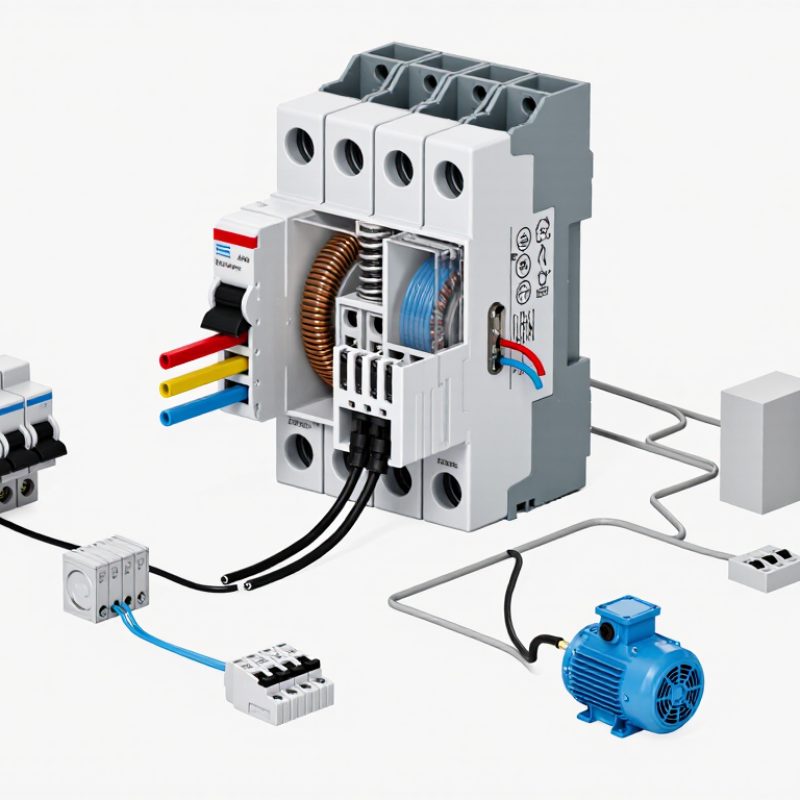
What Is a Three-Phase RCBO?
A three-phase RCBO is a protective device designed for electrical systems with three live phases. It combines two functions in one unit: residual-current protection and overcurrent protection. The residual-current section detects electricity leaking to earth, such as current passing through damaged insulation. The circuit-breaker section responds to overloads and short circuits.
Unlike a single-phase device, a three-phase RCBO monitors several conductors together. It may also include a neutral connection, depending on the system design. If one phase develops a fault, the device can disconnect the protected circuit quickly. This helps reduce electric shock risks, cable overheating, and equipment damage. Correct pole arrangement matters. A wiring error can leave part of a circuit energized, even when the handle appears off. That detail is easy to underestimate.
Tips: Check the rated current, residual operating current, breaking capacity, and compatible voltage before installation. The protected phases and neutral must pass through the correct terminals. Press the test button regularly, but do not treat it as a complete inspection. A successful test only confirms the mechanism responds at that moment. An experienced electrician should verify phase balance, earthing, terminal torque, and enclosure suitability. In real installations, dust, moisture, and loose connections can affect performance. Neat wiring is useful, but measured testing is more reliable.
Get in touch
Our mission is to develop cutting-edge clean energy technology and provide next-generation solar inverters.
Phone
(888) 598-9901
nep-usa@site_ea168614-f5f4-4298-bd5b-880b4cf8d99d
