We use our own and third-party cookies to improve our services. If you continue browsing, we will consider that you accept this use. Read More

OK

English-US
  • Spanish-Latin America
  • Japanese-JP
  • Chinese
  • Europe
  • Português-BR

Tech Support

(888) 598-9901
Hours: Mon-Fri 8AM-8PM EST

E-mail

nep-usa@site_ea168614-f5f4-4298-bd5b-880b4cf8d99d

Smart Plug Outlet Tips for Efficient Home Automation?

In the emerging world of smart home technology, the role of the “Smart Plug Outlet” has become increasingly vital. Industry expert Dr. Emma C. Raines, an advocate for efficient home automation, once said, “Smart Plug Outlets are game changers for energy management at home.” These devices allow users to control their appliances remotely, providing convenience and energy savings.

Using Smart Plug Outlets in your home can streamline daily routines. Imagine being able to turn on your lamps or coffee maker from your smartphone. The accessibility and control they provide are remarkable. Yet, despite their advantages, many users hesitate to integrate them fully. Concerns about compatibility and security often arise.

Smart Plug Outlets can also contribute to sustainable living. Users can monitor energy consumption, making informed decisions on appliance usage. However, some people may find it challenging to understand how to set them up correctly. This confusion could hinder their potential benefits. Engaging with Smart Plug technology can lead to greater home efficiency, and it's time to embrace that opportunity.
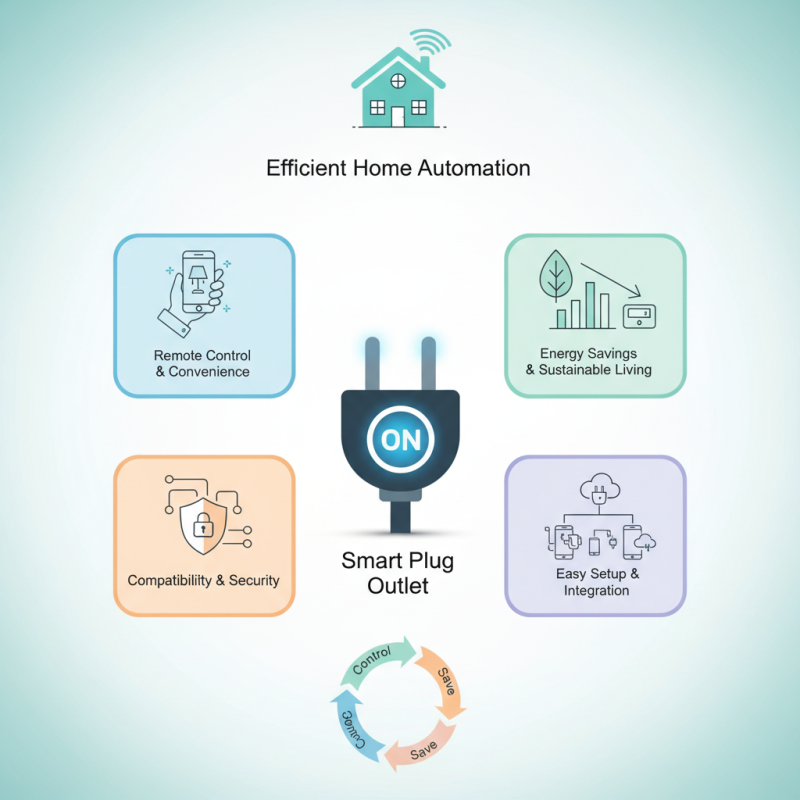
Smart Plug Outlet Tips for Efficient Home Automation?

Understanding Smart Plugs: Definition and Functionality in Home Automation

Smart plugs are small devices that make regular outlets smarter. They connect to your home Wi-Fi network. This allows you to control them remotely using an app. Smart plugs can turn on and off any device plugged into them. They are great for automating lights, fans, and even coffee machines.

Using smart plugs can enhance energy efficiency. They help monitor power consumption and reduce wastage. However, it's essential to choose the right devices. Some smart plugs may not support all appliances. This could lead to frustration when trying to automate your home.

Setting up smart plugs is usually straightforward. Yet, some users may face connectivity issues. It’s essential to ensure a reliable Wi-Fi connection. Occasionally, updates may disrupt functionality. This could cause you to rethink your automation strategy. Proper planning and regular checks are crucial for an efficient smart home setup.

Smart Plug Outlet Tips for Efficient Home Automation

Feature Description Benefits
Voice Control Allows users to control devices using voice commands via virtual assistants. Convenience and hands-free operation.
Scheduling Set specific times for devices to turn on or off automatically. Energy savings and enhanced automation.
Energy Monitoring Tracks energy usage of connected devices in real-time. Helps to identify energy hogs and reduce costs.
Remote Access Control devices from anywhere using a smartphone app. Increased control and flexibility.
Integration with Smart Home Systems Works with other smart home devices for a cohesive system. Enhances the efficiency and ease of smart home automation.

The Role of Smart Plugs in Energy Efficiency: Data Insights and Savings

Smart plugs are transforming energy efficiency in homes. These devices allow users to control appliances remotely. This means you can turn off lights or electronics from your smartphone. Studies show that smart plugs can reduce energy waste by up to 30%. That’s a significant saving on electricity bills.

Data insights reveal that many households often forget to unplug devices. Standby power consumption, or vampire energy, contributes to unnecessary costs. Smart plugs can help combat this issue by scheduling shut-off times. Users appreciate the ability to monitor real-time energy usage. This feature provides awareness and prompts better habits.

However, users should consider some limitations. Not all devices are compatible with smart plugs. Sometimes, these gadgets require a stable Wi-Fi connection. If the internet goes down, the smart features may be inaccessible. Users should also reflect on how many smart plugs they genuinely need. Over-reliance can lead to clutter and confusion. Balancing convenience with practicality is essential for effective home automation.

Integrating Smart Plugs with Smart Home Systems: Compatibility and Protocols

Integrating smart plugs into your home automation system can enhance convenience. Compatibility and communication protocols are key factors in creating a seamless environment. Most smart plugs work with Wi-Fi, Zigbee, or Z-Wave. Before you choose, check your existing devices’ compatibility.

When setting up smart plugs, aim for optimal placement. Ensure they are within range of your Wi-Fi network for reliable connectivity. Avoid locations near major appliances that may interfere with signals. This ensures your devices respond promptly when you command them.

Here are a few tips: Regularly update your smart plug firmware for security. Create schedules for devices to optimize energy consumption. Monitor usage through apps to make adjustments as needed. Be ready to troubleshoot connection issues occasionally. A well-integrated system can be powerful, but it requires some attention and fine-tuning.

User Tips for Optimizing Smart Plug Usage: Scheduling and Remote Control

Smart plugs are powerful tools for home automation. They enable users to control appliances remotely. Scheduling is one of the key features that enhances their efficiency. By programming devices to turn on or off at specific times, you can save energy and reduce costs. Imagine your coffee maker starting up every morning before you wake up. It adds convenience to your routine without extra effort.

Remote control features also improve usability. You can manage your devices via smartphone apps. This interface can feel overwhelming at first. It may take time to learn all capabilities. You might accidentally leave a device on, which defeats the purpose of automation. Be patient with yourself. Review manuals or online tutorials for support.

Combining scheduling with remote control forms a flexible system. You can adjust settings on the go. If you leave home and forget a light on, just turn it off from your phone. This level of control brings peace of mind. However, be aware of connectivity issues that may arise. Your smart plug is only as reliable as your Wi-Fi connection.

Future Trends in Smart Plug Technology: Innovations and Market Growth Projections

The smart plug market is evolving rapidly. Innovations in technology are making these devices more user-friendly and efficient. Many households are now integrating smart plugs to control devices remotely. This shift indicates a growing trend toward automation. Smart plugs can reduce energy waste by turning off appliances when not in use. Consumers are increasingly aware of their energy consumption. This awareness is driving demand for more intelligent solutions.

Future trends indicate a focus on connectivity and compatibility. Integration with other smart home devices will enhance functionality. Enhanced features like voice control and energy monitoring are on the horizon. However, challenges remain. Not all smart plugs work seamlessly together. Some may struggle with connectivity or features. These issues lead to user frustration. Addressing these problems will be key for future growth in this market.

As technology advances, consumers expect more from smart plugs. Innovations may include greater personalization options. Users want devices that understand their habits and preferences. This desire for tailored experiences could shape future development. Overall, the landscape for smart plugs appears promising, with ongoing market growth and exciting innovations ahead.

Future Trends in Smart Plug Technology: Innovations and Market Growth Projections

Article Source:

Get in touch

Our mission is to develop cutting-edge clean energy technology and provide next-generation solar inverters.

Phone

(888) 598-9901

E-mail

nep-usa@site_ea168614-f5f4-4298-bd5b-880b4cf8d99d