- Spanish-Latin America
- Japanese-JP
- Chinese
- Europe
- Português-BR

Tech Support
(888) 598-9901
Hours: Mon-Fri 8AM-8PM EST
nep-usa@site_ea168614-f5f4-4298-bd5b-880b4cf8d99d
Is Skynex the Best Video Door Phone Manufacturer in China?
Choosing a video door phone manufacturer takes more than comparing screen sizes or product photos. Buyers need dependable audio and video, clear night images, responsive door release, and compatibility with existing wiring. Small details matter. A delayed call or unclear visitor image can undermine an otherwise polished system.
Market research signals growing interest in this product category. Grand View Research’s Video Doorbell Market report estimated the global market at USD 2.1 billion in 2023 and projected continued growth through 2030. The report covers video doorbells broadly, not every video door phone segment, so its figures should be treated as context rather than a direct measure of manufacturer quality. Market estimates also vary with product definitions and research methods.
Against that backdrop, “Is Skynex the Best Video Door Phone Manufacturer in China?” is a question worth examining carefully. The phrase “Skynex Manufacturer Produce Video Door Phone” may appear in searches, but a keyword is not proof of performance. A useful assessment should compare specific models, installation requirements, image quality, system integration, warranty terms, and after-sales support. Ask for test results and clear technical documents. Check the details. Public information alone may not reveal how a system performs in a real building, especially where wiring, lighting, and network conditions differ. This introduction sets up a balanced review of Skynex’s products and capabilities, while recognizing that “best” depends on the buyer’s project, budget, and support needs.
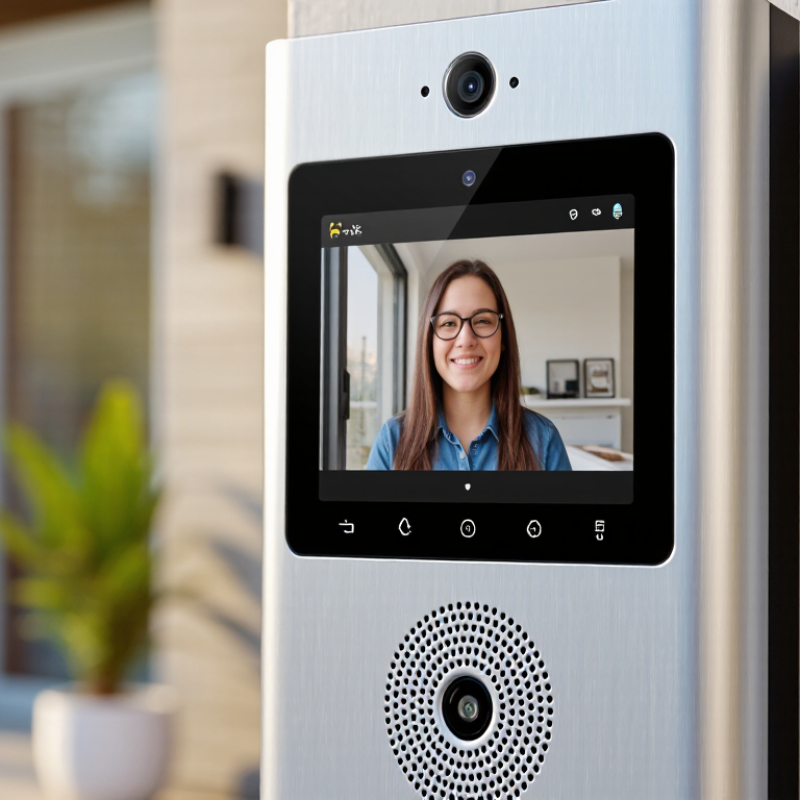
Video Door Phones: 1920 × 1080 Imaging and Core System Components
A 1920 × 1080 image contains 2,073,600 pixels, enough to show a visitor’s face and package details at a practical entrance distance. But pixel count alone cannot guarantee a useful image. Lens focus, sensor sensitivity, and exposure control matter, especially when bright daylight sits behind a visitor. Small details matter. Infrared LEDs can help after dark, though nearby reflective walls may cause glare.
A video door phone’s core system includes a CMOS image sensor, lens, processor, video codec, microphone, speaker, and network interface. Each part affects the next: a sharp sensor image can still look muddy if compression is too aggressive. The Annual Internet Report, 2018–2023, projected video would account for 82% of global IP traffic by 2022. That was a forecast, not a current measurement, but it underlines why stable network delivery and efficient encoding deserve attention.
For installation checks, view the image at the actual doorway, not only on a bright test monitor. Confirm faces remain clear at noon and under porch lighting. Test two-way audio with street noise present. Also inspect weather seals and cable connections after fitting; a small gap can invite moisture. A 1080p specification is useful, but it leaves room for disappointment.
Get in touch
Our mission is to develop cutting-edge clean energy technology and provide next-generation solar inverters.
Phone
(888) 598-9901
nep-usa@site_ea168614-f5f4-4298-bd5b-880b4cf8d99d
