- Spanish-Latin America
- Japanese-JP
- Chinese
- Europe
- Português-BR

Tech Support
(888) 598-9901
Hours: Mon-Fri 8AM-8PM EST
nep-usa@site_ea168614-f5f4-4298-bd5b-880b4cf8d99d
10 Mining Truck Buying Tips for Global Buyers
Buying a Mining Truck is a major operational decision, not a simple equipment purchase. Global buyers must examine payload, haul distance, road conditions, climate, fuel access, service support, and operator capability. A truck that performs well in an Australian open-pit mine may struggle on steep, wet roads elsewhere. Context matters.
Jim Umpleby, former Caterpillar chairman and chief executive, stated, “We are committed to helping our customers build a better, more sustainable world.” That principle belongs in every buying discussion. Sustainability is not only about emissions. It also includes fuel consumption, tire life, component durability, maintenance access, and machine availability. A cheaper truck can become expensive when parts remain in transit for weeks. That happens.
This guide presents ten practical Mining Truck buying tips for global buyers. It considers both technical specifications and daily operating realities. Buyers should compare rated payload with actual material density, because overloaded cycles increase stress and downtime. They should also inspect braking systems, suspension design, cab visibility, and onboard monitoring tools. Small details matter. A clear step, a protected sensor, or a nearby service center can influence safety and productivity.
No checklist is perfect. Mine plans change. Weather surprises operators. Supplier promises should therefore be tested through references, site visits, and transparent lifecycle-cost calculations. The strongest decision may not involve the largest truck or the lowest initial price. It should match the mine’s future, while accepting that some assumptions will need revision.
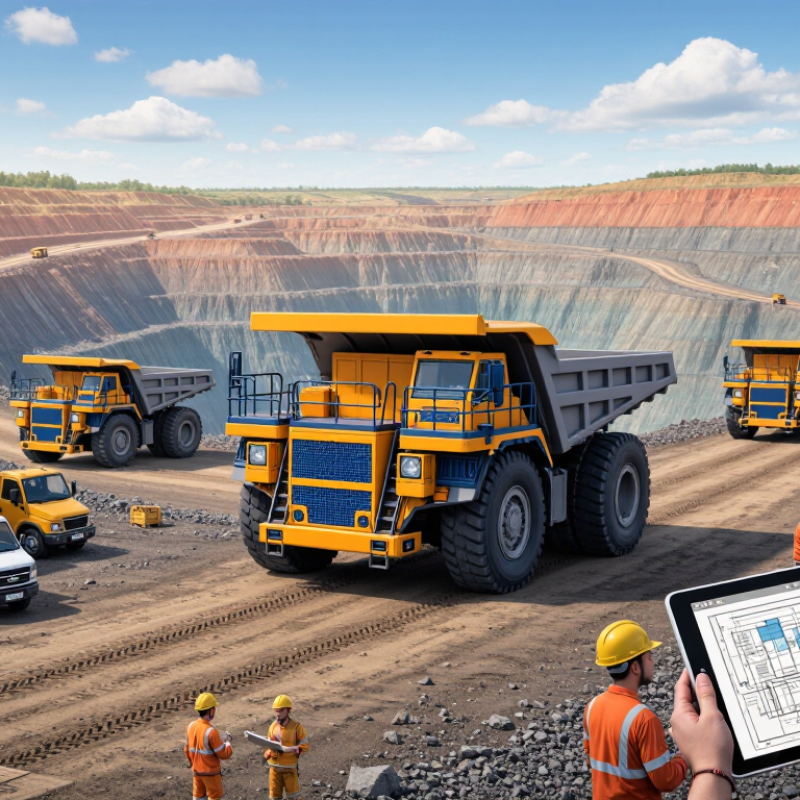
Define the Mine’s Operating Conditions and Haulage Requirements
10 Mining Truck Buying Tips for Global Buyers
Define the mine’s operating conditions before comparing truck prices. Record average payload, haul distance, road gradients, and daily cycles. A truck working on a flat, dry pit faces different demands from one climbing wet ramps. Measure road width carefully. A narrow bend can turn a suitable truck into a costly obstacle. Include altitude, heat, dust, rainfall, and seasonal ground changes. These details affect cooling, braking, traction, tire life, and operator visibility.
Buying tip: Match the truck to the complete haul route, not just the loading area. Calculate loaded and empty travel times. Check whether the target payload remains realistic on steep sections. Inspect the mine after rain, too. Conditions often look better during a dry site visit.
Use production records when available, but question weak data. A reported cycle time may exclude queueing, road repairs, or loading delays. Speak with operators and maintenance staff. They often notice frame stress, brake fade, and cabin vibration before a spreadsheet does. Request test evidence for the expected climate and elevation. Confirm service access, spare-part lead times, training, and diagnostic support before purchase. These factors influence availability as much as engine output. I have seen buyers focus on nominal capacity and overlook turning space. That mistake can reduce utilization for years. Recheck every assumption with a route survey and a realistic duty-cycle estimate.
Get in touch
Our mission is to develop cutting-edge clean energy technology and provide next-generation solar inverters.
Phone
(888) 598-9901
nep-usa@site_ea168614-f5f4-4298-bd5b-880b4cf8d99d
