- Spanish-Latin America
- Japanese-JP
- Chinese
- Europe
- Português-BR

Tech Support
(888) 598-9901
Hours: Mon-Fri 8AM-8PM EST
nep-usa@site_ea168614-f5f4-4298-bd5b-880b4cf8d99d
Top Pop Up Electrical Socket Manufacturers Worldwide
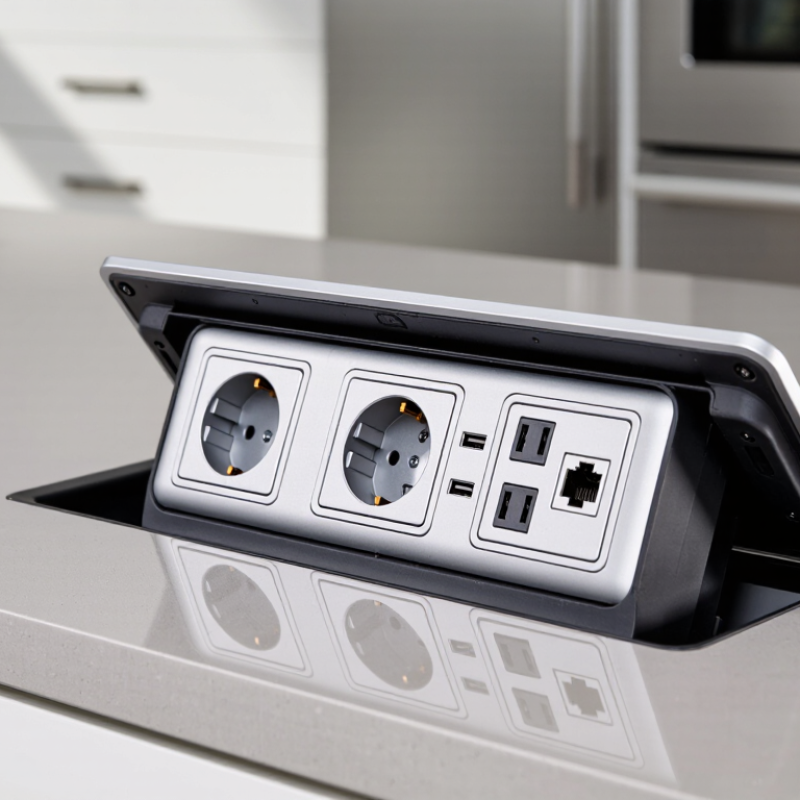
Pop Up Electrical Socket solutions are changing how power reaches modern workspaces, kitchens, hotels, and shared tables. Unlike fixed wall outlets, these units stay concealed until users need them. A gentle press can raise several sockets, USB ports, or data connections from a countertop. The mechanism must feel smooth, not loose or noisy. Small details matter.
Benoît Coquart, Chief Executive Officer of Legrand, has said, “Innovation must remain useful, reliable, and easy to live with.” This principle fits the Pop Up Electrical Socket market closely. Buyers now examine more than appearance. They compare load capacity, thermal protection, child safety features, waterproof ratings, cable management, and installation depth. A premium unit should also resist scratches, fingerprints, and repeated daily movement. It must disappear neatly when closed.
This guide reviews leading Pop Up Electrical Socket manufacturers worldwide. It considers product engineering, manufacturing consistency, certification practices, customization, warranty support, and real project experience. These factors reveal differences that glossy product images often hide. A socket may look elegant but operate poorly after thousands of cycles. That weakness deserves attention.
The market is not perfectly transparent. Some claims require closer verification. Therefore, readers should request test reports, material specifications, and installation guidance before choosing a supplier. Regional requirements can also vary. A reliable manufacturer explains these limits clearly instead of promising everything. Performance matters most. So does honest communication.
What Defines a Leading Pop-Up Electrical Socket Manufacturer
A leading pop-up electrical socket manufacturer begins with safety, not appearance. The International Energy Agency reports that buildings consume about 30% of global final energy. Therefore, efficient power management deserves attention, even inside a compact desk unit. A reliable manufacturer should design sockets around recognized standards, including IEC 60884-1 where applicable. It should also provide traceable test records, clear load ratings, and documented material controls. In practical installation work, loose terminals and poor cable routing remain common failure points. Small details matter.
Engineering depth separates a supplier from a true manufacturer. Each pop-up mechanism should withstand repeated opening cycles, accidental pressure, and uneven mounting surfaces. Thermal protection, child-safe shutters, grounding continuity, and flame-retardant housings need verification, not attractive promises. The ISO Survey 2023 recorded more than 1.5 million ISO 9001 certificates worldwide, showing how widely quality-management systems are used. Certification alone proves little. Auditable production controls matter more.
Experienced manufacturers also test products under realistic conditions. They should examine heat buildup behind crowded desks, moisture near kitchen counters, and cable stress during daily use. Independent laboratory testing strengthens credibility. So does transparent corrective-action reporting. No factory is flawless. Honest suppliers explain failure patterns and improve tooling, inspection, and worker training. Some product pages still hide important limits, such as maximum connected load or replacement requirements. That omission deserves scrutiny. A leading manufacturer makes technical information visible before purchase, not after installation.
Get in touch
Our mission is to develop cutting-edge clean energy technology and provide next-generation solar inverters.
Phone
(888) 598-9901
nep-usa@site_ea168614-f5f4-4298-bd5b-880b4cf8d99d
