- Spanish-Latin America
- Japanese-JP
- Chinese
- Europe
- Português-BR

Tech Support
(888) 598-9901
Hours: Mon-Fri 8AM-8PM EST
nep-usa@site_ea168614-f5f4-4298-bd5b-880b4cf8d99d
10 Integrated Solar LED Street Light Buying Tips
Buying an Integrated Solar Led Street Light involves more than comparing wattage or choosing the brightest product photo. The panel, battery, LED fixture, and controller must work together for the conditions at the installation site. A shaded road, a long winter night, and a busy parking area place very different demands on one system. Small details matter. Check the usable battery capacity, expected lighting hours, charging time, and whether the lamp can dim when activity is low. These figures help turn a sales claim into a practical comparison.
The ten buying tips in this guide focus on decisions that affect performance over time. They cover light output and distribution, panel placement, battery specifications, weather protection, controls, installation, warranty, and maintenance access. Ask suppliers how their stated runtime was tested, and review the product documentation rather than relying on a headline figure. A product sheet can look convincing, yet still leave important questions unanswered. That deserves a second look. Consider the site’s sun exposure and local weather, and confirm that the proposed system suits the intended road or walkway. No single specification proves a light will work well everywhere. Careful checks before purchase can reduce avoidable surprises and help you choose a system that meets real project needs.
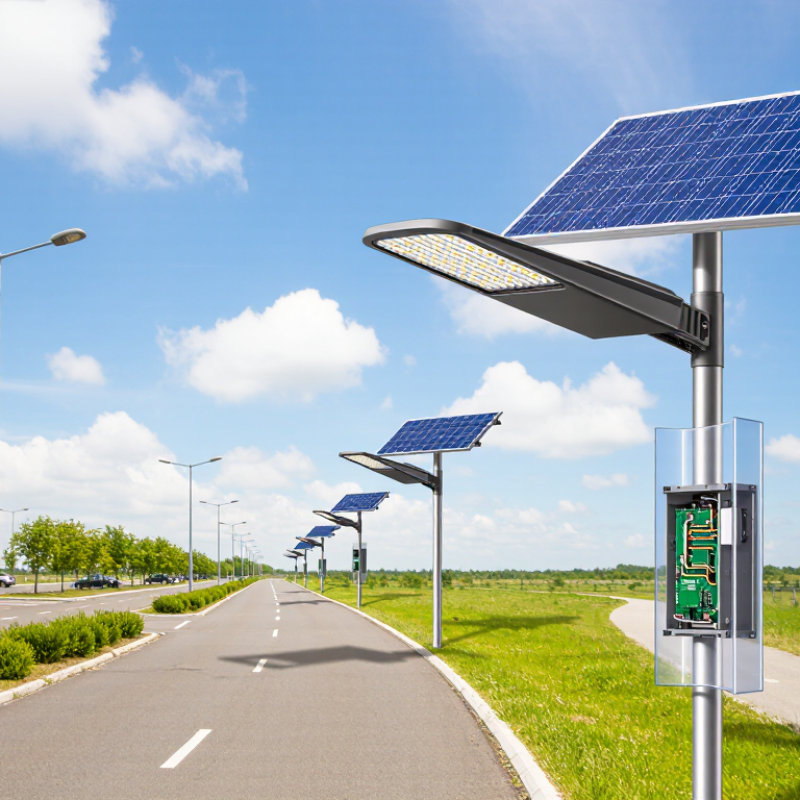
Match Roadway Class to IES RP-8 Illuminance and Uniformity Criteria
Match the roadway’s actual class before comparing solar street lights. IES RP-8 recommendations vary with roadway function, traffic, pedestrian activity, and the chosen calculation method. Do not copy an illuminance target from a different street type. Check the applicable RP-8 edition and identify whether the design uses illuminance or luminance criteria. Then review maintained average levels and the required uniformity measure. Uniformity matters. A bright patch beneath a pole cannot compensate for a dark crossing or sidewalk.
Tip: Request a photometric layout using the proposed pole spacing, mounting height, and luminaire optics. Compare calculated values with the criteria for the selected roadway class, including the specified uniformity ratio. Ask whether calculations account for light loss over time. For solar fixtures, also check that the expected operating schedule and battery capacity can sustain the designed output. A catalog lumen figure alone is not enough.
Field conditions can make a tidy calculation less tidy. Trees, wet pavement, driveways, and uneven pole setbacks may change what people see at night. I would verify critical locations on site, especially intersections and pedestrian crossings. One easy mistake is judging uniformity by standing directly under a fixture. Review the full calculation grid instead, and revise spacing or optics when dark gaps appear.
Get in touch
Our mission is to develop cutting-edge clean energy technology and provide next-generation solar inverters.
Phone
(888) 598-9901
nep-usa@site_ea168614-f5f4-4298-bd5b-880b4cf8d99d
