- Spanish-Latin America
- Japanese-JP
- Chinese
- Europe
- Português-BR

Tech Support
(888) 598-9901
Hours: Mon-Fri 8AM-8PM EST
nep-usa@site_ea168614-f5f4-4298-bd5b-880b4cf8d99d
How to Choose Electric Power Substations?
Choosing Electric Power Substations starts with the work the site must perform. A distribution station serving a growing neighborhood has different needs from a transmission hub. Define the voltage levels, expected load, and room for future expansion. Then examine transformer capacity, short-circuit ratings, protection systems, grounding, and access for maintenance. A narrow access road can complicate a transformer replacement years later. Small details matter.
Michael Faraday, a pioneer of electrical science, wrote, “Nothing is too wonderful to be true, if it be consistent with the laws of nature.” His words offer a useful reminder: base design choices on engineering evidence, not assumptions. Compare candidate sites using soil conditions, flood exposure, nearby loads, connection distance, and lifecycle costs. Review applicable technical standards with qualified power-system engineers, and confirm that equipment ratings match the utility’s requirements. No single layout fits every project.
The best choice balances reliability, safety, cost, and adaptability. A compact site may reduce land needs but limit later upgrades. An oversized design can waste money. Honestly, early forecasts are imperfect; load growth can surprise even experienced planners. Use documented assumptions, test more than one growth scenario, and record why key decisions were made. That record helps operators understand the trade-offs long after construction ends.
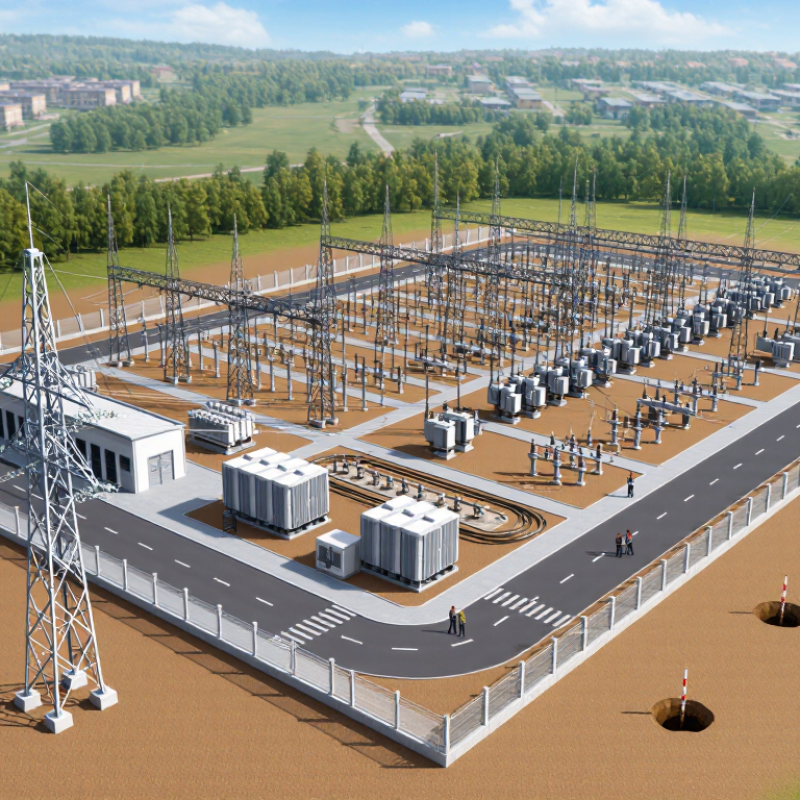
Assessing Present and Future Electricity Demand
Choosing a substation starts with a careful view of electricity demand today and tomorrow. Review interval-meter data, not just annual consumption. A factory’s Monday morning ramp or a neighborhood’s winter evening peak can shape equipment needs. The IEA’s Electricity 2024 report forecasts global electricity demand growth of about 3.4% annually from 2024 to 2026. It also estimates data-center electricity use could rise from 460 TWh in 2022 to over 1,000 TWh by 2026. These are global signals, not local forecasts. Peaks matter.
Build local scenarios across several time horizons. Include new housing, industrial projects, electric-vehicle charging, rooftop generation, and connections already awaiting service. Compare peak load, power factor, and seasonal patterns with transformer, busbar, and feeder capacity. Leave practical headroom, but avoid sizing solely for a dramatic worst case. The IEA’s 2023 Electricity Grids and Secure Energy Transitions report says about 80 million kilometres of grids may need to be added or refurbished by 2040. That broad estimate underlines the scale of planning, yet it cannot predict one site’s needs. Forecasts can look tidier than reality. Recheck assumptions against actual load data; even a well-built forecast can miss a delayed project or a faster-than-expected demand shift.
Get in touch
Our mission is to develop cutting-edge clean energy technology and provide next-generation solar inverters.
Phone
(888) 598-9901
nep-usa@site_ea168614-f5f4-4298-bd5b-880b4cf8d99d
