How to Choose Solar Power Panels in 2026
Choosing solar power panels in 2026 means looking beyond the largest number on a product label. A high-wattage panel may produce less than expected on a shaded roof or in a hot climate. Small details matter. Roof direction, usable space, and afternoon shadows all shape real-world output.
International Energy Agency Executive Director Fatih Birol called solar “the new king of electricity markets.” That broader shift makes careful equipment choices more important, not less. Compare panel efficiency, temperature performance, degradation rates, and product warranties. Check that the panels also work with the proposed inverter and mounting system. A warranty sounds reassuring, but its value depends on the terms and the company standing behind it.
Ask installers for estimates based on your actual roof, not a generic package. Look for clear assumptions about shade, annual production, and expected system losses. Request product datasheets, and compare the same measures across brands. A one-point efficiency difference may matter less than a better fit for your roof or a dependable local service team. It depends.
This guide explains how to assess those trade-offs and what questions to ask before signing a proposal. It cannot identify one panel as best for every home. That would be too tidy. Prices, products, and installation conditions change, and projections are still estimates. Treat them as estimates. Verify current specifications with manufacturers and have a qualified installer assess your site.
Assess Your Energy Use and Roof or Site Conditions
Before comparing solar panels, study how your household uses electricity. Review twelve months of utility bills, not just one recent statement. Note seasonal changes, such as air conditioning in July or electric heating in winter. List major loads, including a water heater, oven, and planned electric vehicle. Small details matter. A weekly laundry routine can shift demand into daylight hours, while evening cooking may rely more on stored or grid power. Estimate future needs carefully; a spreadsheet can look precise while still missing a new appliance or changing habits.
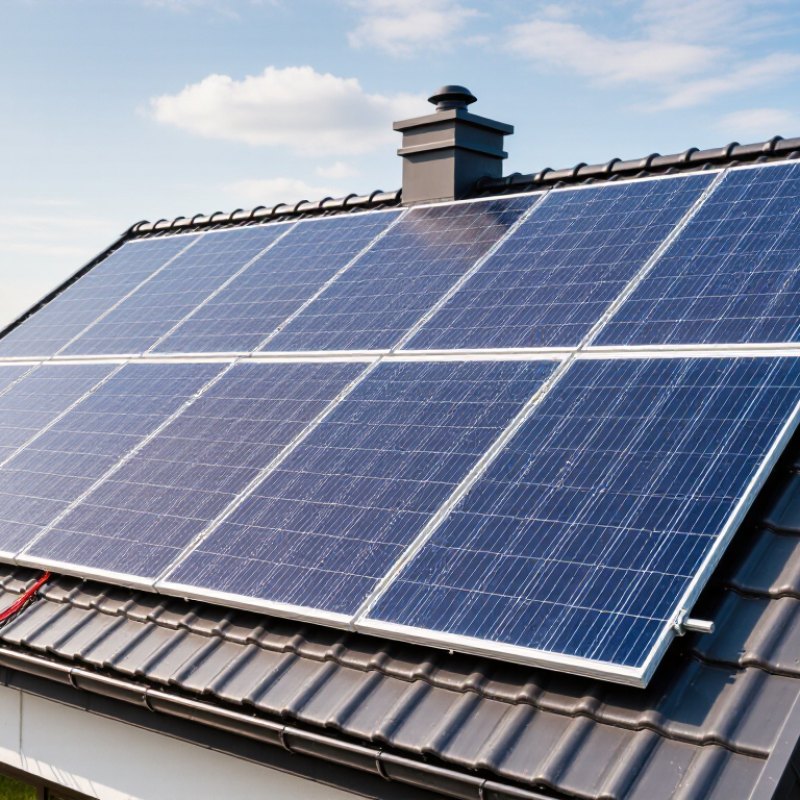
Next, inspect the roof or proposed installation site. Record usable area, direction, pitch, and any shade from trees, chimneys, or nearby buildings. A sunny roof at noon may still be shaded in the morning. Take photos across several hours, and consider how trees might grow. Check the roof’s condition before planning an installation; replacing old roofing later can add cost and disruption. If the roof has limited space, a ground-mounted system may be worth assessing, if the property allows it. Ask a qualified professional to review structural capacity and model expected output using local weather data. Estimates are not promises. I would still leave room for uncertainty. A modest design that fits real conditions is often more useful than a larger system built around optimistic assumptions.
Compare Solar Panel Types and Performance Ratings
How to Choose Solar Power Panels in 2026
Compare Solar Panel Types and Performance Ratings
Monocrystalline panels usually offer more power per square metre, making them useful on small roofs. Polycrystalline panels are less common today, while thin-film panels can suit lightweight or curved surfaces. Compare rated efficiency, but don’t treat it as a promise of real-world output. Shade, roof angle, and local heat all matter. A panel’s temperature coefficient shows how much its output may fall as it heats up.
Check degradation data, too. A 2012 review by NREL researchers, “Photovoltaic Degradation Rates—An Analytical Review,” found a median decline of about 0.5% per year across nearly 2,000 reported rates. That is a broad historical estimate, not a guarantee for every product. I’d compare independent test results and warranty terms, while remembering that warranties don’t predict every rooftop’s performance. Small details count.
Tips: Compare panels using the same test conditions. Check the temperature coefficient, rated power, and degradation terms. Ask for an estimate based on your roof’s shading and orientation, not just the panel’s headline efficiency. If two options look nearly identical, the choice can still feel uncertain; installation quality may matter more than a tiny rating difference.
How to Choose Solar Power Panels in 2026 — Compare Solar Panel Types and Performance Ratings
| Panel type |
Typical module efficiency |
Approx. power density at STC |
Typical temperature coefficient of power |
Key strengths |
Considerations |
Often a good fit for |
| Monocrystalline PERC |
About 19%–22% |
About 190–220 W/m² |
About −0.34% to −0.40% per °C |
Established cell design; widely available; good efficiency for many rooftop systems. |
Generally loses more output in high temperatures than newer premium cell designs. |
Homes and businesses seeking a widely available option with a balance of cost and output. |
| N-type TOPCon |
About 21%–23.5% |
About 210–235 W/m² |
About −0.29% to −0.35% per °C |
High efficiency; typically lower temperature-related power loss than PERC; available in monofacial and bifacial formats. |
Performance and price vary by module; bifacial gains depend on reflected light and installation conditions. |
Rooftops with limited space or projects where higher output per unit area is valuable. |
| Heterojunction (HJT) |
About 21%–24% |
About 210–240 W/m² |
About −0.24% to −0.30% per °C |
Often combines high efficiency with relatively strong performance in warm conditions; bifacial designs are available. |
Product availability and upfront pricing depend on the market; compare individual module specifications. |
Hot climates, space-constrained roofs, and projects prioritizing temperature performance. |
| Cadmium telluride (CdTe) thin-film |
About 17%–20% |
About 170–200 W/m² |
Often about −0.25% to −0.32% per °C |
Thin-film technology can perform well at high temperatures and under diffuse light; commonly used in large installations. |
Typically offers lower power density than high-efficiency crystalline silicon modules; product formats may be less suited to some rooftops. |
Large ground-mounted projects and sites where the technology’s temperature or diffuse-light characteristics are useful. |
| Copper indium gallium selenide (CIGS) thin-film |
About 15%–19% |
About 150–190 W/m² |
Often about −0.30% to −0.36% per °C |
Thin-film construction can suit some lightweight or specialized applications. |
Efficiency, product availability, and performance specifications vary considerably among products; check the module datasheet. |
Specialized installations where form factor or weight matters more than maximum output per area. |
Figures are representative ranges, not guarantees for every module. Efficiency ranges and temperature coefficients vary by product and test method. Power density is an approximate calculation from module efficiency under Standard Test Conditions (STC): 1,000 W/m² irradiance, 25°C cell temperature, and an air mass of 1.5. Compare the exact datasheet ratings, warranty terms, installed cost, and site conditions before choosing a system.
Evaluate Efficiency, Durability, Degradation, and Warranties
How to Choose Solar Power Panels in 2026
Compare efficiency, durability, degradation, and warranty terms together. A high-efficiency panel can produce more power in limited roof space, but lab records are not typical products. NREL’s Best Research-Cell Efficiency Chart shows why it matters to distinguish record-setting cells from commercial modules. Check the module’s certified power rating and temperature coefficient, too. A sunny roof can heat panels well above ambient temperature, reducing output.
Durability shows up in construction details and independent test results. Ask for evidence of testing under IEC 61215 and IEC 61730 standards, and check whether the warranty covers product defects, performance, or both. NREL researchers Jordan and Kurtz reported a median degradation rate near 0.5% per year in their review of photovoltaic studies. That is a useful benchmark, not a prediction for every installation. A 25-year performance warranty may promise a minimum output, but its exclusions and claim process matter. Read the actual terms.
Tips: Compare the warranted output at year 25, not just the starting wattage. Photograph the label and keep the sales documents. Check how salt, wind, snow, and shade affect your site. Small details are easy to miss. I’d also question any salesperson who treats a long warranty as proof that a panel will never fail.
Check System Compatibility, Pricing, and 2026 Incentives
When comparing solar panels in 2026, check the whole system, not just the panel rating. Ask an installer to confirm that the inverter matches the panels and that your electrical panel can handle the proposed equipment. If you may add a battery or an electric vehicle later, get that compatibility confirmed in writing.
Small details matter.
Pricing needs a fair baseline. Lawrence Berkeley National Laboratory’s Tracking the Sun 2024 report put the median installed price for U.S. residential systems installed in 2023 at about
$2.90 per watt, before incentives.
Treat that as a reference, not a 2026 price quote. Compare total cash prices, equipment, labor, warranties, and projected output. A low quote can hide exclusions.
I have learned that the cheapest option is not always the clearest one.
Incentives depend on where you live and when costs are incurred. In the United States, the federal residential clean-energy tax credit under Section 25D does not apply to new expenditures after December 31, 2025, under current federal law. Check IRS guidance, state programs, and utility rebates before signing; funding and eligibility can change.
Ask for the program name, application deadline, and expected payout in writing. Get it in writing.
Verify Product Certifications and Installer Qualifications
Before comparing panel output, verify the certificates for the exact model you plan to buy. A document for a similar-looking panel may not cover it. Check that the certification comes from a qualified testing body and confirm the listed model number. Look for relevant safety and performance standards, such as IEC 61730 or IEC 61215, where applicable. Requirements and accepted marks vary by location. Read the report, not just the logo.
Ask the installer for current credentials, proof of insurance, and any locally required license. Check that their experience includes rooftop solar and your roof type. Request references for completed jobs, then ask about practical details: who handles permits, how roof penetrations are sealed, and who responds if the system underperforms. Get the work scope, equipment list, schedule, and workmanship warranty in writing. Keep these separate from the panel maker’s product warranty.
A polished sales folder is not proof of careful work. It is easy to focus on certificates and overlook whether the installer has inspected shading, roof condition, and electrical capacity. Ask for those findings in writing. If an answer feels vague, pause and compare another proposal. I would not treat one missing document as automatic proof of poor quality, but I would ask for a clear explanation before signing.
How to Choose Solar Panels in 2026: Verify Certifications and Installer Qualifications
U.S. Bureau of Labor Statistics projections show faster-than-average growth for solar photovoltaic installer jobs. This industry outlook does not certify any particular installer: check local licensing requirements, relevant training, insurance, and references. For panels, ask for documentation of applicable product safety and performance certifications, such as IEC 61730 and IEC 61215.
Source: U.S. Bureau of Labor Statistics, Occupational Outlook Handbook (2023–2033 projections).