- Spanish-Latin America
- Japanese-JP
- Chinese
- Europe
- Português-BR

Tech Support
(888) 598-9901
Hours: Mon-Fri 8AM-8PM EST
nep-usa@site_ea168614-f5f4-4298-bd5b-880b4cf8d99d
How Long Can a Fridge Last Without Power 7 Best Tips?
When the electricity fails, a refrigerator becomes a quiet food-safety test. The answer to “how long can a fridge last without power” depends on temperature, door openings, and how full the appliance is. An unopened refrigerator generally keeps food cold for about four hours. A full freezer may hold its temperature for nearly 48 hours, while a half-full freezer may last about 24 hours.
Meredith Carothers, a food safety specialist with the USDA Food Safety and Inspection Service, offers a practical warning: “When in doubt, throw it out.” It sounds simple. It is not always easy.
This guide introduces seven useful tips for handling a powerless fridge. You will learn how to keep the doors closed, check food temperatures, protect frozen items, and identify dangerous spoilage signs. A refrigerator thermometer can provide stronger evidence than smell or appearance. Food may look normal and still contain harmful bacteria.
Think about a warm kitchen, melted ice on the freezer floor, and milk sitting above 40°F. These details matter. Do not taste food to test its safety. That shortcut can create unnecessary risk.
There is no perfect answer for every outage. A newly opened refrigerator behaves differently from a packed one. Some advice also feels overly cautious, especially when expensive food is involved. Still, careful decisions protect more than groceries. They protect your household. Keep a cooler, ice packs, and a thermometer ready before the next outage begins.
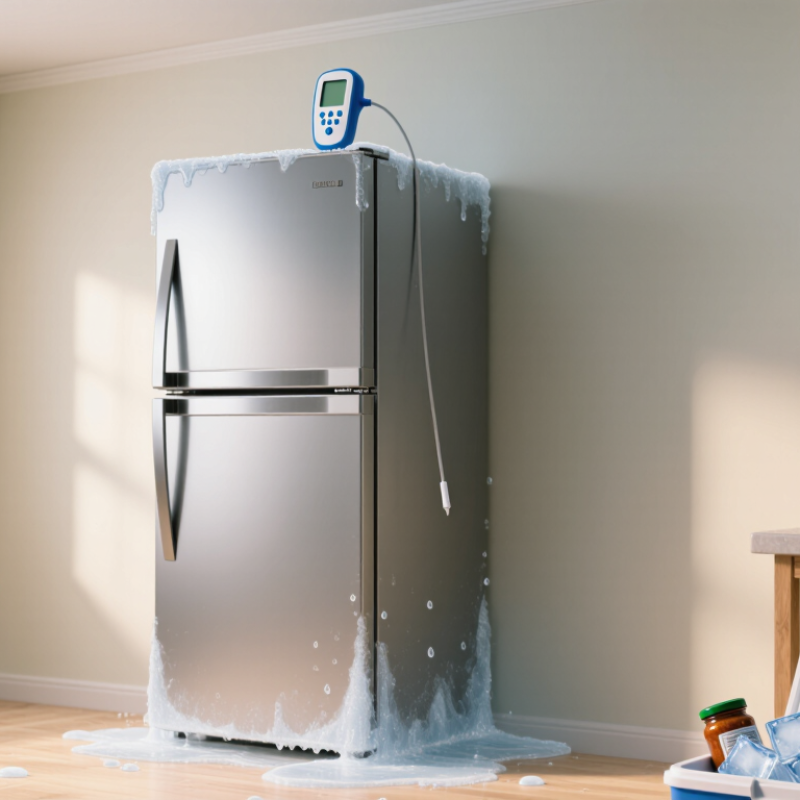
How Long a Fridge Can Stay Cold Without Electricity
A refrigerator can usually stay cold for about four hours without electricity, if the door remains closed. This estimate assumes a normally working, properly loaded appliance. A full freezer may hold a safe temperature for about 48 hours. A half-full freezer usually lasts around 24 hours. These times are practical guidance, not guarantees. Room temperature, insulation, food volume, and door openings can change everything.
Keep the door shut. Check the internal temperature with a food thermometer when power returns. Perishable food should remain at or below 40°F (4°C). If it has stayed warmer for over two hours, discard it, even if it looks or smells normal. During very hot weather, the safer limit may be one hour. I once trusted a cool container by touch, but that was a poor test. Cold hands cannot measure food safety.
Tips: Freeze water containers before outages and place them inside the refrigerator or freezer. Grouping food together helps it stay colder longer. Move dairy, meat, and leftovers into an insulated cooler with ice when needed. Avoid opening the freezer repeatedly to “check” the food. Keep a thermometer inside, since appearance can mislead you. Record the outage time on paper. That small detail helps you judge the risk later. If uncertain, throw it out. Waste is frustrating, but illness is worse.
Get in touch
Our mission is to develop cutting-edge clean energy technology and provide next-generation solar inverters.
Phone
(888) 598-9901
nep-usa@site_ea168614-f5f4-4298-bd5b-880b4cf8d99d
