How to Compare Electricity Rates for Better Savings?
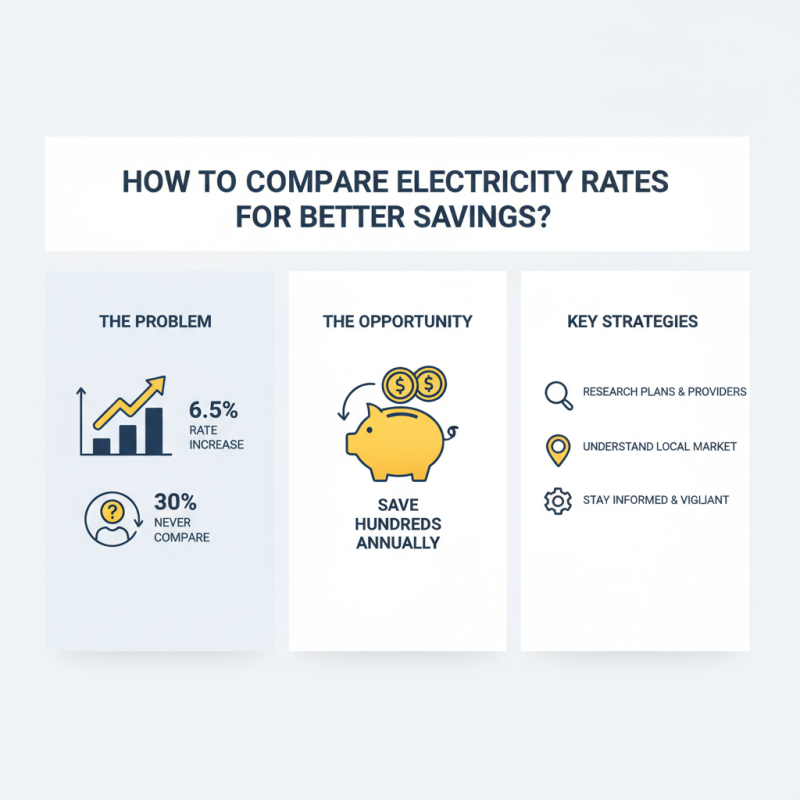
Electricity rates are a crucial aspect of household budgeting. In 2022, the U.S. Energy Information Administration reported that average electricity rates rose by 6.5% across the nation. This highlights the need for consumers to carefully compare rates to achieve better savings.
Many households overlook the importance of evaluating their electricity plans. Research indicates that nearly 30% of consumers never shop for better electricity rates. This can lead to significant overspending. By taking the time to explore different options, individuals can potentially save hundreds of dollars each year.
Understanding local market conditions is essential. Different providers may offer varying rates based on energy sources and demand. Some regions have experienced fluctuations in electricity rates due to factors like weather and supply chain issues. Therefore, consumers must remain vigilant and informed. Taking control of your electricity rates may require effort, but it is a worthy investment for long-term savings.
Understanding Electricity Rates: Key Terminology and Concepts
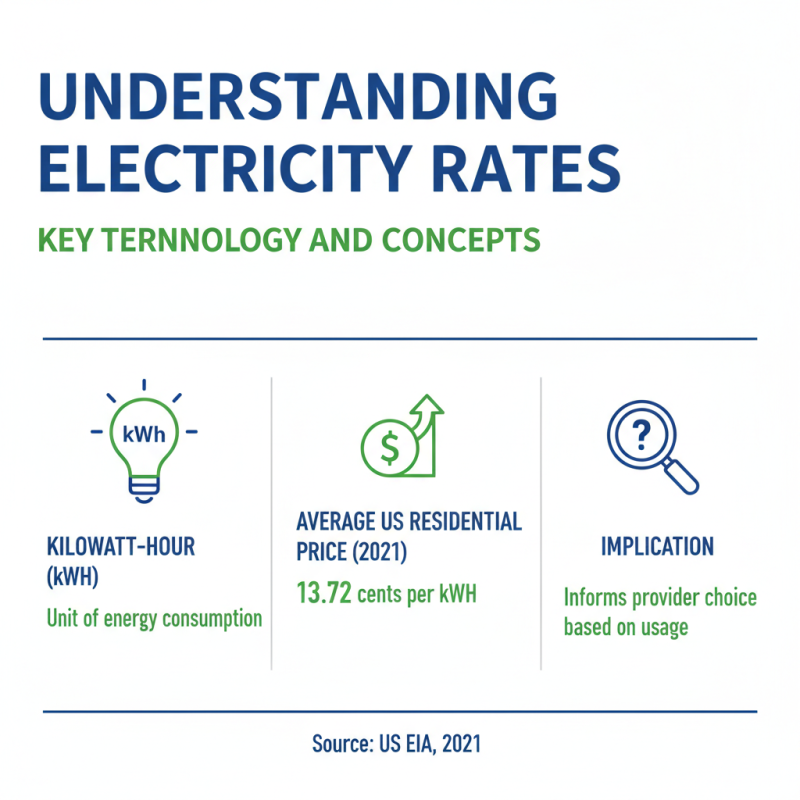
When comparing electricity rates, understanding the terminology is vital. A few key concepts include "kilowatt-hour" (kWh), which measures energy consumption. In 2021, the average residential price was about 13.72 cents per kWh in the U.S., reflecting how much consumers pay for their usage. Knowing this can guide your choice in providers.
"Rate structures" are another important aspect. Flat rates, tiered rates, and time-of-use rates have different implications for costs. A recent study suggested that around 70% of consumers are on flat rates. However, tiered and time-of-use structures may offer better savings for high-consumption households. This shows that consumers may often settle for simplicity over potential savings.
Lastly, it’s essential to consider hidden fees. Some plans may seem cheaper at first glance but include additional costs. Research suggests that about 30% of consumers do not thoroughly read their contracts, leading to confusion and higher bills. Being aware of these fees can prevent unexpected expenses. Understanding these terms and rates can empower consumers in their electricity plan choices.
Identifying Your Electricity Needs: Usage Patterns and Preferences
Understanding your electricity needs is essential for making informed decisions. Start by analyzing your usage patterns. Examine your monthly bills to identify trends. Do you use more energy during peak hours? Or does your consumption rise significantly in winter? Recognizing these patterns will help you assess your actual needs against available rates.
Consider your preferences too. Some may prefer renewable sources, while others focus on cost. Think about how many devices you use and their energy efficiency. Are you running a home office? This can increase overall usage. Reflect on how lifestyle changes, like working from home, have impacted your consumption. This self-assessment is crucial when comparing electricity rates.
Awareness of these factors leads to better savings. Explore options that align with both your usage and preferences. Finding the right balance can be challenging but rewarding. Always stay open to reevaluating your choices as your needs change over time.
Comparing Electricity Rates for Better Savings
This chart displays the average monthly electricity usage patterns and associated costs for different household sizes. Analyzing these patterns can help identify savings opportunities when comparing electricity rates.
Researching Available Plans: Comparing Providers and Offers
When researching available electricity plans, it is essential to compare different providers and their offers. Many companies provide varied rates and incentives. Understanding these differences can empower consumers to make informed choices. Don’t settle for the first offer you see. Take the time to investigate multiple options.
Look for common features in plans. Some may include fixed rates, while others offer variable rates. Take note of any additional fees. In many cases, low rates come with hidden costs. Always read the fine print. A plan may appear attractive but could have costly penalties for early termination.
Use online comparison tools to gain insights into local providers. These can help you visualize the options available. However, be cautious; not all tools are equally reliable. Double-check the information from multiple sources. This extra step can prevent costly mistakes. Establish a priority list based on your usage patterns. Think critically about what matters most to you. Balancing savings with service quality is often not straightforward.
Utilizing Online Tools: Calculators and Rate Comparison Websites
When searching for the best electricity rates, online tools play a crucial role. Rate comparison websites and calculators can simplify the process. A report by the Energy Information Administration (EIA) states that up to 20% of consumers spend more than necessary on their electricity bills. This is where accurate comparisons become essential.
Using online calculators, users can input their usage data and get tailored results. For instance, if a household's average monthly usage is 1,000 kWh, these tools highlight plans that align with their consumption. Some calculators can compare up to five different providers at once. This helps in understanding potential savings quickly.
However, not all online resources offer transparent data. Some websites may choose selected providers or outdated rates. This can mislead users, resulting in poor decisions. Consumers should also check the fine print of each plan, considering factors like contract length and hidden fees. Being informed means digging deeper and verifying information from multiple sources.
Evaluating Additional Fees: Hidden Costs in Electricity Bills
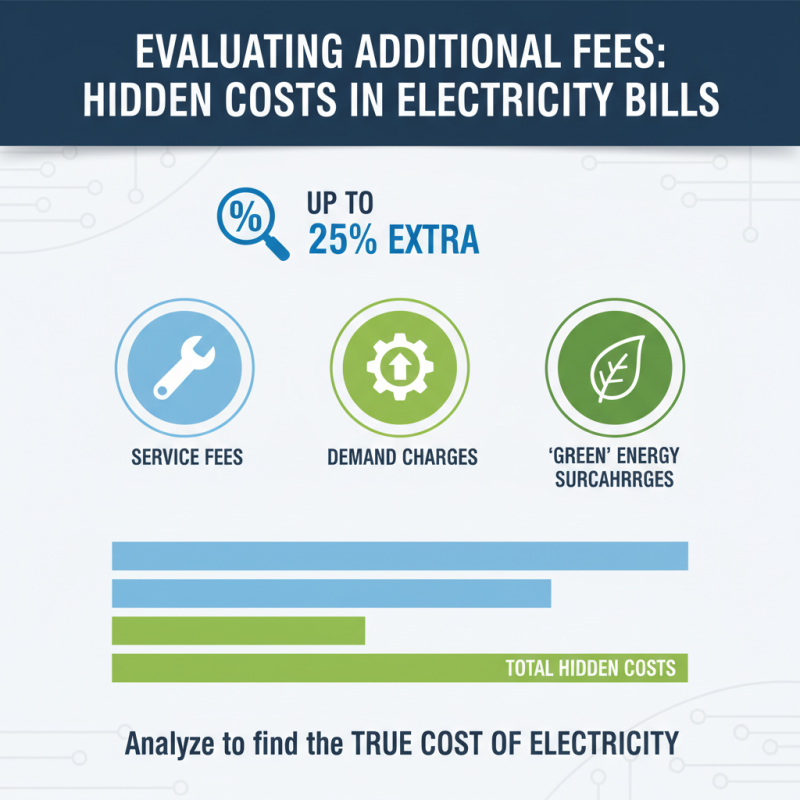
When comparing electricity rates, many consumers overlook additional fees that can inflate monthly costs. These hidden charges can include service fees, demand charges, and "green" energy surcharges. Research shows that these extra expenses can account for up to 25% of a customer's bill. Analyzing these fees is crucial for determining the true cost of electricity.
Consider a scenario where a low rate is advertised. If the plan includes high additional fees, customers may end up paying more than with a higher-rate provider. A study from the Energy Information Administration reveals that more than half of U.S. households unknowingly pay extra fees. This oversight can lead to substantial, unnecessary expenses over time.
To effectively minimize costs, review your electricity bill regularly.
**Tip:** Identify all listed fees and understand their purpose.
Being informed allows you to make better comparisons. Additionally, use online tools to compare multiple providers.
**Tip:** Explore plans that have transparent pricing structures.
Finding a provider with fewer hidden fees can lead to considerable savings.