- Spanish-Latin America
- Japanese-JP
- Chinese
- Europe
- Português-BR

Tech Support
(888) 598-9901
Hours: Mon-Fri 8AM-8PM EST
nep-usa@site_ea168614-f5f4-4298-bd5b-880b4cf8d99d
How to Choose the Right Electrical Relays?
Choosing the right relay begins with the actual job it must perform. A compact relay switching a control signal faces different demands from one driving a motor, heater, or lighting circuit. Check the load’s voltage, steady current, inrush current, switching frequency, and expected service life. Then consider the coil voltage, contact arrangement, insulation requirements, mounting space, and operating environment. A relay that fits the socket may still be wrong for the load.
For Relays Electrical selection, ratings deserve careful attention. An AC rating does not automatically apply to DC, and resistive-load ratings may not suit inductive equipment. Inspect the datasheet for the relevant load category, electrical life, and coil power. Picture a relay inside a warm control cabinet, switching a motor several times each hour. Heat and frequent arcing can shorten contact life. Small details matter.
A practical rule for relay application engineers is: “Match the relay to the load’s real switching conditions, not just its nominal current.” This is an editorial design principle, not a quotation attributed to a named expert. If a project needs a sourced expert quotation, verify one against a reliable publication or manufacturer document before using it. Selection is rarely perfect from a single specification sheet; testing under representative conditions can reveal assumptions worth revisiting. A careful choice balances safety, performance, availability, and maintenance.
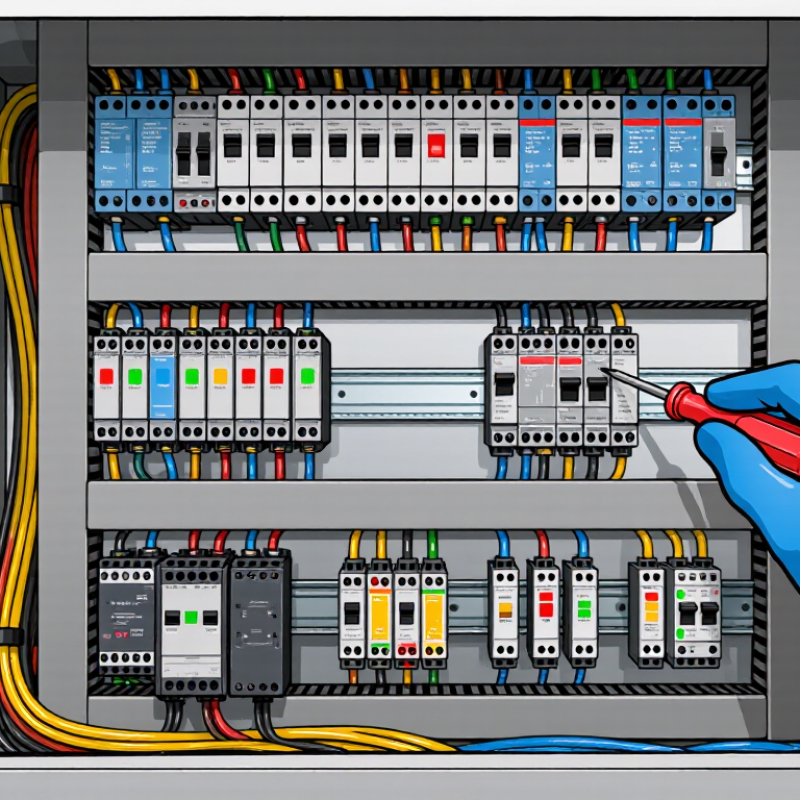
Define the Load: 24 VDC or 230 VAC, Current, and Inrush
A relay’s coil voltage is not its load rating. A 24 VDC control circuit may switch a 230 VAC load, but only if the contacts are rated for that voltage and load type. Record the supply voltage, steady current, and load characteristics before choosing. A heater draws fairly steady current; a motor or capacitive power supply can pull a sharp startup surge. Peak matters. The U.S. Department of Energy’s Improving Motor and Drive System Performance sourcebook notes that induction-motor starting current can reach roughly five to seven times full-load current, depending on the motor. That brief surge can weld undersized contacts, even when the running current looks safe.
Tips: Check the relay’s DC and AC ratings separately; they are not interchangeable. Compare the load’s measured or specified inrush with the relay’s making-current rating and electrical endurance data. IEC 60947-4-1 defines utilization categories for contactors, including AC-3 for starting and switching off running squirrel-cage motors. For a small motor, that category is more informative than a generic resistive-load rating. Not just watts. If the datasheet omits inrush capacity, seek clarification rather than assuming a generous margin. Real installations can be messier than the rating table suggests.
Get in touch
Our mission is to develop cutting-edge clean energy technology and provide next-generation solar inverters.
Phone
(888) 598-9901
nep-usa@site_ea168614-f5f4-4298-bd5b-880b4cf8d99d
