- Spanish-Latin America
- Japanese-JP
- Chinese
- Europe
- Português-BR

Tech Support
(888) 598-9901
Hours: Mon-Fri 8AM-8PM EST
nep-usa@site_ea168614-f5f4-4298-bd5b-880b4cf8d99d
How to Choose the Right Air Conditioner Contactor?
Choosing the right Air Conditioner Contactor affects cooling performance, electrical safety, and long-term equipment reliability. This small switching device controls power to the compressor, condenser fan, or other high-load components. A poor match may cause buzzing, overheating, welded contacts, or repeated breaker trips.
This guide explains how to evaluate contactor voltage, current rating, poles, coil specifications, and enclosure quality. Start with the air conditioner’s nameplate, wiring diagram, and existing contactor. Do not rely on appearance alone. Two contactors can look identical while using different coil voltages or contact capacities. That mistake is common.
Reliable selection requires practical judgment. A contactor should handle the motor’s operating load and its starting demands. Check the rated-load amperage, voltage, frequency, and duty classification. Confirm whether the control circuit uses 24V AC, 120V AC, or another voltage. A licensed HVAC technician can verify these details with a multimeter and manufacturer documentation.
Small details matter.
For example, a pitted contact surface may indicate excessive cycling, loose wiring, or an undersized component. Replacing only the visible part might not solve the real problem. This is where careful inspection becomes more valuable than a quick purchase. The following sections compare common specifications, explain compatibility concerns, and outline safer replacement practices. Some older systems have incomplete labels, so professional testing remains essential. A dependable Air Conditioner Contactor is not simply the cheapest option; it is the one correctly matched to the system and installed according to recognized electrical and manufacturer requirements.
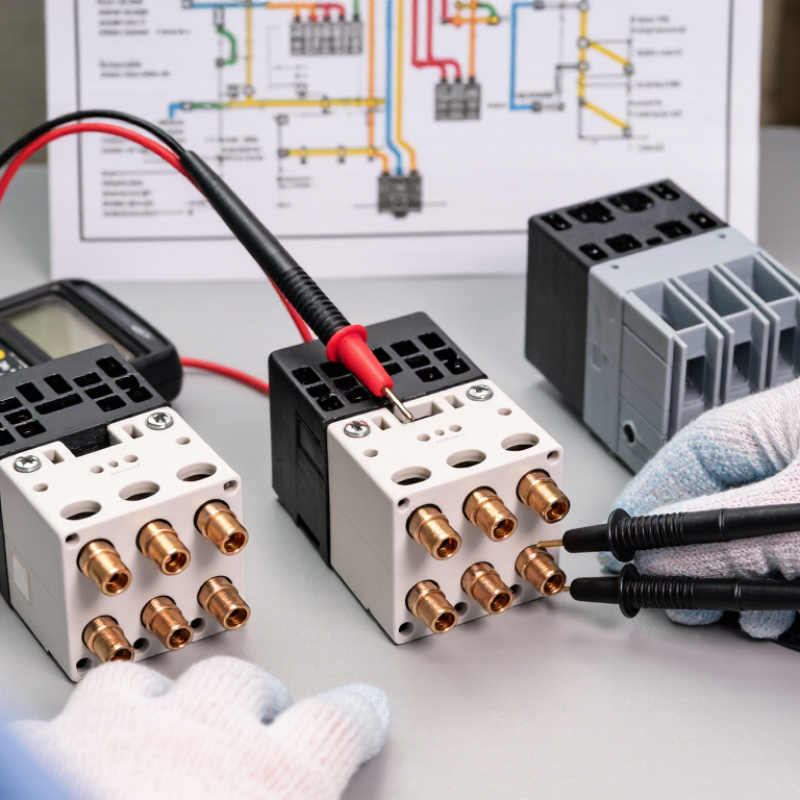
Identify the Load: 1-Phase Units Use 2 Poles; 3-Phase Units Use 3
How to Choose the Right Air Conditioner Contactor?
Identify the Load: 1-Phase Units Use 2 Poles; 3-Phase Units Use 3
Choosing an air conditioner contactor starts with the power arrangement. A single-phase unit normally needs a two-pole contactor. It switches both live conductors together. A three-phase unit requires three poles. Each phase must open and close simultaneously. Using two poles on a three-phase compressor leaves one phase energized, creating a serious service hazard and possible motor damage.
Check the equipment nameplate before selecting the contactor. Compare rated voltage, running current, locked-rotor current, coil voltage, and frequency. The contactor’s operational rating should match the compressor and fan load, not only the circuit breaker. IEC 60947-4-1 provides requirements for electromechanical contactors. The International Energy Agency reports that global space-cooling electricity demand could more than triple by 2050. Reliable switching will matter more as cooling equipment use expands. Still, a larger contactor is not automatically better. Oversizing can increase cost and may create poor terminal connections.
Tips: Count the supply conductors first. Confirm the pole count visually. Then verify the coil marking. Select a contactor with suitable utilization ratings and an adequate short-circuit rating. Leave room for doubt. A worn terminal, weak connection, or incorrect coil voltage can defeat an otherwise correct selection. Ask a qualified technician to verify the installation against local electrical requirements.
Get in touch
Our mission is to develop cutting-edge clean energy technology and provide next-generation solar inverters.
Phone
(888) 598-9901
nep-usa@site_ea168614-f5f4-4298-bd5b-880b4cf8d99d
