- Spanish-Latin America
- Japanese-JP
- Chinese
- Europe
- Português-BR

Tech Support
(888) 598-9901
Hours: Mon-Fri 8AM-8PM EST
nep-usa@site_ea168614-f5f4-4298-bd5b-880b4cf8d99d
How to Choose the Best Commercial EV Charger?
Choosing the best Commercial Ev Charger is not a simple matter of comparing charging speed and purchase prices. Fleet managers must examine daily mileage, vehicle battery capacity, parking duration, electrical supply, and future expansion plans. A delivery depot may need several 22-kilowatt AC units, while a highway service site may require powerful DC fast chargers. The right choice depends on actual operations, not impressive specifications.
Claas Bracklo, a longtime CharIN e-mobility expert, has stressed that “interoperability is the key to successful e-mobility.” That principle matters in commercial charging. A charger should communicate reliably with different vehicles, payment systems, energy platforms, and management software. Check connector compatibility, load balancing, remote monitoring, weather protection, and maintenance response times. Small details matter. A frozen screen at 6 a.m. can delay an entire route.
Experience also reveals an uncomfortable truth: the cheapest charger may become the most expensive asset. Poor uptime, difficult software, and limited technical support can create hidden operating costs. However, the most expensive model is not automatically better. Buyers should request documented uptime data, warranty terms, installation requirements, and references from similar businesses.
Safety and compliance must remain central. Qualified electricians should assess the site before installation. Energy demand should be measured carefully. Plans should also allow room for future vehicles, even when budgets feel tight today. There is no perfect system. A careful buyer still reviews usage data after installation and adjusts the network when real-world behavior differs from the original plan.
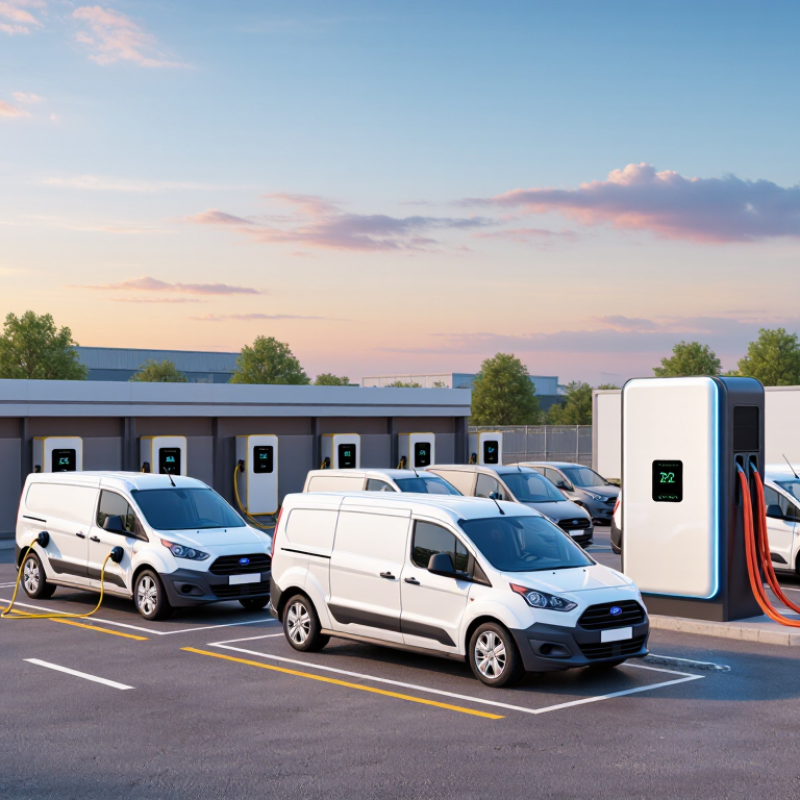
Define Your Commercial Charging Needs and Fleet Requirements
Choosing the best commercial EV charger starts with your fleet, not the charger cabinet. Record vehicle types, daily mileage, battery capacity, parking duration, and return times. A delivery van parked for eight hours needs a different solution from a taxi stopping for twenty minutes.
The International Energy Agency reported over 14 million electric cars sold globally in 2023. Its Global EV Outlook 2024 also estimates that public charging capacity may need to expand sixfold by 2035. These figures signal growing demand, but they do not define your site. Review electricity capacity, shift schedules, route lengths, and seasonal usage. A 150 kW charger may look powerful, yet it can create expensive demand peaks. Slower charging may work better when vehicles remain overnight.
Tips: Build a one-week charging profile before requesting quotes. Measure arrival state of charge, departure targets, and missed charging windows. Include future vehicles, but avoid paying for capacity you cannot use. The U.S. Department of Energy’s Alternative Fuels Data Center recommends evaluating charging levels, connector compatibility, and electrical requirements together. That sounds simple. It is often overlooked.
Leave room for operational mistakes. Drivers may return late. Batteries may arrive nearly empty. Software data may also be incomplete. Choose equipment that supports load management, access control, maintenance alerts, and clear energy reporting. A practical pilot with several vehicles can reveal problems that spreadsheets miss. Test it during the busiest week, not the easiest one.
How to Choose the Best Commercial EV Charger? - Define Your Commercial Charging Needs and Fleet Requirements
| Planning Dimension | Key Question | Typical Requirement | Recommended Charger Configuration | Selection Consideration |
|---|---|---|---|---|
| Fleet Size | How many vehicles need regular charging? | 1–10 vehicles for a small commercial fleet | AC chargers with multiple charging ports and basic load sharing | Allow capacity for fleet growth and temporary vehicle replacement. |
| Daily Energy Demand | How much energy does each vehicle typically consume per day? | Approximately 30–120 kWh per vehicle per day, depending on vehicle type and route | Size the system using daily kWh demand, charging losses, and available charging hours | Use actual route data where possible instead of relying only on battery capacity. |
| Vehicle Dwell Time | How long are vehicles parked at the charging location? | 8–12 hours overnight or 1–4 hours between shifts | AC charging for long dwell periods; DC charging for short turnaround times | A longer dwell time can reduce required charger power and installation cost. |
| Charging Speed | How quickly must the vehicle return to service? | Overnight charging or rapid top-up during scheduled breaks | Typically 7–22 kW AC for scheduled charging; approximately 50–150 kW DC for faster fleet turnaround | The vehicle’s maximum charging rate may be lower than the charger’s rated output. |
| Vehicle Type | What types of electric vehicles will be charged? | Passenger cars, vans, light commercial vehicles, buses, or trucks | Select power, cable reach, connector type, and physical protection based on vehicle class | Larger vehicles may require longer cables, higher power, and wider parking bays. |
| Electrical Capacity | Can the existing electrical service support the planned chargers? | Capacity must cover simultaneous charging, building loads, and future expansion | Use dynamic load management, scheduled charging, or staged electrical upgrades | A site electrical assessment should be completed before final equipment selection. |
| Charging Standards | Which connectors and electrical standards are required? | Depends on vehicle models, country, and local electrical regulations | Provide compatible AC and/or DC connectors with suitable voltage and current ratings | Confirm compatibility with every vehicle currently in the fleet and planned additions. |
| Operating Environment | Will the charger be installed indoors or outdoors? | Exposure to rain, dust, temperature changes, impact, or corrosive conditions | Outdoor-rated enclosure, suitable ingress protection, cable management, and impact protection | Check local conditions and installation requirements rather than selecting by power alone. |
| Load Management | How many vehicles may charge at the same time? | Multiple vehicles with varying departure times and energy requirements | Dynamic power allocation, charging priorities, and time-based scheduling | Smart load management can reduce peak demand and improve available site capacity. |
| Software and Reporting | How will charging sessions and energy costs be monitored? | Need for user access control, energy records, alerts, and fleet reports | Networked charging with session history, remote monitoring, and exportable usage data | Verify data ownership, connectivity options, software fees, and system integration needs. |
| Reliability and Maintenance | What level of uptime is required for daily operations? | High availability for vehicles with fixed routes or multiple shifts | Remote diagnostics, replaceable components, clear maintenance procedures, and service support | Evaluate total downtime risk, not only the initial equipment price. |
| Future Expansion | Will the fleet or energy demand increase? | Additional vehicles, longer routes, or increased daily charging sessions | Modular charger layout, spare electrical capacity, conduit planning, and scalable software | Designing for expansion during the initial project can reduce future construction work. |
Get in touch
Our mission is to develop cutting-edge clean energy technology and provide next-generation solar inverters.
Phone
(888) 598-9901
nep-usa@site_ea168614-f5f4-4298-bd5b-880b4cf8d99d
