- Spanish-Latin America
- Japanese-JP
- Chinese
- Europe
- Português-BR

Tech Support
(888) 598-9901
Hours: Mon-Fri 8AM-8PM EST
nep-usa@site_ea168614-f5f4-4298-bd5b-880b4cf8d99d
How to Choose a Power Bank Rental Station in 2026?
Choosing a Power Bank Rental Station in 2026 requires more than checking its charging speed. Location, battery condition, payment security, and return convenience directly affect customer trust. A station beside a café entrance may outperform one hidden near an elevator, even with identical hardware.
Grand View Research valued the global power bank market at approximately $13.31 billion in 2023. It also forecasts strong growth through 2030. Meanwhile, Juniper Research continues to identify mobile charging access as an important convenience service in public venues. These figures show demand, but they do not guarantee a profitable station. Poor maintenance can quickly damage user confidence.
Jitesh Ubrani, research manager at IDC, has offered a useful principle for connected accessories: “Convenience must be measured in the user’s everyday routine.” That idea matters here. Look for visible battery-level indicators, clear rental pricing, contactless payment, and simple return instructions. Ask how often batteries are inspected and replaced. Ask what happens when a device fails.
No station is perfect. Some networks promise broad coverage but provide limited support after midnight. Others offer low prices but use aging batteries. A careful buyer should compare uptime records, warranty terms, charging standards, and local service response. The strongest choice is not always the cheapest one. It is the Power Bank Rental Station that works reliably when a phone reaches five percent.
What Is a Power Bank Rental Station and How Does It Work?
How to Choose a Power Bank Rental Station in 2026?
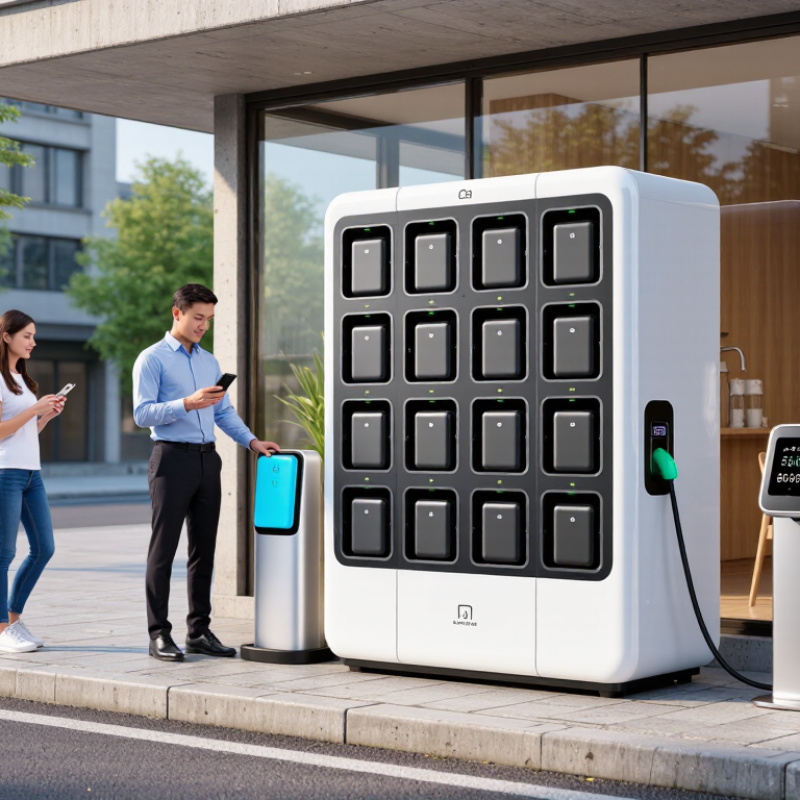
A power bank rental station is a self-service kiosk for temporary battery access. It stores charged power banks in individual slots. Users scan a QR code, confirm payment, and release one unit. The device usually includes built-in cables for common charging ports. Returning it means inserting the power bank into any compatible station. The kiosk records the return automatically.
The need is growing.
Grand View Research valued the global portable power bank market at about USD 13.7 billion in 2023. It also forecasts steady growth through 2030. GSMA’s Mobile Economy 2025 reports 4.7 billion mobile internet users in 2024. More connected users create more moments when a dead battery becomes inconvenient. Sometimes, urgently so.
When choosing a station in 2026, check cable condition, charging speed, rental pricing, and return coverage. A bright screen is not proof of reliable service. Test whether the power bank feels swollen, cracked, or unusually warm. Avoid using damaged equipment. Confirm the station shows the rental timer and return rules clearly. Wide return coverage matters more than a low starting fee. A station near transport, restaurants, or event entrances is usually more practical. However, published availability can mislead when several slots are empty. I would inspect the last-return location before renting, especially during travel. Reports provide useful market direction, but local performance still needs verification.
Get in touch
Our mission is to develop cutting-edge clean energy technology and provide next-generation solar inverters.
Phone
(888) 598-9901
nep-usa@site_ea168614-f5f4-4298-bd5b-880b4cf8d99d
