- Spanish-Latin America
- Japanese-JP
- Chinese
- Europe
- Português-BR

Tech Support
(888) 598-9901
Hours: Mon-Fri 8AM-8PM EST
nep-usa@site_ea168614-f5f4-4298-bd5b-880b4cf8d99d
How to Choose a Home Audio Intercom System in 2026?
Choosing a Home Audio Intercom System in 2026 is no longer only about hearing a door chime. It is about clear communication, dependable access, privacy, and daily convenience. A parent may need to call upstairs without shouting. A caregiver may need a louder, simpler room station. Someone working remotely may want quiet, hands-free communication near the entrance.
Audio researcher Dr. Floyd Toole offers a useful principle: “The room is part of the sound reproduction system.” His point matters here. A compact speaker can sound clear in a hallway but weak inside a tiled kitchen. Background noise, wall materials, microphone placement, and echo all affect real performance. The strongest system on paper may disappoint at home.
This guide examines wired, wireless, and hybrid options for 2026. It considers microphone pickup, speaker volume, latency, power backup, network stability, installation effort, and compatibility with smart-home platforms. Security also deserves careful attention. Look for encrypted communication, trusted updates, strong account controls, and local operation when the internet fails.
Small details matter.
A system should remain understandable when someone is cooking, vacuuming, or standing several rooms away. It should not force every family member to manage a complicated app. Yet convenience can create dependence on cloud services, and that weakness is easy to overlook. No product fits every home. The right choice depends on floor plan, household habits, hearing needs, budget, and tolerance for maintenance. This practical comparison may not remove every uncertainty, but it can make the decision more informed and less expensive.
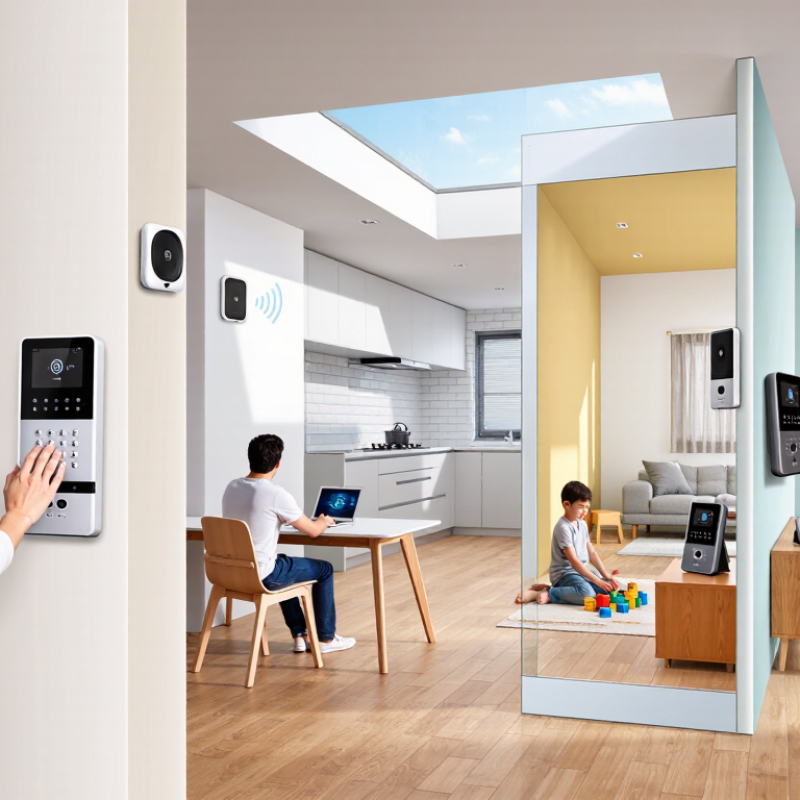
Define Household Needs: Rooms, Users, Range, and Privacy Zones
Choosing a home audio intercom system starts with the household, not the device. Count rooms, users, and daily call patterns. A kitchen-to-bedroom link needs different coverage than a whole-floor system. Walk through the home and mark thick walls, stairwells, metal doors, and outdoor spaces. Advertised range often assumes open air. Real homes are less cooperative.
Deloitte’s 2024 Connected Consumer Survey reported that 77% of U.S. consumers owned at least one smart-home product. That figure suggests connected living is common, but it does not define your needs. A family with three bedrooms may need five communication points. An older resident may need louder audio and simple controls. Children may need limited access to private rooms. Guests may require a separate call path.
Create privacy zones before comparing specifications. Keep bedrooms, bathrooms, home offices, and rental areas outside general announcements when possible. Decide who can call whom, and whether conversations remain inside the home network. The National Institute of Standards and Technology recommends clear access control for connected devices in its NISTIR 8259 guidance. Test the system from the farthest room, with doors closed and appliances running. It may fail once. That failure is useful. Recheck the layout before buying.
Get in touch
Our mission is to develop cutting-edge clean energy technology and provide next-generation solar inverters.
Phone
(888) 598-9901
nep-usa@site_ea168614-f5f4-4298-bd5b-880b4cf8d99d
