- Spanish-Latin America
- Japanese-JP
- Chinese
- Europe
- Português-BR

Tech Support
(888) 598-9901
Hours: Mon-Fri 8AM-8PM EST
nep-usa@site_ea168614-f5f4-4298-bd5b-880b4cf8d99d
China Top Glass Sorting Machine Manufacturers?
China has become an important source of glass-processing and recycling equipment, but choosing a supplier takes more than comparing brochures. A Glass Sorting Machine must identify material consistently, handle the required throughput, and fit the plant’s actual feedstock. Clear cullet, mixed-color fragments, ceramic pieces, and metal contaminants each create different sorting demands. Small details matter: sample size, belt speed, lighting, and the cleanliness of the glass can all affect results.
Circular-economy chemist Michael Braungart and architect William McDonough popularized the principle, “Waste is food.” It is a useful lens for glass recovery, though it is not a machine-performance guarantee. The practical question is whether a manufacturer can turn that principle into reliable separation on your line. Ask for test results using representative glass, not only carefully prepared samples. Request details about sensor configuration, maintenance access, spare parts, and commissioning support. Then compare the evidence across suppliers.
This guide examines China’s leading Glass Sorting Machine manufacturers, their technologies, and the applications they serve. It also considers limitations. A machine may perform well in a demonstration and less predictably with dusty, uneven feed. That gap deserves attention. Supplier claims should be checked against plant trials, technical documentation, and references from comparable installations. No ranking can replace a site-specific evaluation, but careful questions can narrow the field and help buyers make a more informed choice.
What Is a Glass Sorting Machine and How Does It Work?
What Is a Glass Sorting Machine and How Does It Work?
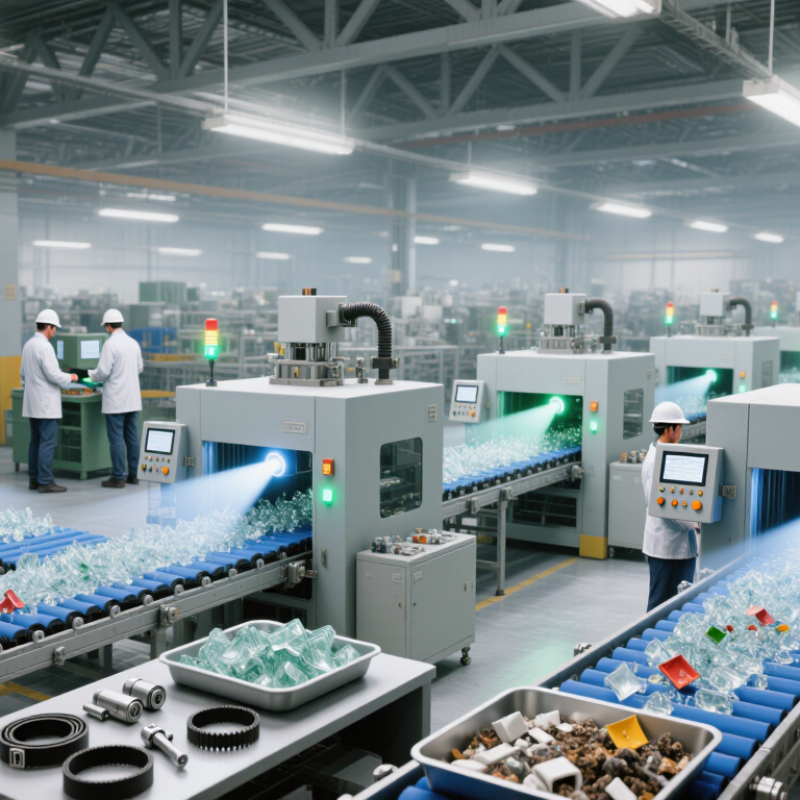
A glass sorting machine separates usable glass from mixed waste and removes unwanted materials. At a recycling plant, workers or equipment first spread broken glass across a moving belt. Cameras and optical sensors scan each piece by color and material. When software identifies an unwanted item, a timed air jet pushes it into a separate chute. Some systems also detect ceramics, stones, and heat-resistant glass, which can weaken recycled glass batches. The pieces move fast. Clean sorting depends on steady material flow and accurate sensor calibration.
Eurostat’s Packaging Waste Statistics reported that 74.9% of glass packaging waste was recycled across the EU in 2022. That figure reflects an entire recycling system, not just sorting machines. A machine’s results depend on the quality of incoming material, maintenance, and how operators set its detection thresholds. Wet fragments, labels, and overlapping shards can confuse sensors; a missed ceramic chip may matter more than a visible label. Optical sorting helps produce cleaner cullet, but it cannot fix every problem upstream. Its limits deserve attention.
China Top Glass Sorting Machine Manufacturers? - What Is a Glass Sorting Machine and How Does It Work?
A glass sorting machine separates glass cullet and removes unwanted materials using sensors, image processing, and mechanical ejection. The appropriate configuration depends on the feed material, target contaminants, and required output.
| Sorting Stage or Technology | What It Detects | How It Works | Typical Role in Glass Recycling | Selection Considerations |
|---|---|---|---|---|
| Screening and size separation | Differences in particle size | Vibrating or rotating screens divide material into size fractions before sensor sorting. | Prepares a more consistent feed and helps protect downstream equipment. | Screen openings should suit the incoming cullet size and the process layout. |
| Optical color sorting | Visible color differences, such as clear, green, and amber glass | Cameras or optical sensors inspect pieces as they pass through the machine. The control system identifies selected material, and timed air jets direct it into a chosen outlet. | Separates glass by color to meet the requirements of a recycling or remanufacturing process. | Performance depends on feed presentation, particle size, lighting, and the condition of the glass. |
| Optical contaminant sorting | Visible non-glass materials, including ceramics, stones, and porcelain | Sensor signals are analyzed against configured sorting criteria; compressed-air ejectors remove targeted pieces from the material stream. | Reduces contaminants that can cause quality problems in recycled glass. | Sensor configuration and sorting settings should be matched to the contaminants present in the feed. |
| X-ray sorting | Differences in X-ray absorption or density between materials | An X-ray system measures how material attenuates radiation. The sorter uses those measurements to identify selected objects and trigger separation. | Can help identify certain dense or compositionally different contaminants, depending on the system and application. | Confirm the target materials and detection limits with application-specific testing. |
| Metal separation | Ferrous and, with suitable equipment, non-ferrous metal pieces | Magnetic separators or metal-detection systems identify or remove metal from the stream. | Often used as an upstream or complementary step to protect equipment and improve material cleanliness. | The separation method depends on metal type, particle size, and where the equipment is installed. |
| Air-jet ejection and collection | Previously identified target pieces | Precisely timed compressed-air pulses divert selected pieces into a reject or product chute. | Provides the physical separation after a sensor identifies material. | Air quality, nozzle condition, timing, and consistent material spacing affect operation. |
| System evaluation | Feed suitability, separation results, and operating requirements | Performance is assessed using representative feed samples and agreed product-quality criteria. | Helps determine whether a machine configuration is suitable for a specific recycling line. | Compare test results, service support, spare parts, controls, and integration needs rather than relying on a general ranking. |
Sorting results vary with feed composition, particle size, moisture, throughput, machine setup, and the required product specification. A representative material test is recommended before selecting equipment.
Get in touch
Our mission is to develop cutting-edge clean energy technology and provide next-generation solar inverters.
Phone
(888) 598-9901
nep-usa@site_ea168614-f5f4-4298-bd5b-880b4cf8d99d
