- Spanish-Latin America
- Japanese-JP
- Chinese
- Europe
- Português-BR

Tech Support
(888) 598-9901
Hours: Mon-Fri 8AM-8PM EST
nep-usa@site_ea168614-f5f4-4298-bd5b-880b4cf8d99d
China Top Crystal Table Manufacturers for Global Buyers
China has become an important sourcing hub for Crystal Table products, serving hotels, restaurants, retailers, and residential projects worldwide. Its manufacturers offer varied designs, from clear glass dining tables to illuminated reception tables with crystal-inspired details. However, attractive photos do not prove manufacturing quality. Buyers need practical evidence.
This guide examines China’s top Crystal Table manufacturers through product quality, production experience, customization ability, and export reliability. It considers tabletop thickness, edge polishing, frame stability, load capacity, packaging, and replacement support. A dependable factory should explain its materials clearly and provide samples, drawings, inspection records, and realistic production schedules. Factory audits, video inspections, and third-party testing can reduce uncertainty before payment. Small details matter. A carefully protected corner can prevent costly damage during ocean transport.
Experienced buyers also compare communication speed, finish consistency, and after-sales procedures. These factors often reveal more than a polished catalogue. Some manufacturers may excel at custom shapes but lack strong international logistics. Others may deliver stable production but offer limited design flexibility. No supplier is perfect. That deserves honest consideration.
The right choice depends on project use, budget, order volume, and destination requirements. Buyers should confirm applicable safety expectations, documentation, and import responsibilities before signing contracts. This overview aims to support a careful, evidence-based decision. It does not treat factory size as the only measure of trust. A smaller workshop may provide close attention, while a larger producer may offer stronger capacity. The best result comes from verifying both.
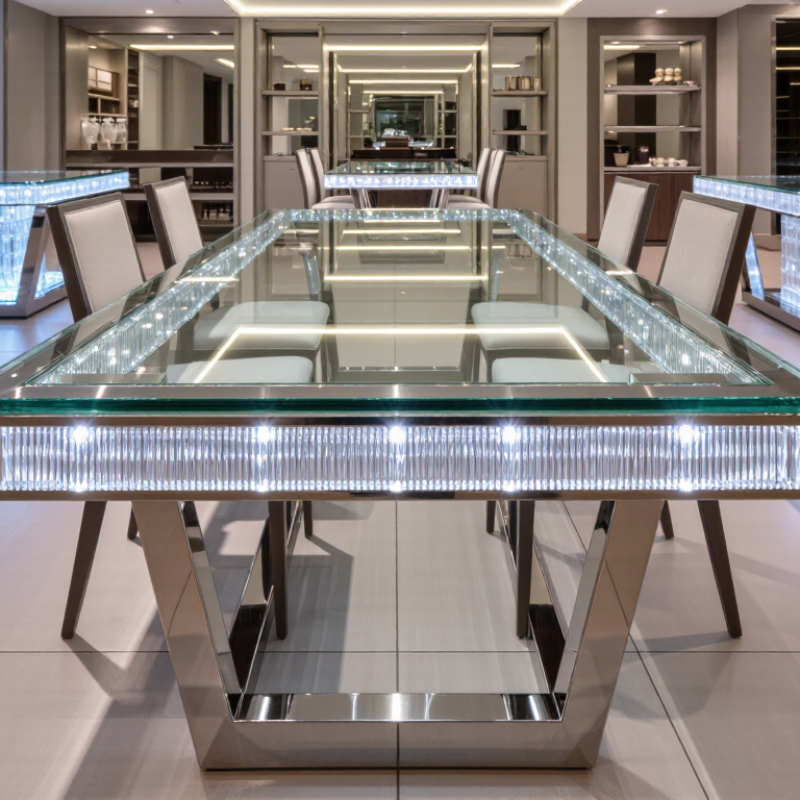
What Is a Crystal Table and Why Does It Matter?
What Is a Crystal Table and Why Does It Matter?
A crystal table is usually not carved from one natural crystal. In furniture trade, the term often describes a table using crystal-clear glass, engineered quartz, or decorative mineral surfaces. Its value depends on clarity, edge finishing, structural design, and safe handling. A transparent top can make a small room feel larger, while polished edges catch daylight like water.
Material choice matters. The U.S. Geological Survey reported about 105 million metric tons of industrial sand and gravel produced in the United States in 2023. This material supports many glass products, including furniture glass. Meanwhile, industry analyses from Grand View Research identify continued growth in the global glass furniture market, driven by modern interiors and space-conscious design. These figures show demand, not automatic quality.
A reliable manufacturer should provide glass thickness, tempering details, load tests, and inspection records. Ask whether the surface resists thermal shock and whether the base remains stable on uneven floors. A crystal table may look weightless. It is not.
Poorly matched hardware can create stress around drilled holes or metal joints. I have found that visual brilliance sometimes hides practical weaknesses. That deserves more attention.
Procurement teams should also verify packaging tests, moisture protection, and replacement-part availability before approving large orders. A beautiful sample is only evidence of one successful sample.
Get in touch
Our mission is to develop cutting-edge clean energy technology and provide next-generation solar inverters.
Phone
(888) 598-9901
nep-usa@site_ea168614-f5f4-4298-bd5b-880b4cf8d99d
