- Spanish-Latin America
- Japanese-JP
- Chinese
- Europe
- Português-BR

Tech Support
(888) 598-9901
Hours: Mon-Fri 8AM-8PM EST
nep-usa@site_ea168614-f5f4-4298-bd5b-880b4cf8d99d
China Top 10 Forklift Crane Manufacturers
China’s forklift crane industry has grown alongside warehouses, factories, ports, and construction projects. This article examines China’s top 10 forklift crane manufacturers and the strengths they bring to demanding material-handling environments. The term “Forklift Crane” covers equipment that combines lifting mobility with crane-style handling functions.
A reliable manufacturer should offer more than an attractive machine. Product capacity, lifting height, stability, battery or engine performance, and operator visibility all influence daily results. After-sales support matters just as much. Spare parts, technician response, warranty clarity, and training can determine whether a machine remains productive after installation.
Real work reveals details that brochures often miss. A narrow warehouse aisle tests steering control. A dusty yard tests sealing and maintenance access. Uneven ground exposes weaknesses in stability and suspension. These practical conditions help separate experienced suppliers from companies with limited field knowledge.
This guide compares manufacturers through product range, engineering capability, certifications, customization options, export experience, and customer service. It also considers whether published specifications are clear and independently verifiable. Rankings can change as product lines, ownership, and market performance develop. That uncertainty deserves attention.
No single supplier fits every operation. A compact electric unit may suit indoor storage, while a diesel model may perform better outdoors. Buyers should confirm load charts, working conditions, local service coverage, and total ownership costs before choosing. Safety remains essential, even when delivery schedules are tight.
The following profiles aim to support practical research, not replace professional assessment. Some manufacturers may appear stronger in one category than another. That is normal. Careful comparison usually produces better decisions than relying on brand popularity alone.
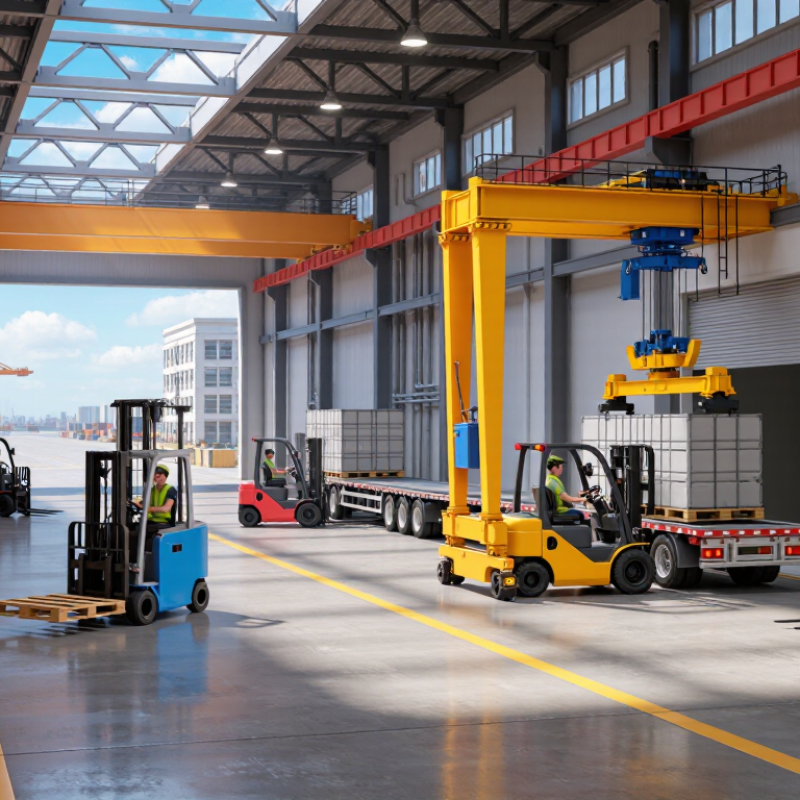
What Is a Forklift Crane and How Does It Work?
A forklift crane is a forklift fitted with a jib, hook, or lifting boom. It combines the forklift’s mast and hydraulic system with a crane-like attachment. The attachment reaches forward, while the counterweight keeps the truck balanced. The operator raises the boom, positions the hook, and controls movement through hydraulic levers.
Capacity changes quickly. A load placed farther from the front wheels creates greater overturning force. The rated capacity plate therefore matters more than the attachment’s advertised lifting number. OSHA safety guidance commonly cites about 85 annual forklift fatalities and 34,900 serious injuries in the United States. Those figures show why load distance, ground condition, and operator visibility deserve constant attention. Small errors become expensive.
Industry data also shows the scale of this equipment sector. World Industrial Truck Statistics reported roughly 2.38 million industrial trucks delivered globally in 2023. That figure does not represent forklift cranes alone, but it indicates strong demand for material-handling equipment. In Chinese manufacturing, buyers often compare hydraulic response, boom rigidity, mast stability, and spare-parts access. Experienced users inspect welds, pins, hoses, and locking devices before lifting. A crane attachment can look robust and still have poor balance. This is the part many product pages explain badly. Operators must follow the specific capacity chart and attachment instructions, not rely on habit. The safest working method is sometimes slower. That is not a flaw.
Get in touch
Our mission is to develop cutting-edge clean energy technology and provide next-generation solar inverters.
Phone
(888) 598-9901
nep-usa@site_ea168614-f5f4-4298-bd5b-880b4cf8d99d
