- Spanish-Latin America
- Japanese-JP
- Chinese
- Europe
- Português-BR

Tech Support
(888) 598-9901
Hours: Mon-Fri 8AM-8PM EST
nep-usa@site_ea168614-f5f4-4298-bd5b-880b4cf8d99d
China Best Industrial Mixing Machine Manufacturer?
Choosing China’s best Industrial Mixing Machine manufacturer is not a contest decided by price or polished brochures. The right partner must understand the material, batch size, viscosity, and production target. A powder blender and a high-viscosity planetary mixer solve different problems. Details matter: impeller geometry, shaft seals, vessel finish, and cleaning access can shape daily performance. Suzanne M. Kresta, co-editor of Handbook of Industrial Mixing, describes mixing as “the process of reducing nonuniformities in order to achieve a desired result.” That principle offers a useful test: ask manufacturers how their equipment will deliver the required result for your specific process.
Look beyond product photos. Request drawings, material specifications, operating limits, and evidence from comparable applications. If possible, review a test plan using your actual ingredients; a sample run can expose dead zones, foaming, or slow discharge. Ask how the supplier handles commissioning, spare parts, and operator training. Good answers should be clear, documented, and consistent. Not every factory will share the same level of detail. That matters. I would not trust a broad capacity claim without understanding the test conditions behind it. Even a capable machine may need adjustment after installation. This guide examines practical ways to compare Chinese manufacturers, assess technical fit, and spot unanswered questions before purchase. The goal is not to name a winner by slogan. It is to identify a dependable supplier for your process. Start with the material, then verify the machine.
What Is an Industrial Mixing Machine?
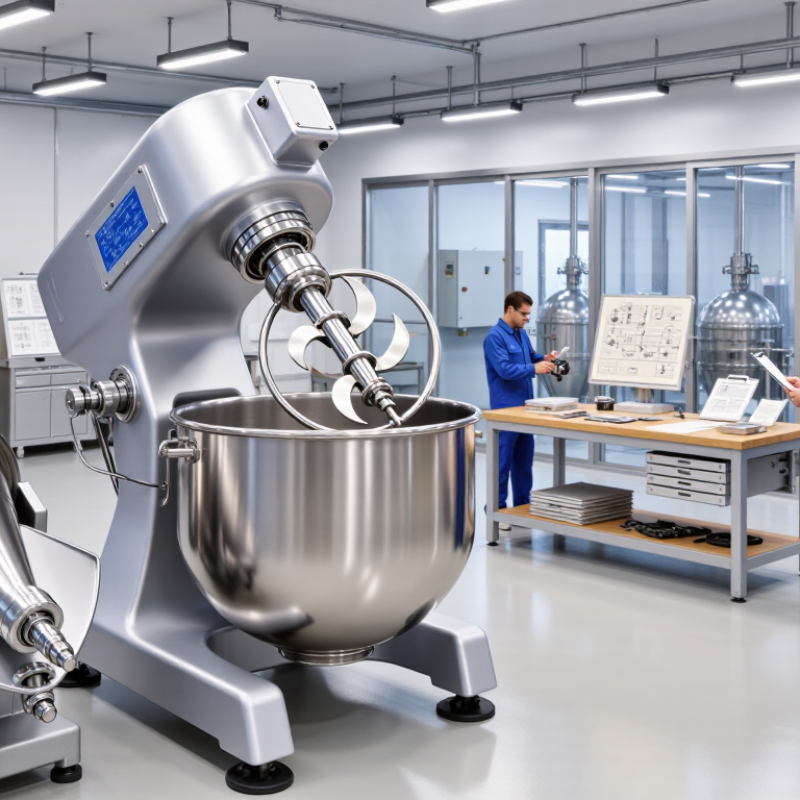
An industrial mixing machine combines materials to create a consistent blend, suspension, or paste. It may use rotating blades, paddles, ribbons, or high-speed dispersers. The right design depends on the material’s viscosity, particle size, and sensitivity to heat. A powder blend behaves differently from a thick liquid. One machine cannot suit every process.
Inside a typical mixer, a motor drives an agitator within a vessel. The moving parts circulate ingredients and reduce uneven pockets. Operators may adjust speed, mixing time, and temperature to meet a target. Small details matter. A few unmixed clumps can affect product quality. For example, powders may need controlled feeding to limit dust and improve distribution. Liquid batches may require baffles to prevent a deep vortex. These choices should be checked against real production conditions, not just a machine’s rated capacity. Even a well-designed mixer may need trial runs; that part is easy to underestimate. Cleaning access, batch size, and maintenance also deserve attention. A practical assessment starts with the actual recipe and workflow.
Get in touch
Our mission is to develop cutting-edge clean energy technology and provide next-generation solar inverters.
Phone
(888) 598-9901
nep-usa@site_ea168614-f5f4-4298-bd5b-880b4cf8d99d
