- Spanish-Latin America
- Japanese-JP
- Chinese
- Europe
- Português-BR

Tech Support
(888) 598-9901
Hours: Mon-Fri 8AM-8PM EST
nep-usa@site_ea168614-f5f4-4298-bd5b-880b4cf8d99d
China Best Forklift Battery Manufacturers for Global Buyers
Choosing a Forklift Battery supplier in China can shape equipment uptime, operating costs, and service planning. Global buyers often compare battery chemistry, rated capacity, charging requirements, warranty terms, and export support. A low quotation alone says little. Buyers also need to understand how a battery performs through repeated shifts, temperature changes, and daily charging routines.
China’s manufacturers vary in product range, production scale, technical support, and experience serving overseas markets. Some focus on lead-acid batteries; others offer lithium-ion models with battery management systems and faster charging options. The right fit depends on forklift compatibility, shift patterns, charging space, and local service access. Small details matter. Ask for clearly documented specifications, test information, warranty conditions, and guidance on installation and maintenance. Where possible, compare references from customers using similar equipment and operating schedules. Marketing claims can sound convincing, but written evidence is more useful.
This guide introduces Chinese manufacturers for global buyers and outlines practical points for evaluating them. It does not treat one company as the best choice for every operation. That comparison is not always neat. Product lines and service arrangements can change, so confirm current details directly with each supplier. A careful review may take longer, but it can help buyers avoid mismatched capacity, unclear support, or unexpected costs after delivery. The aim is a grounded shortlist, not a perfect answer.
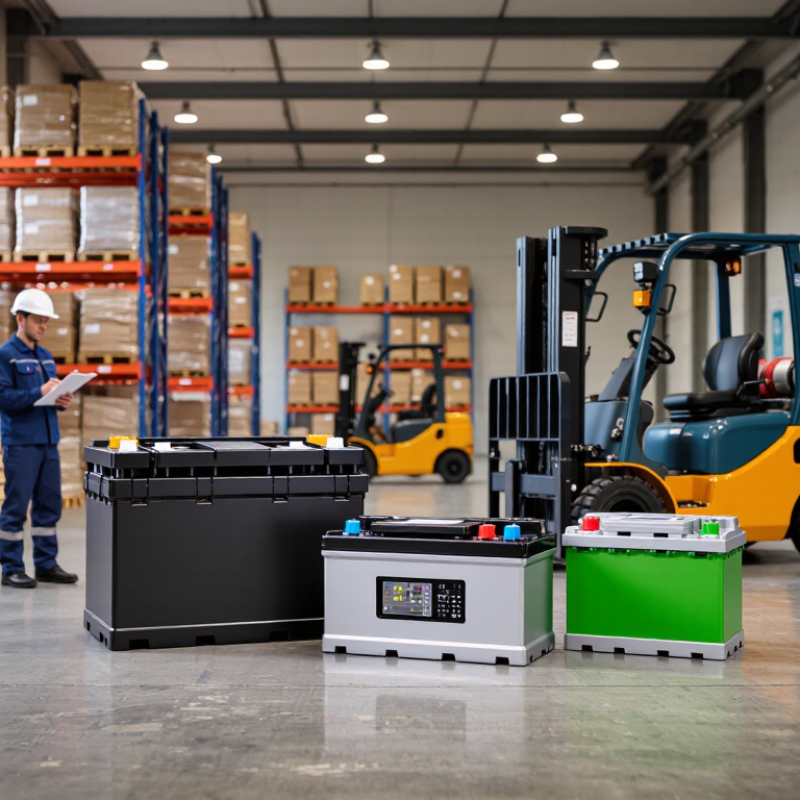
China’s Forklift Battery Industry and Its Global Role
China has become an important part of the global forklift battery supply chain. Its manufacturers serve buyers seeking both traditional lead-acid batteries and lithium-based systems. The industry brings together cell production, pack assembly, battery management, and equipment integration. That breadth can support varied forklift models and operating schedules. But production scale alone does not prove suitability.
Details matter.
A battery that works well in a warm warehouse may perform differently in a cold loading area. Buyers should compare voltage, capacity, dimensions, charging requirements, expected cycle life, and available service support. Ask for test records and clear guidance on installation and maintenance. These details help connect product claims with real operating needs. A low purchase price can be misleading if charging downtime or replacement frequency is high.
Not every specification tells the whole story. Battery performance also depends on forklift settings, shift length, and charging habits. This is easy to overlook. Some buyers focus heavily on headline capacity and give less attention to practical service access. That deserves a second look. Reliable sourcing means checking consistency, documentation, and communication, not just factory scale.
Get in touch
Our mission is to develop cutting-edge clean energy technology and provide next-generation solar inverters.
Phone
(888) 598-9901
nep-usa@site_ea168614-f5f4-4298-bd5b-880b4cf8d99d
