We use our own and third-party cookies to improve our services. If you continue browsing, we will consider that you accept this use. Read More

OK

English-US
  • Spanish-Latin America
  • Japanese-JP
  • Chinese
  • Europe
  • Português-BR

Tech Support

(888) 598-9901
Hours: Mon-Fri 8AM-8PM EST

E-mail

nep-usa@site_ea168614-f5f4-4298-bd5b-880b4cf8d99d

Top 10 Best Rooftop Solar Power Systems to Consider for Your Home?

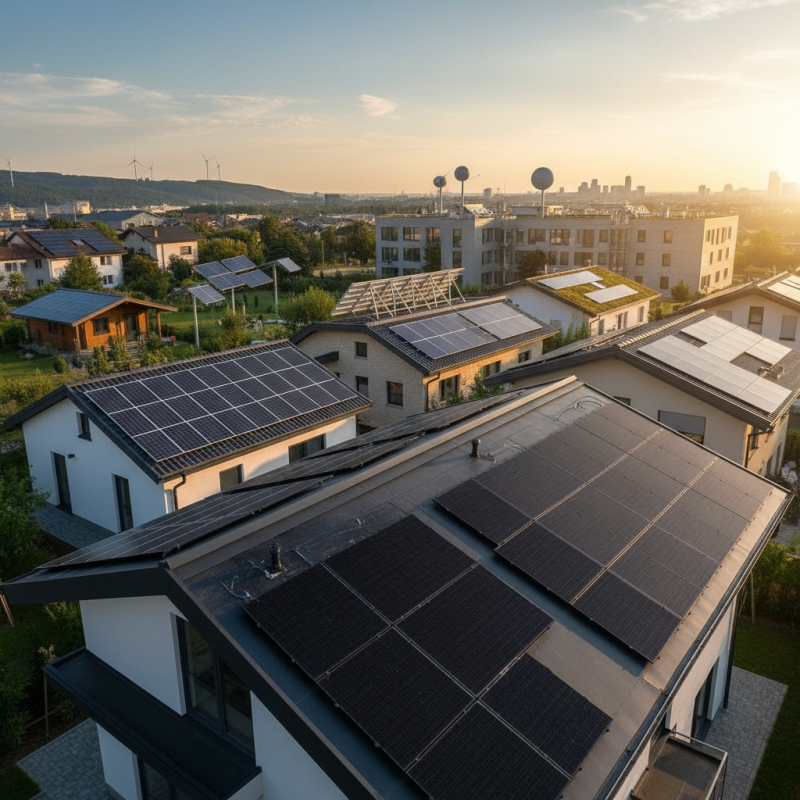
As more homeowners seek sustainable energy options, rooftop solar power emerges as a viable solution. Industry expert Dr. Emily Carter states, "Harnessing the sun's energy can transform how we power our homes." This sentiment resonates deeply in today's energy landscape.

Rooftop solar power not only reduces electricity bills but also minimizes carbon footprints. Many homeowners have embraced this technology, but the choices can be overwhelming. With various systems to consider, making the right selection becomes crucial. Quality and efficiency are key factors that determine long-term satisfaction.

Yet, adopting rooftop solar power isn't without challenges. Some installations may face restrictions or require significant upfront investment. It's essential to weigh these considerations carefully. Ultimately, the right system can significantly enhance your home's sustainability while championing energy independence.
Top 10 Best Rooftop Solar Power Systems to Consider for Your Home?

Top Considerations for Selecting a Rooftop Solar Power System
Top 10 Best Rooftop Solar Power Systems to Consider for Your Home?

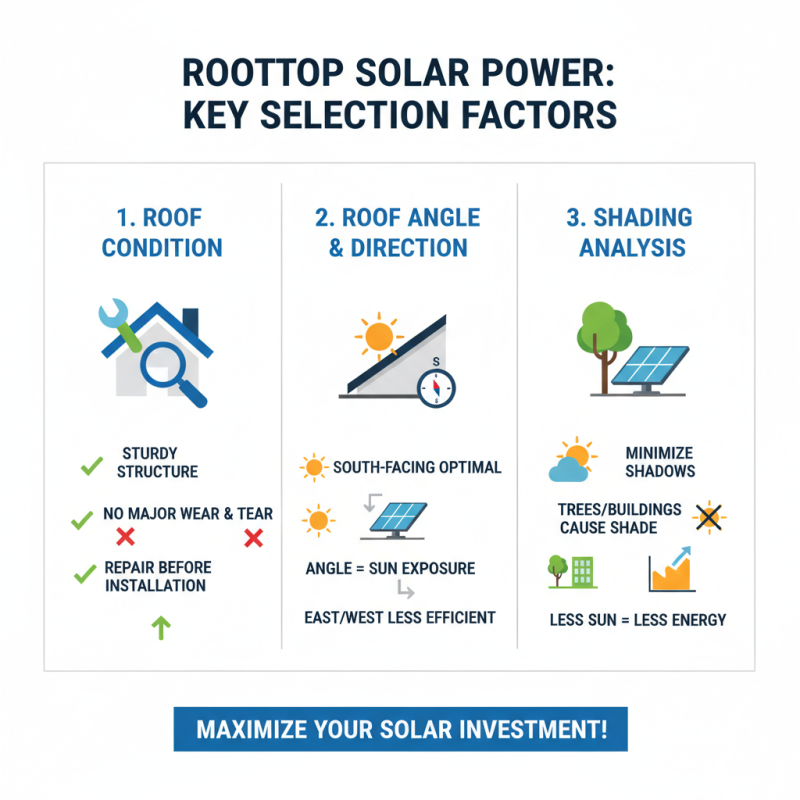
When selecting a rooftop solar power system, various factors come into play. Start with assessing your roof's condition. A sturdy roof can support solar panels better, ensuring longevity. Inspect for wear and tear, as repairs may hinder installation. Consider the angle of your roof too. South-facing roofs typically yield more sunlight. If your roof has significant shading, energy generation could suffer.

Energy needs are a key consideration. Calculate your current electricity use to determine how many panels you need. Many overlook this aspect, leading to insufficient energy production. Speak to a professional who can analyze your consumption patterns. Installation costs vary widely, but be wary of low-priced options. Sometimes, cheaper systems may lack efficiency or durability.

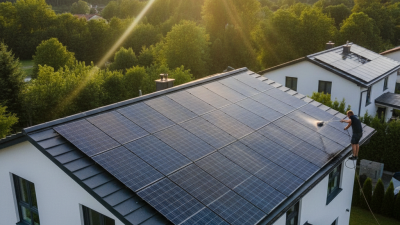
Incentives often exist for solar installations, but the rules can be complex. Research available rebates and tax credits. Not every system qualifies, so verify eligibility. In addition, consider maintenance needs. Some systems require more upkeep over time. Regular cleaning helps optimize performance. However, don’t forget that some growth on panels can benefit in specific climates.
Understanding the Different Types of Solar Panels for Home Installation

When considering solar panels for home installation, understanding the different types is crucial. There are primarily three types of solar panels: monocrystalline, polycrystalline, and thin-film. Each type has its strengths and weaknesses, so assessing your needs is essential.

Monocrystalline panels are known for their efficiency. They take up less space while providing high power output. However, they can be more expensive. On the other hand, polycrystalline panels are more budget-friendly but require more roof space for the same power output. They are slightly less efficient than their monocrystalline counterparts. Thin-film panels are lightweight and flexible, making them easy to install. Yet, they usually have lower efficiency and require more maintenance.

Reflect on your energy needs and roof space when choosing. Each panel type has pros and cons, and what works best for one home may not suit another. Assessing your budget, installation area, and energy goals will lead to better choices. With the right information, homeowners can make informed decisions.

Efficiency Ratings: Comparing the Best Solar Panels on the Market

When considering solar power systems, efficiency ratings are key. They indicate how much sunlight a panel can convert into usable energy. Higher efficiency translates to more electricity generated from the same roof space. Some panels boast efficiency ratings above 20%. These options can significantly reduce your energy bills.

Tip: Assess your roof size before choosing. Smaller roofs may benefit from high-efficiency models. Larger installations can use a mix of efficiency ratings.

It’s also essential to examine performance under various conditions. Some panels perform well in low light, while others excel in high temperatures. This can affect energy output throughout the year. Remember, location plays a vital role.

Tip: Research your climate. Different regions face distinct weather challenges. Understanding these can help refine your options. Compare panels based on real-world performance, not just lab results.

Solar technology is evolving, and it’s not perfect. Some panels may degrade quicker than expected. Always check warranties and degradation rates. This offers insights into long-term value. Balancing efficiency with cost is crucial for making informed decisions.

Cost Analysis: Initial Investment vs. Long-Term Savings in Solar Energy

When considering rooftop solar power systems, cost is a major factor. Initial investment can seem daunting. For many, the price tag translates to thousands of dollars. However, financial benefits often outweigh these costs. Solar panels can significantly reduce monthly energy bills. In some cases, homeowners may even earn money through feed-in tariffs.

Long-term savings should not be ignored. Many solar systems have lifespans of 25 years or more. This longevity means consistent savings on energy costs. Yet, there are variable factors to consider. Local utility rates fluctuate, impacting forecasts. Homeowners may also need to factor in maintenance costs over time. Occasionally, systems can require repairs, leading to additional expenses.

Besides the financial aspects, installations can have unexpected challenges. Not all rooftops are suited for solar panels. The orientation and angle might limit efficiency. Additionally, homeowners should consider state and federal incentives. These can substantially lessen initial costs, but policies change frequently. Keeping abreast of such changes is crucial for maximizing savings.

Government Incentives and Programs for Home Solar Power Systems

Top 10 Best Rooftop Solar Power Systems to Consider for Your Home?

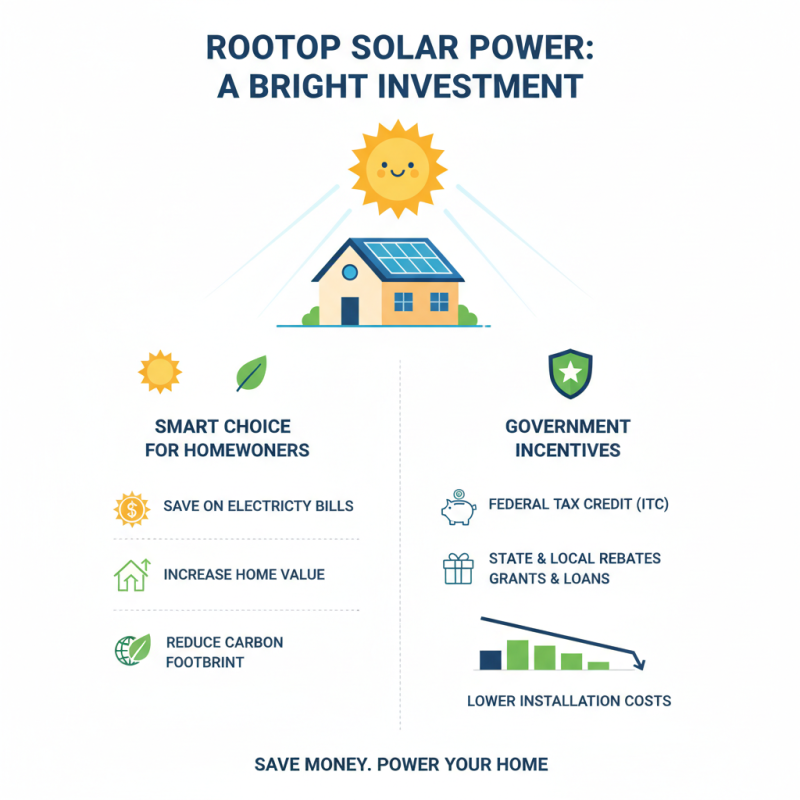
Investing in rooftop solar power can be a smart choice for homeowners. Various government incentives exist to make this transition more affordable. Many regions offer tax credits, rebates, and grants. These programs can significantly reduce installation costs. For example, some incentives cover a large percentage of your initial investment.

The availability of these incentives varies by location. Homeowners may not always find the same support in every state. This inconsistency can lead to confusion. Researching local programs is essential before making a decision. A solar system can save money on energy bills. However, without proper guidance, you might miss out on critical savings.

Despite the financial benefits, challenges remain. The installation process can be complex. Homeowners need to assess their roofs carefully. Factors like orientation and shading can affect efficiency. It’s also important to understand potential maintenance costs over time. Not every home will benefit equally from solar power, and that's worth considering. Balancing these factors can lead to a more informed choice.

Get in touch

Our mission is to develop cutting-edge clean energy technology and provide next-generation solar inverters.

Phone

(888) 598-9901

E-mail

nep-usa@site_ea168614-f5f4-4298-bd5b-880b4cf8d99d