We use our own and third-party cookies to improve our services. If you continue browsing, we will consider that you accept this use. Read More

OK

English-US
  • Spanish-Latin America
  • Japanese-JP
  • Chinese
  • Europe
  • Português-BR

Tech Support

(888) 598-9901
Hours: Mon-Fri 8AM-8PM EST

E-mail

nep-usa@site_ea168614-f5f4-4298-bd5b-880b4cf8d99d

What Is the Best MCB Inspection Conveyor in China?

Choosing the best Mcb Inspection Conveyor in China requires more than comparing prices and photographs. The right system must support stable feeding, precise positioning, reliable inspection, and controlled product discharge. It should also fit the manufacturer’s production rhythm. A fast conveyor is not automatically a good conveyor.

In practical factories, small details often decide performance. Adjustable guides should hold miniature circuit breakers without scratching their housings. Sensors must detect gaps, double feeding, and misalignment. Vision cameras need steady lighting and a clean inspection window. A responsive PLC can connect inspection results with automatic rejection and production records. Maintenance access matters too. Dust gathers. Belts stretch. Operators need quick solutions.

According to electrical automation specialist Dr. Martin Keller, “A conveyor proves its value when it protects inspection accuracy, not merely production speed.” That principle offers a useful starting point for this article. The best Mcb Inspection Conveyor should combine mechanical stability, inspection compatibility, safety design, and dependable after-sales support in China. Suppliers with documented testing, clear electrical drawings, and factory references deserve closer attention. Claims alone are not enough.

No machine is perfect. A promising design may still struggle with unusual breaker shapes, reflective surfaces, or inconsistent upstream feeding. That assumption needs testing. Buyers should request sample trials using their own products, speeds, and inspection requirements. They should also review changeover time, spare-part availability, software support, and operator training. This introduction examines these practical factors and explains how to compare Chinese conveyor manufacturers with greater confidence.
What Is the Best MCB Inspection Conveyor in China?

What Is an MCB Inspection Conveyor?

An MCB inspection conveyor is a production-line system that moves miniature circuit breakers through controlled inspection points. It does more than transport parts. It positions each MCB accurately for checking, testing, and safe removal.

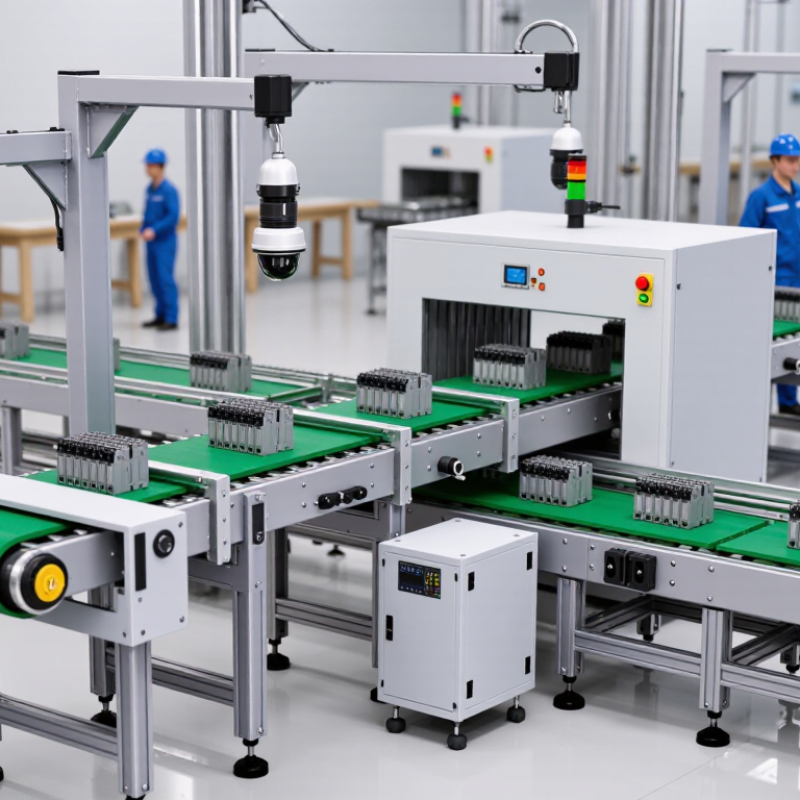
A typical conveyor uses fixtures, indexing mechanisms, sensors, and vision cameras. These components inspect housing appearance, terminal position, label accuracy, and assembly completeness. Some systems also connect with electrical testing equipment. The conveyor pauses each unit briefly, allowing stable measurements and consistent results. A reject mechanism then separates defective products from approved ones. Clear records help engineers trace batch numbers, inspection results, and machine alarms.

The best MCB inspection conveyor in China should match the product design, output target, and factory layout. Stable positioning matters more than impressive speed. In practical production, dust, vibration, and fixture wear can affect accuracy. Regular cleaning and calibration are necessary. Small errors grow quickly. Operators should also access sensors and fixtures without complicated procedures. A reliable system includes emergency stops, guarded moving parts, and understandable control screens. However, no conveyor is perfect for every MCB model. New designs may require fixture changes or software adjustments. Trial production can reveal problems that specifications miss. That uncomfortable step is often valuable.

How Does an MCB Inspection Conveyor Work?

What Is the Best MCB Inspection Conveyor in China?

An MCB inspection conveyor moves miniature circuit breakers through controlled inspection stations. Each unit enters on a guided belt or indexing chain. Positioning accuracy matters because cameras must view the same area repeatedly. Sensors detect the product and trigger each inspection step. A vision system checks housing defects, terminal alignment, label placement, and lever position. Some lines also test dimensions, insulation, or mechanical movement. Results are sent to a control system. Qualified products continue forward, while rejected units move into a separate collection area. The process is fast, but not careless.

Tips: Keep the conveyor clean. Check sensor alignment daily. Use adjustable guides for different MCB sizes. Record false rejects, not only failures.

From practical commissioning experience, stable feeding often affects accuracy more than camera resolution. Vibration, dust, and loose fixtures can create confusing images. A good conveyor should provide steady speed, simple access, and clear fault signals. It should also allow operators to change inspection recipes without rebuilding the entire line. However, no system is perfect. Reflective plastic may confuse the camera. A narrow tolerance can also reject acceptable products. Engineers should review sample data before setting final limits. Manual checks remain useful during early production and after maintenance. The best MCB inspection conveyor in China is therefore not merely the fastest model. It is a balanced system that matches product design, testing needs, factory space, and operator capability.

Which Features Define the Best Conveyor in China?

The best MCB inspection conveyor in China is not simply the fastest one. In production trials, stable indexing matters more than impressive belt speed. Each breaker should stop in the same position, with little vibration at the camera station. A rigid frame, adjustable guides, and servo-controlled movement help maintain repeatable images. The conveyor should handle different MCB sizes without awkward manual changes. Clear guarding protects operators and keeps dust away from inspection areas. Small details often decide whether accuracy survives a long shift. Speed is not everything.

A strong system combines high-resolution vision, controlled lighting, electrical testing, and automatic rejection. Lighting must reveal terminal damage, labeling errors, cracks, and assembly gaps. Sensors should confirm product presence before testing begins. Results need searchable records, including time, batch, fault type, and station status. This traceability supports quality audits and faster troubleshooting. Local engineering support and readily available spare parts are equally important in China. I have seen reliable machines lose production because one simple sensor was unavailable.

Tips:
Ask for a live sample test using your actual MCB models. Measure false rejects, not only inspection speed. Check changeover time with an operator, not just an engineer. Request records from a full-shift trial. A short demonstration can hide heat, dust, and alignment drift. No conveyor is perfect. Leave room for calibration and maintenance.

What Is the Best MCB Inspection Conveyor in China?

Key features that define a high-performance MCB inspection conveyor

The chart shows a practical evaluation weighting for MCB inspection conveyors. Inspection accuracy and production throughput receive the highest priority, followed by positioning repeatability, uptime, changeover efficiency, and reject-response performance. These criteria reflect common requirements for reliable automated circuit-breaker inspection lines.

How to Evaluate Chinese MCB Conveyor Manufacturers?

What Is the Best MCB Inspection Conveyor in China?

How to Evaluate Chinese MCB Conveyor Manufacturers?

The best MCB inspection conveyor is not defined by speed alone. It must inspect miniature circuit breakers consistently, safely, and with traceable results. Evaluate the manufacturer before comparing equipment prices. Ask for a process layout, inspection sequence, cycle time, and product tolerance list. A serious supplier should explain how feeders, sensors, cameras, electrical testers, and reject units work together.

Request a trial using your actual MCB samples. Watch the conveyor during startup, continuous running, and product changeover. Check whether parts remain stable on the belt. Examine sensor positioning, cable protection, guarding, and access for cleaning. Results should be recorded automatically, not written by operators. Ask for measurement repeatability data and sample inspection reports. Certificates such as ISO 9001 can support credibility, but they cannot replace practical testing.

Visit the production facility when possible. Review machining quality, control cabinet wiring, software documentation, and final inspection records. Ask who provides technical support after installation. Spare sensors, belts, fixtures, and clear response times matter during production. A polished demonstration can mislead. The conveyor may run perfectly with one product model, then struggle after a small dimensional change. This detail is easy to overlook. Require factory acceptance testing and site acceptance testing with agreed standards. Leave room for design improvement, too. No supplier gets every detail right. A reliable manufacturer admits limitations and documents corrective actions.

How to Select the Right MCB Inspection Conveyor?

What Is the Best MCB Inspection Conveyor in China?

How to Select the Right MCB Inspection Conveyor?

Selecting an MCB inspection conveyor starts with the breaker design, not the machine’s appearance. Confirm its pole count, dimensions, terminal layout, and production speed. A suitable system should hold each MCB firmly during transfer. Even small movement can distort camera results. Ask for sample testing with your actual products and packaging conditions. Do not rely only on catalog images.

Inspection functions must match your quality risks. Vision modules can check housing damage, missing labels, terminal position, and assembly defects. Stable lighting matters more than a high camera resolution. Electrical testing may verify continuity, insulation, or operating performance, depending on the approved process. Reject units should leave the main flow without touching accepted products. That detail is often underestimated.

Consider indexing accuracy, changeover time, cleaning access, and data traceability. Operators should adjust guides without complicated tools. A clear interface reduces training mistakes. The conveyor frame should resist vibration and allow easy access around sensors and fixtures. Stainless steel surfaces are useful where dust or cleaning is common. Measure real cycle time, not the advertised maximum. A fast conveyor with frequent stops may produce less than a slower, stable line. Also review spare-part availability, technical documentation, and remote support. One practical warning: automation is not always improvement. An overcomplicated design can slow maintenance and hide small failures. Leave room for manual checks during commissioning. Their findings may reveal weaknesses that factory tests missed.

Get in touch

Our mission is to develop cutting-edge clean energy technology and provide next-generation solar inverters.

Phone

(888) 598-9901

E-mail

nep-usa@site_ea168614-f5f4-4298-bd5b-880b4cf8d99d