- Spanish-Latin America
- Japanese-JP
- Chinese
- Europe
- Português-BR

Tech Support
(888) 598-9901
Hours: Mon-Fri 8AM-8PM EST
nep-usa@site_ea168614-f5f4-4298-bd5b-880b4cf8d99d
10 Best Magnetic Track Pendant Lights for 2026
Magnetic track pendant lights bring focused illumination to kitchens, dining areas, and workspaces without fixing every fitting in place. Their appeal is practical: move a pendant along the rail, adjust the composition, and create a pool of light over a table or countertop. The details matter, though. Track standards, adapters, dimming systems, and pendant weight can vary between manufacturers, so a sleek photograph alone is not enough to judge compatibility.
The wider market is growing. Grand View Research estimated the global LED lighting market at USD 75.1 billion in 2023 and projected a 10.4% compound annual growth rate from 2024 to 2030. That figure covers LED lighting broadly—not magnetic track pendants specifically—but it signals the expanding role of efficient, adaptable lighting. Lighting designer Ingo Maurer once said, “I am not interested in light. I am interested in the shadows.” His observation is a useful reminder: a pendant should shape a room, not merely brighten it.
This 2026 guide compares ten magnetic track pendant lights by design, light quality, adjustability, compatibility information, and everyday practicality. Look closely at the rail system and the bulb or LED specifications before buying. A beautiful fixture can still disappoint if its light feels harsh or its adapter does not fit. Some product listings also leave key details unclear. That deserves scrutiny. The selections below aim to make those trade-offs easier to see, while recognizing that the best choice depends on your room, ceiling, and preferred atmosphere.
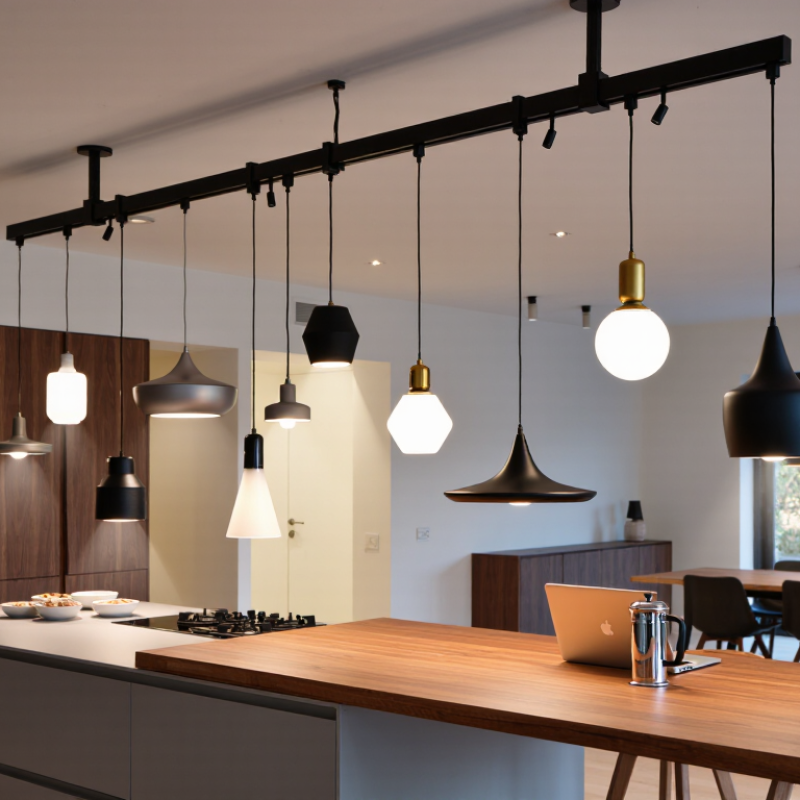
What Magnetic Track Pendant Lights Are and How They Work
Magnetic track pendant lights are modular fixtures that attach to a powered rail through magnetic adapters. The track carries electricity, while magnets hold each pendant in place. Electrical contacts in the adapter connect the fixture to the track’s conductors. Depending on the system, a driver may convert household power to low-voltage current. Check the system’s voltage and adapter compatibility before choosing a pendant; magnetic attachment alone does not guarantee a universal fit.
Once attached, many pendants can slide along the rail or be repositioned without rewiring. That makes it easier to center a light over a dining table or shift it above a kitchen island. The connection should feel secure, but installation details vary. Follow the manufacturer’s instructions, and have a qualified electrician handle wiring when needed. Not magic.
Efficiency depends on the light source, not the magnet. The U.S. Department of Energy’s Energy Saver guidance says LED bulbs use at least 75% less energy and last up to 25 times longer than incandescent bulbs. Still, a movable pendant can be aimed poorly or placed where it creates glare. Stand beneath the fixture and check the light on the work surface. Small adjustments matter.
Get in touch
Our mission is to develop cutting-edge clean energy technology and provide next-generation solar inverters.
Phone
(888) 598-9901
nep-usa@site_ea168614-f5f4-4298-bd5b-880b4cf8d99d
