- Spanish-Latin America
- Japanese-JP
- Chinese
- Europe
- Português-BR

Tech Support
(888) 598-9901
Hours: Mon-Fri 8AM-8PM EST
nep-usa@site_ea168614-f5f4-4298-bd5b-880b4cf8d99d
What Is the Best Energy Storage Connector in 2026?
Choosing the best Energy Storage Connector in 2026 is not simply a matter of selecting the highest current rating. A connector must match the battery voltage, continuous and peak current, cable size, and installation environment. In a compact cabinet, millimeters of clearance can affect service access and heat management. Moisture, vibration, dust, and repeated mating cycles also change what “best” means. Small details matter. A part that looks robust on a datasheet may still be awkward to assemble or inspect. That gap matters.
This guide compares connector types and practical selection factors, including rated voltage and current, contact resistance, temperature rise, ingress protection, locking method, and touch protection. It also considers whether the connector supports the conductor size and installation tools available. Check the complete system, not just the plug: mating halves, crimp contacts, seals, and cable routing all matter. Where possible, verify specifications against current manufacturer documents and battery or inverter requirements. A connector’s rating alone cannot prove system compatibility. Nor can a low purchase price reveal lifecycle cost. Easy to miss. The best choice depends on the application, service conditions, and documented performance—not a universal ranking. This article offers a practical framework for comparing options and recognizing trade-offs before procurement. Some recommendations may need revision as standards and product lines evolve. That uncertainty is real.
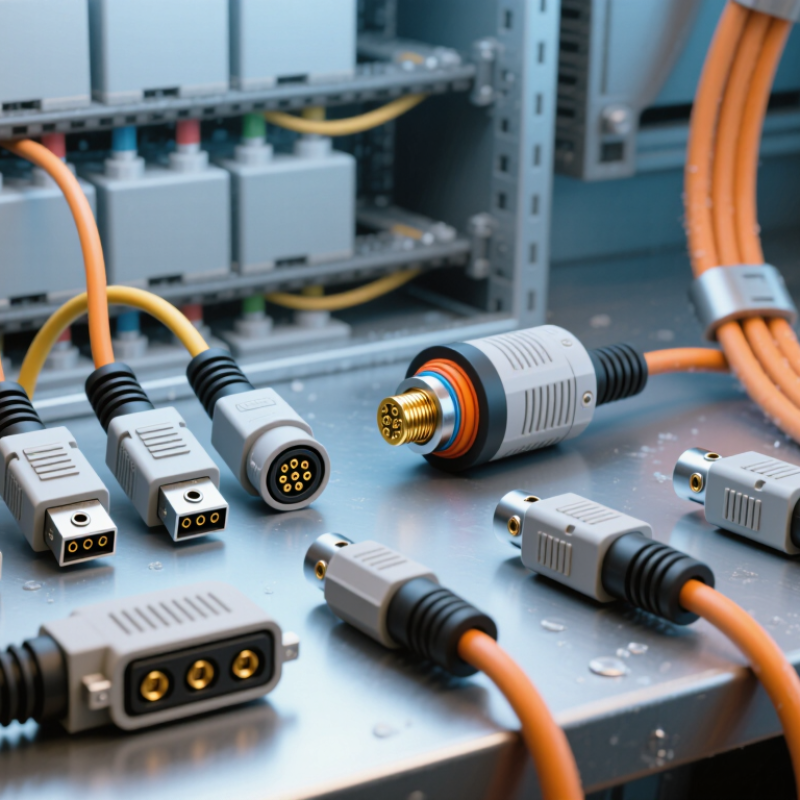
What an Energy Storage Connector Is and How It Works
An energy storage connector is the electromechanical link between battery modules, racks, cables, and other parts of a storage system. It carries electrical current, usually as direct current, through conductive contacts inside an insulating housing. Some designs also support grounding or monitoring connections. Its basic purpose is simple: create a secure, low-resistance path that stays connected during normal operation. It is more than a plug.
When two connector halves mate, their metal contacts press together to conduct current. A keyed housing helps align them, while a latch or locking feature resists accidental separation. Good contact pressure matters. Excess resistance can create voltage drop and localized heat, especially under sustained load. A connector may feel firmly seated, yet still be damaged or incorrectly matched. That is worth checking.
Selection depends on the system’s voltage and current, cable size, operating temperature, exposure to dust or moisture, vibration, and expected mating cycles. Confirm these details against technical documentation, not appearance alone. During installation, check polarity, full engagement, and cable strain relief. Follow the equipment maker’s procedures before disconnecting; stored energy can remain hazardous. Inspect for discoloration, cracks, or loose fittings. Small details matter. The trade-off is easy to overlook: a compact connector saves space, but may be harder to inspect or handle with gloves. A tidy installation is useful, but it does not prove the connection is sound.
What Is the Best Energy Storage Connector in 2026? — What an Energy Storage Connector Is and How It Works
| Connector Type | How It Works | Typical Energy Storage Use | Key Advantages | Points to Check | Best Fit |
|---|---|---|---|---|---|
| Bolted busbar connection | A cable lug or conductive link is clamped to a busbar with a fastener, creating a low-resistance path when assembled to the specified torque. | Battery racks, battery modules, DC distribution, and connections inside cabinets. | Mechanically robust; suitable for fixed installations and high-current paths when correctly designed. | Check torque requirements, contact surfaces, corrosion protection, insulation, and safe access for maintenance. | Fixed connections where service access and a secure mechanical joint are priorities. |
| Stud-and-lug cable terminal | A crimped cable lug is secured to a threaded terminal or stud, forming a removable electrical connection. | Battery posts, inverter connections, and cabinet power cables. | Simple construction; can accommodate different cable sizes with compatible lugs and hardware. | Use a lug matched to the conductor and terminal; follow the specified crimping and tightening procedures. | Equipment connections that need straightforward installation and occasional disconnection. |
| Touch-safe plug-in power connector | Male and female contacts mate inside an insulated housing; the contact geometry and locking feature maintain the electrical connection. | Modular battery packs, removable battery trays, and rack-level DC connections. | Supports faster assembly and module replacement; shrouded designs can reduce accidental contact with live parts. | Verify DC voltage and current ratings, polarity, temperature rise, mating cycles, locking, and any interlock requirements. | Modular systems where repeatable connection and serviceability matter. |
| High-voltage DC connector | Insulated contacts connect high-voltage DC conductors; some designs include a mechanical or electrical interlock to help prevent unsafe separation. | High-voltage battery strings, power conversion equipment, and containerized storage systems. | Designed for higher-voltage applications and can provide a compact, enclosed connection. | Confirm rated DC voltage, current, insulation coordination, creepage and clearance, polarity, and disconnect procedure. | Systems whose operating voltage requires a connector specifically rated for high-voltage DC service. |
| Signal and communications connector | Low-power contacts carry monitoring, control, sensing, or communications signals rather than the main battery current. | Battery management systems, temperature sensors, module monitoring, and control wiring. | Enables monitoring and control; keyed or coded housings can help prevent mismating. | Check pin assignment, shielding where needed, environmental sealing, and separation from power wiring. | Battery systems that need reliable measurement, status, or control connections. |
| Busbar-to-busbar joint | Overlapping or linked conductive bars are joined with fasteners or a purpose-designed joint, with contact pressure maintaining conduction. | Battery racks, DC combiner sections, and internal power distribution assemblies. | Can provide a compact, low-resistance path with fewer flexible cable runs. | Account for alignment, thermal expansion, short-circuit forces, insulation barriers, and specified joint hardware. | Fixed layouts where conductors can be accurately positioned and securely supported. |
Selection takeaway: There is no single best connector for every energy storage system. Choose one whose verified DC voltage, current, temperature, environmental, and mechanical ratings match the installation. Follow the equipment manufacturer’s assembly instructions and applicable electrical codes; never disconnect a connector under load unless it is specifically rated for that operation.
Get in touch
Our mission is to develop cutting-edge clean energy technology and provide next-generation solar inverters.
Phone
(888) 598-9901
nep-usa@site_ea168614-f5f4-4298-bd5b-880b4cf8d99d
