- Spanish-Latin America
- Japanese-JP
- Chinese
- Europe
- Português-BR

Tech Support
(888) 598-9901
Hours: Mon-Fri 8AM-8PM EST
nep-usa@site_ea168614-f5f4-4298-bd5b-880b4cf8d99d
What Are the Best Electric Mini Trucks in 2026?
Electric Mini Trucks promise useful capability without the footprint of a full-size pickup. Yet “best” depends on the work, the roads, and the charging options around you. A landscaping crew needs different strengths from a city delivery driver. Small details matter.
This 2026 guide compares practical candidates by range, payload, bed size, charging speed, safety equipment, service support, and expected availability. Sandy Munro, automotive engineer and teardown analyst, has summed up efficient design this way: “The best part is no part.” His principle offers a useful lens for mini trucks: simple, durable features can matter more than flashy specifications. Still, efficiency alone does not make a truck dependable.
Published range figures may not reflect a cold morning, a loaded bed, or frequent stop-and-go driving. That matters. We will distinguish confirmed specifications from estimates where information is incomplete, and avoid treating announced models as proven choices. Some comparisons may remain imperfect; real-world tests and local support can change the verdict.
As you read, consider what the truck must carry, how far it travels between charges, and whether it fits your worksite or garage. A smaller electric truck can be a smart tool, but not for every job. The strongest choice is the one that meets your daily needs with fewer compromises—not simply the one with the longest range or lowest advertised price.
What Defines an Electric Mini Truck in 2026?
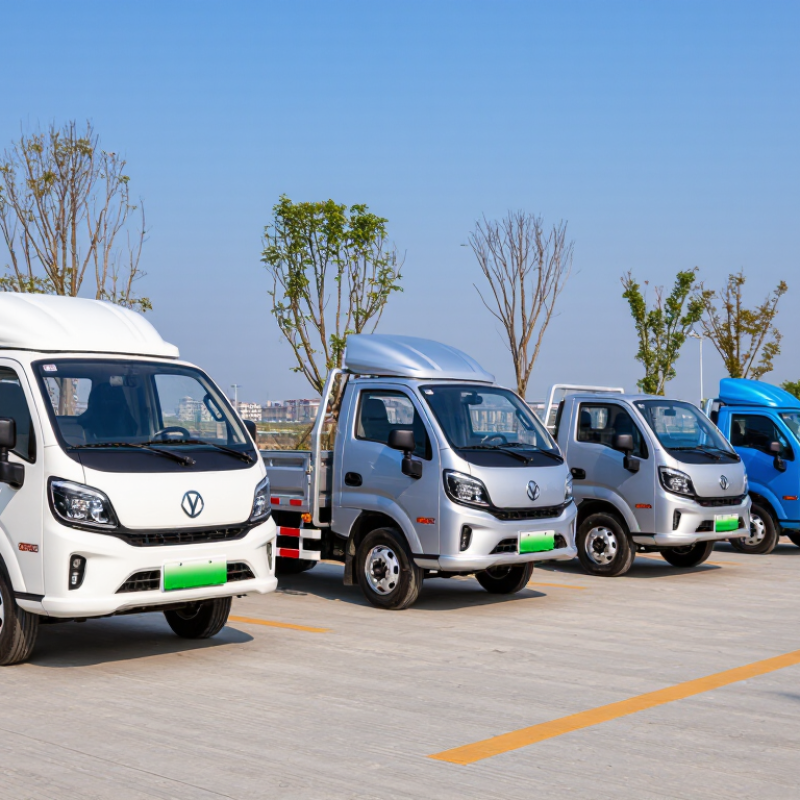
In 2026, “electric mini truck” is best understood as a practical vehicle category, not a single global technical class. It usually means a compact, battery-powered work vehicle with a short wheelbase, modest payload, and a small cargo bed or enclosed load area. Think narrow streets, tight loading bays, and tools rattling behind the cab. Buyers should check payload, curb weight, usable battery capacity, and real-world range—not rely on the word “mini.” Specifications vary, and the label can be fuzzy.
The International Energy Agency’s Global EV Outlook 2024 reported more than 54,000 electric truck sales worldwide in 2023, about 1.2% of truck sales. That figure covers trucks broadly, not mini trucks alone, but it shows why segment-specific comparisons still matter. A useful 2026 definition should include intended duty: neighborhood deliveries, campus maintenance, or short-site hauling. Range must be judged with a load onboard; repeated stops and cold weather can change it. Small is not automatically efficient. One drawback deserves attention: compact dimensions may limit payload or cabin comfort, and published range figures rarely capture a full work shift. Check the numbers against the actual route.
| Dimension | Factual definition or benchmark | Why it matters when choosing | Best-fit use |
|---|---|---|---|
| Vehicle definition | “Electric mini truck” is a broad market description, not a single standardized vehicle class used worldwide. It generally refers to a compact, battery-electric vehicle with a small cargo bed or utility body. | Compare the vehicle’s actual dimensions, ratings, equipment, and local legal classification rather than relying on the “mini truck” label. | Useful as a starting point for comparing compact work vehicles; not enough by itself to establish road legality. |
| Low-speed vehicle classification in the United States | Under the U.S. federal definition, a low-speed vehicle has four wheels, a top speed greater than 20 mph and not greater than 25 mph, and a gross vehicle weight rating under 3,000 lb. | A compact electric truck may or may not meet this definition. Federal safety requirements and state or local operating rules also matter. | Campus, industrial-site, or other permitted low-speed routes, subject to local law. |
| Payload | Payload capacity is vehicle-specific. A basic calculation is gross vehicle weight rating (GVWR) minus curb weight; occupants, cargo, and installed equipment all contribute to loaded weight. | Choose a vehicle whose rated capacity covers the heaviest expected load, not just the typical load. Do not exceed its GVWR or axle ratings. | Landscaping, facility maintenance, and light materials handling when the rated payload is sufficient. |
| Cargo bed and body | Bed length, width, sides, tie-down points, and available body configurations vary by vehicle. There is no single standard mini-truck bed size. | Check the usable bed dimensions and load-securing provisions against the actual items being carried. | Choose an open bed for bulky items; consider a purpose-built enclosed or utility body where weather protection or organized storage is needed. |
| Driving range | There is no universal range for electric mini trucks. Actual distance per charge depends on the specific vehicle and conditions such as speed, payload, terrain, temperature, and accessory use. | Compare the manufacturer’s stated test conditions with the planned daily route, and allow for an operating reserve. | Short, predictable routes with charging available between shifts or overnight. |
| Battery and charging | Battery capacity, charging connector, charging power, and charging time are vehicle-specific. Charging time also depends on the power source and charging equipment. | Confirm connector compatibility, available electrical supply, charging schedule, and whether the vehicle supports the charging method you need. | Fleet or property operations with a known parking location and a practical charging plan. |
| Speed and route access | Maximum speed and road-access eligibility depend on the vehicle’s design and legal classification, as well as jurisdiction-specific rules. | Check permitted roads, speed limits, registration, and any restrictions before purchase. A low-speed vehicle is not a substitute for a highway-capable truck. | Sites and routes where the vehicle’s approved speed and legal access match the work. |
| Towing | Towing capacity, if provided, is specific to the vehicle and may depend on equipment and operating conditions. | Verify the rated trailer weight and any required hitch or braking equipment in the vehicle documentation; do not infer capacity from appearance. | Light utility tasks only when the vehicle is explicitly rated for the intended trailer and load. |
| Safety equipment | Required equipment varies with vehicle classification and jurisdiction. In the United States, federal low-speed-vehicle rules specify certain safety equipment, while state and local requirements can add operating conditions. | Confirm the vehicle’s certification and required equipment for the place and type of use, including lighting, restraints, mirrors, and other applicable items. | Any use involving shared roads or public access; verify compliance before operation. |
| Best overall selection method | No single configuration is best for every buyer. The practical choice depends on legal access, route length, payload, cargo dimensions, charging, and service support. | Shortlist vehicles that meet all required ratings and operating rules, then compare total operating needs rather than headline range or purchase price alone. | Match the vehicle to a defined job, route, load, and charging plan. |
| Important note | Specifications and legal classifications vary by vehicle and jurisdiction. Verify current manufacturer documentation and local regulations before purchase or road use. | ||
Get in touch
Our mission is to develop cutting-edge clean energy technology and provide next-generation solar inverters.
Phone
(888) 598-9901
nep-usa@site_ea168614-f5f4-4298-bd5b-880b4cf8d99d
