- Spanish-Latin America
- Japanese-JP
- Chinese
- Europe
- Português-BR

Tech Support
(888) 598-9901
Hours: Mon-Fri 8AM-8PM EST
nep-usa@site_ea168614-f5f4-4298-bd5b-880b4cf8d99d
What Is the Best COB LED Strip Light in 2026?
Choosing the best COB LED strip light in 2026 means looking beyond a smooth, dot-free glow. A strip may appear flawless in a product photo, yet run hot inside a shallow aluminum channel. The difference shows up in brightness consistency, color accuracy, adhesive performance, and long-term reliability.
The U.S. Department of Energy says LED lighting can use at least 75% less energy and last up to 25 times longer than incandescent lighting. These are broad LED comparisons, not guarantees for every COB strip. Its 2022 Solid-State Lighting R&D Opportunities report also identifies efficiency, color quality, reliability, and cost as important areas for continued development. Those measures help frame a fair comparison.
Looks simple. Not quite. For this guide, we’ll consider light output per meter, color temperature, color rendering, cutting intervals, dimmer compatibility, and heat management. We’ll also look at the details buyers can miss: power-supply sizing, waterproofing claims, and whether the stated brightness applies to a full roll or one meter. A higher LED count alone does not prove better performance. Nor does a low price reveal how a strip behaves after hours of use. The right choice depends on the installation, the desired light, and credible specifications. Where product claims lack clear test conditions, treat them cautiously; even a careful comparison has limits.
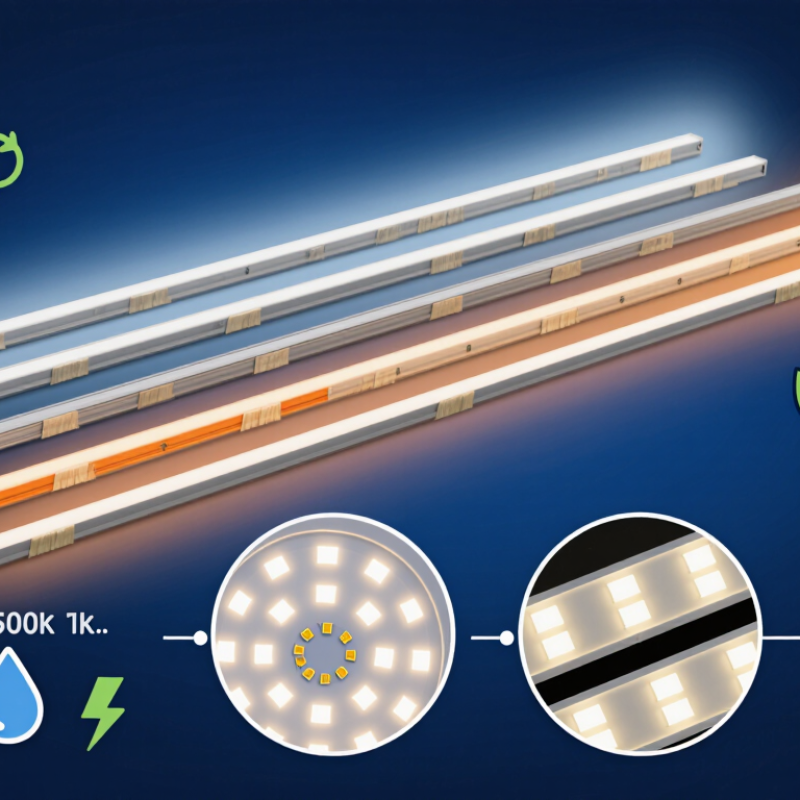
How COB LED Strip Lights Produce Continuous, Dot-Free Illumination
COB LED strips place many small LED chips close together on a flexible circuit board, then cover them with a continuous phosphor layer. The light blends before it leaves the strip, so individual points are much harder to see than on widely spaced LEDs. No dotted trail. Under a kitchen cabinet, this can make a countertop appear evenly lit rather than striped. The effect still depends on viewing distance, surface finish, and the strip’s quality.
A diffuser can soften the light further, though it may reduce brightness. For a clean installation, press the strip onto a dry, smooth surface; an aluminum channel can help manage heat and keep the line straight. Heat matters. Long runs may also show brightness changes if voltage drops along the strip, so check the manufacturer’s guidance on run length and power feed points. Match the power supply to the strip’s voltage and total wattage, with some capacity to spare. I would not judge a COB strip by appearance alone: compare brightness, color consistency, and heat behavior in the actual space. Even good strips can look different against glossy tile or pale paint.
Get in touch
Our mission is to develop cutting-edge clean energy technology and provide next-generation solar inverters.
Phone
(888) 598-9901
nep-usa@site_ea168614-f5f4-4298-bd5b-880b4cf8d99d
