Choosing the best Battery Server Rack from China requires more than comparing prices or cabinet appearance. The right system must match your server load, battery chemistry, installation space, and backup duration. A compact 19-inch rack may suit a small data room, while a 42U enclosure can support larger power demands. Capacity alone is not enough.
Reliable evaluation starts with the battery system. Check the usable energy, continuous discharge rating, cycle performance, and battery management system. LiFePO4 batteries are widely considered for their thermal stability and long service potential. However, real performance depends on cell quality, temperature control, firmware, and charging conditions. Ask suppliers for test reports, wiring diagrams, protection settings, and traceable component information.
Safety needs careful attention.
A qualified manufacturer should explain overcurrent protection, thermal monitoring, emergency isolation, ventilation, and fire-risk controls. Confirm whether the rack has passed relevant transport and electrical testing, such as UN38.3 documentation where applicable. Factory audits, sample testing, and clear warranty terms can reveal more than polished product photographs. Communication quality matters too, especially when custom connectors or remote monitoring are required.
Still, no single rack is best for every project. Some suppliers offer impressive specifications, yet provide limited service after delivery. Others may cost more but offer stronger engineering support and better documentation. This guide examines Chinese Battery Server Rack options through practical criteria, including safety, compatibility, manufacturing experience, maintenance, and total ownership cost. The final choice should reflect verified evidence, not marketing language alone.
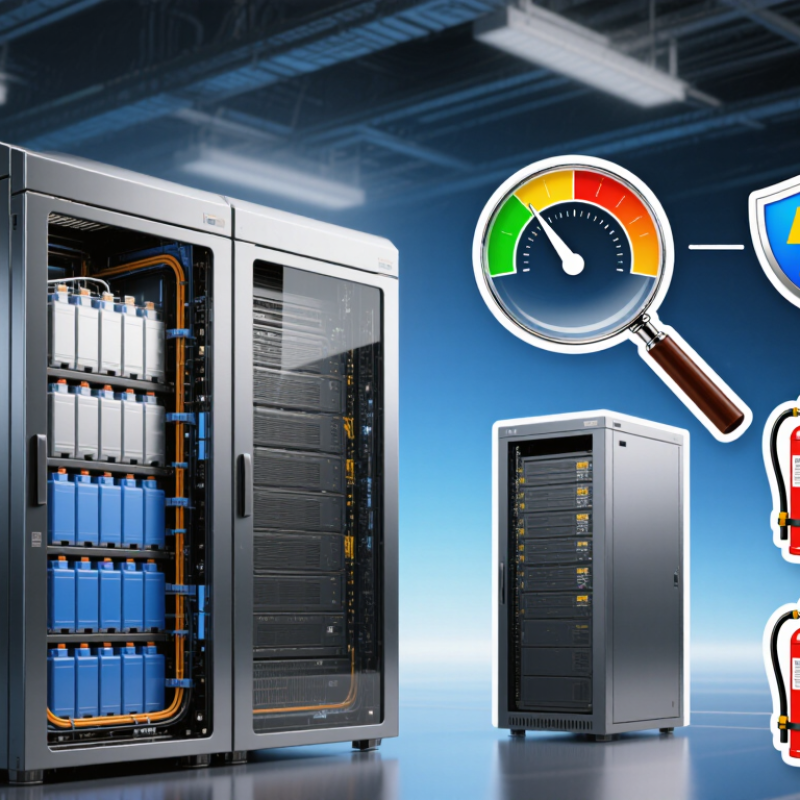
A battery server rack is a cabinet that stores electrical energy in rack-mounted battery modules. It resembles a network server cabinet, but its job is different. Inside, several battery units connect through a DC bus. A battery management system monitors voltage, temperature, current, and cell balance. This system can disconnect the rack when unsafe conditions appear.
During charging, an inverter or charger sends controlled power into the modules. During an outage, the inverter changes stored DC energy into usable AC power for servers and other equipment. Air channels, temperature sensors, fuses, and circuit breakers help manage heat and fault risks. In real installations, cable size and ventilation matter as much as battery capacity. A 100 kWh rack still needs suitable floor loading, clearances, fire planning, and professional commissioning.
When evaluating a battery server rack from China, request cell data, test records, protection settings, warranty terms, and applicable safety certifications. Inspect the enclosure, connectors, communication ports, and emergency shutdown design. Do not rely on capacity figures alone. A rack may advertise excellent performance but lose efficiency in a hot room or under heavy discharge. That detail is easy to miss. Reliable suppliers should explain testing procedures and provide traceable documentation. Independent inspection can reveal loose terminals, unclear labels, or software limitations before installation. No rack is perfect. Careful review remains necessary.
For a Chinese server rack, battery technology should match the workload, room conditions, and maintenance plan. Lithium iron phosphate batteries suit many modern racks because they provide stable output, long cycle life, and strong thermal performance. Their built-in battery management system should monitor voltage, temperature, current, and cell balance. This information helps technicians identify weak cells before an outage becomes serious.
Valve-regulated lead-acid batteries remain practical for smaller installations and strict budgets. They are familiar, widely supported, and simple to replace. However, they need more cabinet space and usually offer a shorter service life. Lithium nickel manganese cobalt batteries can provide high energy density, but their thermal controls require careful engineering. Sodium-ion technology is promising, yet its server-rack experience remains less mature. I would not choose it without verified field data.
Tips: Check the battery’s usable capacity, not only its rated capacity. Confirm communication compatibility with the UPS. Ask for cycle tests, temperature records, and safety certifications. A clean datasheet is not enough. Inspect the enclosure, terminals, cable quality, and cooling path. China-based suppliers can offer flexible designs, but independent testing is still wise. Also, leave ventilation space around each rack. Crowded cabinets create heat quietly, and heat reduces battery life faster than many buyers expect.
Compare manufacturers by evidence, not catalog appearance. Uptime Institute’s 2023 Annual Outage Analysis attributes 52% of significant data-center outages to power problems. Therefore, inspect the rack’s battery chemistry, BMS logic, thermal controls, and bypass design. Ask for capacity tests at 25°C, low temperature, high load, and end-of-life conditions. A claimed 10-year life means little without test conditions.
Request factory audit records, cell traceability, and serial-number tracking. Check whether protection testing follows relevant standards, such as IEC 62619, IEC 62477-1, or UL 1973, where applicable. Certificates alone are insufficient. Read the test scope. Confirm who performed the tests and whether the delivered model matches the tested model. Numbers can mislead.
Compare round-trip efficiency, usable energy, recharge time, noise, footprint, and maintenance access. The International Energy Agency’s Batteries and Secure Energy Transitions report states that global battery storage capacity must expand dramatically this decade, increasing pressure on quality control and supply chains. A reliable supplier should provide replacement-part plans, remote alarm records, firmware procedures, and local technical support. Ask for warranty exclusions in plain language. Also, verify fire-response procedures with the site engineer. That step is often missed. A spreadsheet may rank one rack highest, yet field service can decide the real cost. Do not ignore delivery consistency, documentation quality, or the manufacturer’s willingness to disclose failures and corrective actions.
Choosing the best battery server rack from China requires more than comparing capacity and price. Safety documents should match the exact rack configuration, not only the battery cell. Check test evidence for IEC 62619, UL 1973, and relevant local standards. For larger energy systems, ask whether thermal propagation testing, such as UL 9540A, applies to the proposed installation.
Inspect the battery management system closely. It should record voltage, temperature, current, and state of charge for each module. Look for protection against overcharge, deep discharge, short circuits, overheating, and communication failure. A practical rack should also include clear alarm outputs, emergency shutdown control, and suitable insulation monitoring. Ask for UN 38.3 transport records and complete factory test reports. Certificates alone are not enough.
Performance claims need operating conditions. Check usable energy at the stated depth of discharge, cycle life at a defined temperature, charging rate, and end-of-life capacity. Request round-trip efficiency data and a warranty with measurable limits. During evaluation, review a sample test at 25°C and compare its readings with the monitoring software. Small differences may reveal calibration issues. Cooling design matters too. Measure airflow, noise, cabinet temperature, and spacing between racks. Many specifications look impressive, but real performance can change in a hot room or under uneven loads. Do not ignore service response time, spare modules, firmware control, and installation training. One detail may still be missed. Verification should continue before purchase.
| Evaluation Area | Standard or Reference | What to Verify | Recommended Benchmark | Why It Matters | Evidence to Request |
|---|---|---|---|---|---|
| Cell and Battery Safety | IEC 62619 | Whether the industrial lithium battery system has been evaluated for electrical, mechanical, thermal, and abuse-related safety risks. | Applicable certification or test report | IEC 62619 is a key international safety standard for secondary lithium cells and batteries used in industrial applications, including stationary energy storage. | Certificate, test report, scope of certification, cell model, battery model, and issuing laboratory. |
| Stationary Energy Storage Safety | UL 1973 | Whether the complete battery module or rack has been assessed for stationary and auxiliary power applications. | Certification where required by the project | UL 1973 evaluates batteries used in stationary energy storage and other auxiliary power applications. Requirements may vary by market and installation type. | Valid certification, product listing, construction details, and the exact rack configuration covered. |
| System-Level Fire Testing | UL 9540A | Whether thermal runaway propagation and fire behavior have been tested at the cell, module, unit, or installation level. | Test data matched to the proposed system | UL 9540A is a test method for evaluating thermal runaway and fire propagation characteristics. It is not a general product certification. | Complete test report, tested chemistry, module size, rack layout, spacing, ventilation, and suppression conditions. |
| Power Conversion Safety | IEC 62477-1 | Safety design of the power conversion equipment, DC bus, insulation system, protective circuits, and accessible energized parts. | Applicable inverter or PCS compliance | This standard addresses safety requirements for power electronic converter systems and helps reduce electric shock, fire, and overvoltage risks. | Declaration of conformity, dielectric-strength results, insulation test records, and protective-device specifications. |
| Transport Compliance | UN 38.3 | Whether the lithium battery type has passed transport tests such as altitude simulation, thermal cycling, vibration, shock, overcharge, and forced discharge where applicable. | Required before international shipment | UN 38.3 is generally required for transporting lithium cells and batteries by air, sea, road, or rail under applicable dangerous-goods rules. | UN 38.3 test summary, battery type identification, shipping classification, and safety data sheet. |
| Installation and Fire Protection | NFPA 855 and Local Fire Codes | Indoor or outdoor location, separation distances, ventilation, fire detection, suppression, emergency response, and total installed energy. | Site-specific compliance review | Installation rules depend on system capacity, building type, local authority requirements, and the selected battery chemistry. | Layout drawings, fire risk assessment, emergency plan, ventilation calculations, and approval from the authority having jurisdiction. |
| Ingress Protection | IEC 60529 | Protection against dust and water at the intended installation location. | IP54 minimum for protected indoor areas; higher rating when required | An IP rating must match the enclosure design and actual environment. It does not by itself prove fire safety or corrosion resistance. | IP test report for the final enclosure, gasket design, cable-entry details, and installation limitations. |
| Battery Management System | Functional safety and system requirements | Cell voltage, temperature, current, state of charge, state of health, balancing, fault logging, contactor control, and emergency shutdown. | Independent protection layers with event records | A properly designed BMS helps prevent overcharge, over-discharge, overheating, short circuit, and operation outside approved limits. | BMS protection matrix, alarm list, communication protocol, firmware-control process, and sample fault logs. |
| Nominal Energy | Manufacturer datasheet and test conditions | Rated voltage, rated ampere-hours, number of parallel strings, usable depth of discharge, and DC bus limits. | Usable energy clearly stated, not only nameplate energy | Usable energy depends on operating limits, reserve state of charge, temperature, power level, and battery degradation. | Capacity test report, calculation formula, operating SOC window, and guaranteed usable-energy value. |
| Round-Trip Efficiency | Defined test protocol | Whether efficiency includes the battery only or the complete battery-plus-PCS system, and at what power, temperature, and SOC range it was measured. | Typically 85% or higher for a complete AC system | Efficiency affects electricity losses, operating cost, cooling demand, and the required size of the energy-storage system. | Independent performance report showing charge efficiency, discharge efficiency, auxiliary consumption, and test conditions. |
| Power Capability | Continuous and peak power ratings | Continuous charge and discharge power, short-duration peak power, C-rate, power-factor range, and response time. | Ratings matched to the server load profile | Server facilities may require high short-term power, fast transfer, and stable output during grid disturbances. | Power test curves, inverter datasheet, transient response results, and overload-duration limits. |
| Cycle Life | Defined end-of-life condition | Number of cycles, depth of discharge, ambient temperature, charge and discharge rate, rest periods, and end-of-life capacity. | At least 6,000 cycles to 80% retained capacity under stated conditions | Cycle-life figures are meaningful only when the test conditions and capacity-retention threshold are clearly disclosed. | Life-test report, degradation curve, warranty conditions, and guaranteed end-of-life capacity. |
| Operating Environment | Environmental performance specification | Permitted temperature, humidity, altitude, condensation limits, cooling method, and derating above the rated temperature. | Approximately 0–45 °C for charging and −20–50 °C for discharging, subject to design | Temperature outside the approved range can reduce available power, accelerate degradation, or trigger protective shutdown. | Environmental test records, thermal-management design, derating curves, and installation manual. |
| Scalability and Redundancy | System architecture specification | Maximum parallel racks, rack-level isolation, independent BMS operation, hot-swappable components, and communication redundancy. | Rack-level fault isolation and modular expansion | Modular architecture can improve availability and simplify maintenance without shutting down the entire energy-storage system. | Single-line diagram, communication topology, isolation procedure, expansion limits, and failure-mode analysis. |
| Cybersecurity and Communications | IEC 62443 principles and project requirements | Role-based access, password policy, encrypted communication, secure firmware updates, audit logs, remote-access control, and network segmentation. | Documented controls with remote access disabled by default | Battery racks connected to facility networks can introduce operational and cybersecurity risks if access is not controlled. | Cybersecurity statement, software-update policy, network diagram, access-control procedure, and vulnerability-response process. |
| Warranty and Serviceability | Commercial warranty terms | Warranty duration, throughput limit, retained-capacity guarantee, response time, spare-parts availability, and service coverage in the destination country. | Clear performance warranty with measurable exclusions | A technically compliant rack may still create operational risk if replacement parts, firmware support, and qualified service are unavailable. | Signed warranty, service-level agreement, spare-parts list, maintenance schedule, and escalation contacts. |
Selecting the best battery server rack from China starts with your load profile, not the lowest quotation. Measure critical load, runtime, recharge time, rack space, and site temperature. The International Energy Agency’s Electricity 2024 report estimates that data-center electricity use could exceed 1,000 TWh by 2026, compared with about 460 TWh in 2022. This growth makes efficient backup design increasingly important.
Check the battery chemistry, usable capacity, discharge rate, and expected cycle life. A lithium-ion rack may save floor space, but its battery management system must provide cell balancing, temperature monitoring, alarm records, and controlled shutdown. Ask for IEC 62619 and IEC 62477-1 test evidence, UN 38.3 transport documentation, and reports from an accredited laboratory. Verify compatibility with the UPS, communication protocol, breaker rating, and emergency isolation circuit. Small mismatches can create expensive delays.
Review the supplier’s factory process, not only its product brochure. Request production traceability, sample capacity tests, warranty conditions, spare-parts plans, and remote-service procedures. Uptime Institute’s 2024 Global Data Center Survey continues to identify power problems as the leading reported cause of outages. That finding deserves practical attention. Inspect ventilation, fire detection, aisle clearance, and maintenance access before approval. I would also test one complete rack under realistic load. A clean spreadsheet is not enough. Sensor placement, installation quality, and operator training can still weaken a technically excellent system.
Our mission is to develop cutting-edge clean energy technology and provide next-generation solar inverters.
(888) 598-9901
nep-usa@site_ea168614-f5f4-4298-bd5b-880b4cf8d99d