We use our own and third-party cookies to improve our services. If you continue browsing, we will consider that you accept this use. Read More

OK

English-US
  • Spanish-Latin America
  • Japanese-JP
  • Chinese
  • Europe
  • Português-BR

Tech Support

(888) 598-9901
Hours: Mon-Fri 8AM-8PM EST

E-mail

nep-usa@site_ea168614-f5f4-4298-bd5b-880b4cf8d99d

What is Batching Plant Meaning for Global Buyers?

Understanding the "Batching Plant Meaning" is essential for global buyers in the construction industry. Batching plants serve as critical components in concrete production, directly impacting project efficiency and quality. According to a report by Global Market Insights, the concrete batching plant market is expected to reach $9.9 billion by 2026, highlighting its significance.

Industry expert Dr. John Carter emphasizes, “Understanding batching plant meaning is vital for optimizing supply chains.” His insights reflect the growing reliance on batching plants for timely project completion. However, buyers often overlook the nuances of this technology, leading to mismatches in expectations and reality.

The process of batching involves mixing concrete materials in precise ratios. This precision affects the outcome of construction projects. It is vital for buyers to be aware of various types of batching plants, including stationary, mobile, and compact options. Identifying the right type can lead to better project results, yet many still struggle with defining their specific needs. This conundrum highlights the importance of thoroughly understanding batching plant meaning in the context of modern construction demands.
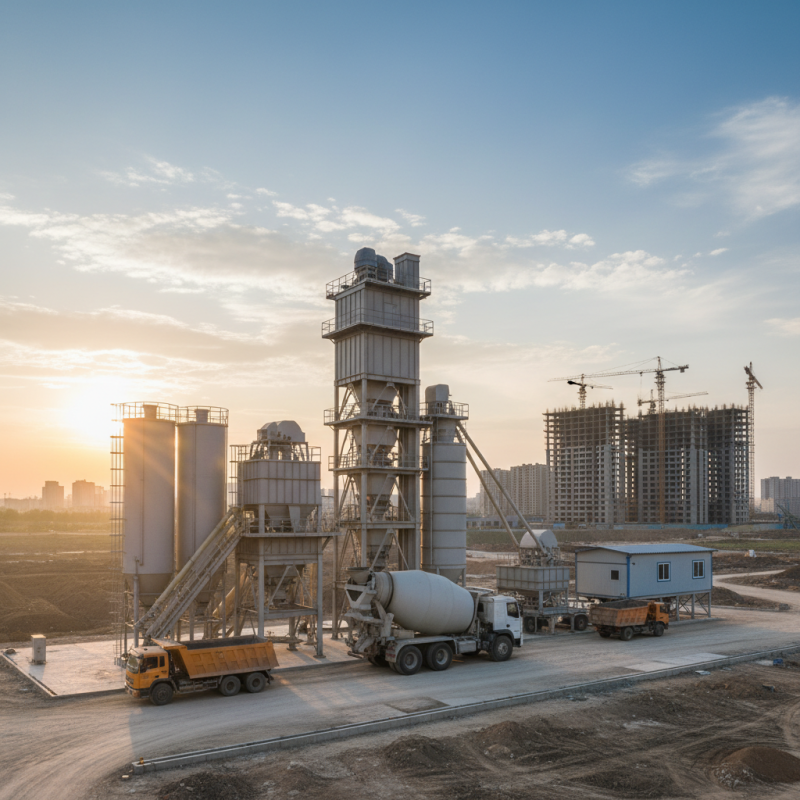
What is Batching Plant Meaning for Global Buyers?

Understanding the Concept of Batching Plants in Construction

Batching plants play a critical role in the construction industry. They produce concrete in a controlled environment, ensuring quality and consistency. These facilities blend various materials, including cement, aggregates, and water, to create concrete that meets specific project requirements. This method allows for efficient production, reducing waste and optimizing resources.

When considering batching plants, it’s essential to understand their capacity and location. A well-placed plant can minimize transportation costs and delays. Additionally, knowing the production capacity helps match output to project timelines. Quality control is vital; fluctuations in material consistency can lead to structural issues. Investing in a reliable batching plant can mitigate risks in your construction projects.

Tips: Always assess the credibility of the batching plant's operations. Check their maintenance schedules and staff training. Ensure they implement safety standards rigorously. Regular audits can reveal areas for improvement, helping to maintain high quality and efficiency in production.

Key Components and Types of Batching Plants for Global Buyers

Batching plants are essential for construction and concrete production. Global buyers need to understand their types and key components.

There are two main types of batching plants: stationary and mobile. Stationary batching plants are used for large projects. They offer high production capacity and are more suitable for fixed locations. Mobile batching plants are more flexible and can be moved easily. They are ideal for smaller projects or sites with limited space. Research shows that the global ready-mix concrete market is projected to grow at a CAGR of 7.5% from 2021 to 2028. This indicates an increasing demand for efficient batching plants.

The components of a batching plant include a mixer, aggregate bins, cement silos, and control systems. A robust control system ensures accuracy in material measurement. This precision affects the quality of the final product. Tips for buyers: ensure that the plant's capacity meets project needs. Also, consider the ease of maintenance, as it directly impacts operational efficiency. Overlooking these components can lead to production delays. Understanding these details is crucial for making informed purchasing decisions in a competitive market.

The Importance of Batching Plants in the Construction Industry

Batching plants play a crucial role in the construction industry. They are responsible for mixing concrete, ensuring consistency and quality for various projects. According to a report by Grand View Research, the global concrete batching plant market was valued at approximately $2.4 billion in 2021 and is expected to grow steadily. This highlights their essential function in meeting rising construction demands.

The efficiency of batching plants directly impacts project timelines. A well-operating plant can significantly reduce labor costs and material waste. For instance, a study by Market Research Future reveals that the introduction of automation in batching processes can enhance productivity by up to 30%. However, not all batching plants optimize their operations. Many still rely on outdated methods, leading to potential delays and increased costs.

Tips for maximizing batching plant efficiency include regular equipment maintenance and staff training. Ensuring that all machinery is in good working order prevents unexpected breakdowns. Training staff can improve accuracy in material mixing. Additionally, using the right technology can streamline the batching process. Investing in upgrades may seem costly initially but can yield significant long-term savings. Reflecting on these aspects is vital for achieving consistent quality in construction projects.

Factors to Consider When Purchasing a Batching Plant

When considering purchasing a batching plant, the buyer must evaluate several key factors. The most important aspect is the plant's capacity. This reflects the volume of materials it can handle. A buyer should consider their project requirements carefully. Are you focusing on large-scale production, or are smaller batches more suited?

Another crucial factor is the technology used in the batching plant. Advanced automation can enhance efficiency but may also increase costs. Understanding the maintenance requirements is equally vital. Regular upkeep is necessary to avoid costly downtimes. Neglecting this aspect can lead to potential issues down the line.

Buyers should also evaluate the sourcing of raw materials. Accessibility and quality can significantly impact the mixing process. The location of the batching plant plays a role too. It should be close to the construction site to minimize transportation costs. However, proximity must not compromise safety or operational efficiency. Each of these factors requires careful reflection and consideration.

Global Trends in Batching Plant Technology and Innovation

Batching plants are pivotal in the construction and manufacturing sectors. They facilitate the efficient production of concrete and other materials. In recent years, the trend has shifted towards increased automation and smart technologies in batching plants. This transition helps reduce human error and optimize resource usage.

Innovation is at the forefront of batching plant technology. Advanced mixing techniques ensure uniformity and quality in production. New software solutions improve scheduling and process management, making it easier to meet tight deadlines. However, this fast-paced innovation brings challenges. Not all workers are trained in new technologies, which can lead to inconsistencies in operation.

Environmental concerns are also influencing batching plant design. There is a growing emphasis on sustainability. Plants are now incorporating recycling systems to minimize waste. Some still struggle to implement these eco-friendly solutions effectively. As global buyers evaluate their options, they must weigh technological advancements against practical implementation challenges.

What is Batching Plant Meaning for Global Buyers? - Global Trends in Batching Plant Technology and Innovation

Dimension Data
Market Size (2023) $5 Billion
Growth Rate (CAGR 2023-2028) 6%
Key Regions North America, Europe, Asia-Pacific
Technology Trends Automation, IoT Integration, Eco-Friendly Solutions
Key Applications Construction, Infrastructure, Roadworks
Average Lifespan 10-15 Years
Top Features High Efficiency, Flexibility, Quality Control
Sustainability Initiatives Recycling Materials, Reducing Emissions

Get in touch

Our mission is to develop cutting-edge clean energy technology and provide next-generation solar inverters.

Phone

(888) 598-9901

E-mail

nep-usa@site_ea168614-f5f4-4298-bd5b-880b4cf8d99d