What Is an Automotive Camera and How Does It Work?
An Automotive Camera is more than a small lens mounted behind a windshield, grille, mirror, or tailgate. It is a sensing device that converts light into digital information. The vehicle’s electronic control units then interpret that information for parking assistance, blind-spot monitoring, lane support, driver recording, and automated emergency functions. In practical terms, a rear camera may show a child-sized object near the bumper, while a forward-facing camera can identify lane markings several meters ahead.
The safety value is substantial, but it requires careful interpretation. The U.S. National Highway Traffic Safety Administration’s Federal Motor Vehicle Safety Standard No. 111 made rear visibility technology mandatory in new light vehicles in the United States from May 2018. Its regulatory analysis examined the potential to reduce backover crashes and related injuries. The Insurance Institute for Highway Safety also reports that advanced driver assistance systems can reduce certain crash risks, although performance varies by system design and road conditions. These findings support camera adoption, but they do not make cameras infallible.
Market research reflects the same momentum. MarketsandMarkets and S&P Global Mobility have identified vehicle sensing, camera integration, and ADAS as major automotive technology growth areas. Yet a camera can struggle with glare, rain, fog, snow, mud, or a poorly calibrated lens. No camera sees everything. That limitation matters. This article explains how image sensors, lenses, processors, software, and vehicle networks work together. It also examines calibration, cleaning, image quality, and system boundaries, helping readers judge what an Automotive Camera can realistically do rather than trusting a polished display alone.
What Is an Automotive Camera?
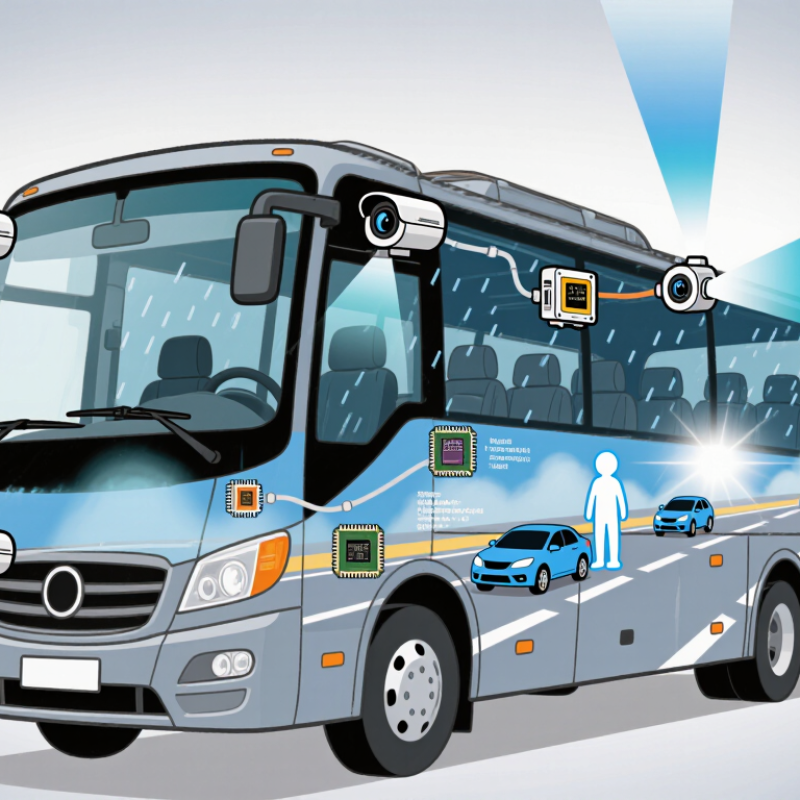
An automotive camera is a compact imaging sensor designed to observe areas around a vehicle. It usually combines a lens, image sensor, processor, housing, and electrical connections. Mounted behind the windshield, grille, mirror, or rear hatch, it captures changing scenes in real time. The lens gathers light. The sensor turns light into digital pixels. Software then examines lines, shapes, colors, movement, and distance clues. Unlike a human passenger, the camera does not naturally understand a scene. It measures patterns. A bright road sign, cyclist, or faded lane marking becomes visual data. This distinction matters when explaining what an automotive camera really is.
During vehicle testing, cameras are checked in daylight, rain, tunnels, and low winter sun. Their output may support lane guidance, parking views, traffic-sign recognition, or collision warnings. Some systems use several cameras because one viewpoint leaves blind areas. Images may be corrected for glare, vibration, lens dirt, and changing exposure before reaching the vehicle computer. Still, a camera is not a perfect witness. Fog can soften edges. Mud can hide details. Shadows can resemble obstacles. Even clear images may be interpreted incorrectly by software. This is where engineering judgment matters. Camera performance depends on placement, calibration, cleaning, and carefully tested algorithms. More testing is always needed. The technology is capable, but never infallible.
How Automotive Cameras Capture and Process Visual Information
An automotive camera is a compact vision system that records the road, nearby vehicles, pedestrians, and signs. Its lens focuses incoming light onto an image sensor. Each pixel converts light into an electrical signal. Exposure, shutter speed, and gain then shape the captured frame.
The camera’s processor improves this raw information by correcting color, reducing noise, and balancing bright and dark areas. It may also identify lanes, estimate distance, and track movement. These results support driving functions such as warnings, parking assistance, and emergency braking. In practical testing, clear lighting usually produces reliable images. Rain, glare, fog, dirty lenses, and weak nighttime contrast can reduce accuracy. The system can misread a shadow. It can also miss a faded road marking. That limitation deserves attention.
Tips: Keep the lens clean. Check alignment after repairs. Use accurate calibration tools. Do not rely on one image alone. Temperature and vibration may affect performance over time. Camera software also needs careful validation, because a quick visual match is not always a safe decision.
What Are the Main Types of Automotive Cameras?
Automotive cameras are compact sensing devices that capture road, vehicle, and cabin conditions. Their main types differ by viewing angle, purpose, and placement. Each camera uses a lens, image sensor, and processor to turn light into usable visual data.
Front-facing cameras watch lane markings, traffic signs, vehicles, and pedestrians ahead. They support lane guidance and collision warnings. Rear cameras show the area behind the vehicle during reversing. Their wide lenses can reveal a child-sized obstacle near the bumper, although image distortion may affect distance judgment.
Surround-view cameras use several units around the vehicle. Software combines their images into a top-down parking view. Side cameras monitor blind spots and nearby traffic during lane changes. Some systems also use cameras near mirrors for tighter parking assistance. These views depend heavily on clean lenses and accurate calibration.
Driver-monitoring cameras face the cabin. They check head direction, eye movement, and signs of distraction or fatigue. Interior cameras may also help adjust safety responses, but privacy handling must remain clear. Night-vision cameras use infrared sensing to detect warm objects in darkness. They can make pedestrians more visible on an unlit road.
In practical testing, camera performance changes with rain, glare, snow, and mud. A spotless lens matters. Camera types often overlap, and one image may support several functions. That sounds efficient. It can also make failures harder to understand. Calibration after repairs is therefore essential, yet it is sometimes treated as a minor task.
How Automotive Cameras Support Vehicle Safety and Assistance
What Is an Automotive Camera and How Does It Work?
How Automotive Cameras Support Vehicle Safety and Assistance
An automotive camera uses a lens, image sensor, and processing software to interpret road scenes. It can identify lane markings, vehicles, pedestrians, traffic signs, and nearby obstacles. A forward-facing camera watches the road through the windshield. Surround-view cameras create a low-speed image around the vehicle. Interior cameras may monitor driver attention and head position.
These systems support safety features such as lane departure warnings, lane-centering assistance, forward collision alerts, and automatic emergency braking. The Insurance Institute for Highway Safety reported that front crash prevention can reduce rear-end crashes by about 50 percent. Its research also found pedestrian crash reductions of roughly 27 percent with pedestrian detection and braking systems. These figures show meaningful benefits, not perfect protection.
Cameras work best in clear daylight. Rain, glare, fog, dirty lenses, and faded lane markings can reduce accuracy. That matters near construction zones. Sensor fusion can combine camera images with radar data, improving object detection and distance estimates. Still, assistance is not the same as autonomous driving. The driver must remain engaged and ready to act. According to safety evaluations from the European New Car Assessment Programme, monitoring driver attention is increasingly important for assisted driving. The technology is improving, but a camera can still misunderstand a shadow, cyclist, or unusual road layout. Inspections and software updates deserve more attention than many drivers give them.
What Factors Affect Automotive Camera Performance?
An automotive camera is a compact imaging device that observes the road, vehicle surroundings, or cabin. It uses a lens to focus light onto an electronic image sensor. Software then analyzes each frame for lanes, obstacles, signs, and movement. Performance depends on more than resolution. Small details matter.
Lens quality controls sharpness, viewing angle, and image distortion. A clean lens helps, but dust, water spots, and road salt can reduce useful detail quickly. Lighting creates another challenge. Bright sunlight may cause glare, while darkness removes contrast. Rain, fog, snow, and shadows can hide narrow objects. Temperature also affects electronic stability and image noise.
Software quality is equally important. Image processing must distinguish real objects from reflections, painted patterns, and roadside clutter. Fast processing reduces delay, especially when the vehicle is moving quickly. Vibration, poor mounting, and repeated jolts can shift the camera’s alignment. Calibration must match the vehicle’s actual position and height. During testing, technicians should check images in daylight, tunnels, wet roads, and uneven streets. No camera performs perfectly. That assumption can fail. Regular inspection and careful validation make performance more dependable, although unusual scenes may still confuse the system.

