- Spanish-Latin America
- Japanese-JP
- Chinese
- Europe
- Português-BR

Tech Support
(888) 598-9901
Hours: Mon-Fri 8AM-8PM EST
nep-usa@site_ea168614-f5f4-4298-bd5b-880b4cf8d99d
2026 Best Module Transceiver Types for Global Buyers
Global buyers are entering a faster, less forgiving Module Transceiver market. AI clusters now demand higher bandwidth, lower latency, and tighter power control. LightCounting’s recent market analyses identify 800G and emerging 1.6T optical products as major growth drivers. Dell’Oro Group also reports strong investment in AI-oriented data-center networking. The direction is clear. The details are not.
Vladimir Kozlov, founder and chief analyst at LightCounting, has emphasized, “AI is changing the optical market faster than previous cloud cycles.” Buyers should treat that warning seriously. A transceiver that performs well in a laboratory may struggle inside a dusty regional data center. Temperature, fiber type, connector cleanliness, firmware support, and replacement availability all matter. Price alone is a weak filter.
This guide examines the 2026 best Module Transceiver types for global buyers. It compares 400G, 800G, coherent, parallel-optics, and single-mode solutions across distance, power, interoperability, and total ownership cost. The analysis also considers findings from LightCounting, Dell’Oro Group, and Omdia, while recognizing that forecasts can change quickly. Some purchasing decisions remain imperfect. Specifications can look impressive, yet field results may disappoint. That is why qualified testing, supplier audits, and documented compatibility should accompany every quotation. Global procurement needs evidence, not just attractive bandwidth numbers.
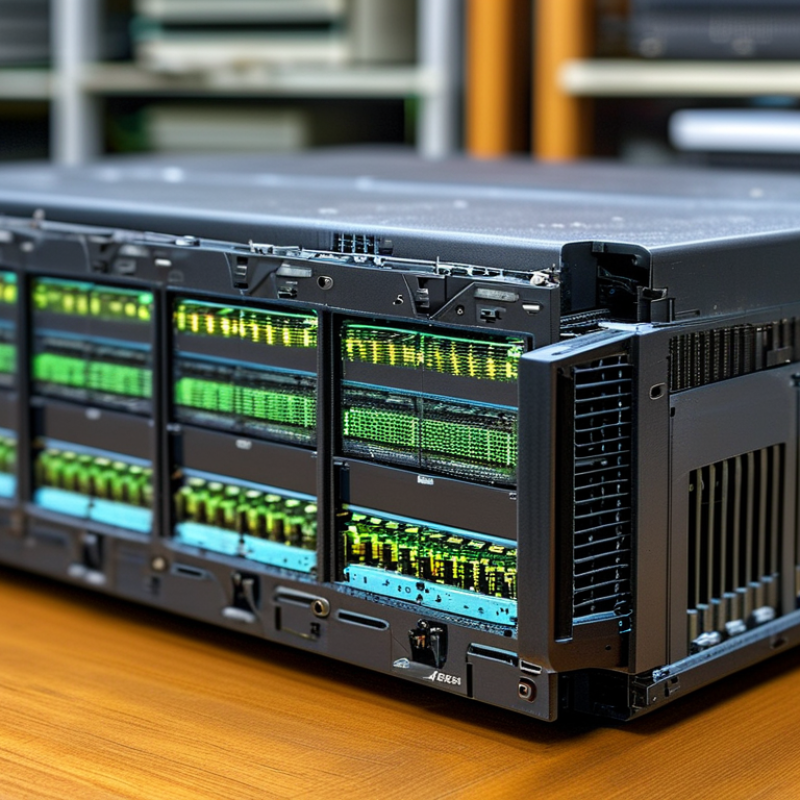
Transceiver Families: SFP, SFP28, QSFP28, QSFP-DD, OSFP, and CDFP
For global buyers, transceiver selection now depends on port speed, distance, power, and upgrade timing. LightCounting’s 2024 Ethernet Optics Market Update projects the optical transceiver market to exceed 20 billion dollars before 2028. Data-center expansion remains the main driver.
SFP fits mature 1G links and simple access networks. SFP28 raises capacity to 25G while keeping a compact footprint. QSFP28 supports 100G through four 25G lanes, making it practical for aggregation. These modules are easier to deploy, but older switches may limit their real performance. Check host compatibility carefully.
QSFP-DD commonly serves 400G and emerging 800G connections through multiple electrical lanes. OSFP offers stronger thermal headroom for high-speed designs, especially in dense computing systems. CDFP provides very high port density, yet its ecosystem is narrower today. The Ethernet Alliance’s 2024 technical roadmap highlights 800G and 1.6T Ethernet as active development paths. That direction matters for large-scale buyers, but it does not make every new module a wise purchase. Higher speed often means greater power draw, stricter cooling, and shorter practical reach. I would verify lane mapping, firmware support, optical budgets, and return-loss limits before ordering. Small errors become expensive at scale.
2026 Best Module Transceiver Types for Global Buyers - Transceiver Families: SFP, SFP28, QSFP28, QSFP-DD, OSFP, and CDFP
| Transceiver Family | Typical Aggregate Data Rate | Electrical Lanes | Common Ethernet Applications | Common Optical Configurations | Typical Reach Range | Primary Advantages | Main Buying Considerations |
|---|---|---|---|---|---|---|---|
| SFP | Typically 100 Mb/s to 1.25 Gb/s; some variants support 2.5 Gb/s services | 1 lane | Fast Ethernet, Gigabit Ethernet, legacy storage and telecom links | Single-mode or multimode; duplex or single-fiber bidirectional options | Approximately 100 m to 80 km, depending on wavelength, fiber, and optics | Mature ecosystem, low power consumption, broad equipment compatibility, and economical replacement | Legacy interface support, host-device compatibility, optical budget, and availability of coded modules |
| SFP28 | 10 or 25 Gb/s per port | 1 lane | 10GbE and 25GbE server, switch, storage, and telecom connections | 10G or 25G single-lambda, duplex parallel-fiber, and bidirectional variants | Approximately 70 m to 40 km, depending on multimode or single-mode design | Efficient 25G connectivity, suitable for high-density server access, and generally backward-compatible with many SFP-based ports | Actual host port speed, forward-error-correction requirements, fiber type, and interoperability at 10G or 25G |
| QSFP28 | 100 Gb/s | 4 lanes at approximately 25 Gb/s each | 100GbE leaf-spine links, data-center interconnects, and network aggregation | 4 × 25G parallel multimode or single-mode; 100G single-lambda variants also exist | Approximately 70 m to 10 km for common data-center and single-mode variants | Widely deployed 100G form factor, strong cable and optical choice, and support for breakout to 4 × 25G | Parallel-fiber polarity, FEC mode, breakout support, thermal limits, and port configuration |
| QSFP-DD | 200, 400, or 800 Gb/s, depending on electrical generation and optical design | 8 lanes; commonly 8 × 50G, 8 × 56G, or 8 × 100G signaling | 200GbE and 400GbE leaf-spine networks; 800GbE adoption in high-capacity platforms | Parallel multimode or single-mode, 2 × 200G, 4 × 100G, 8 × 50G, and single-lambda options | Approximately 30 m to 10 km for common data-center and campus interconnect designs | High bandwidth in a compact footprint, backward mechanical compatibility with many QSFP installations, and flexible breakout options | Host electrical generation, modulation format, FEC, thermal design, cable assembly, and firmware qualification |
| OSFP | 400 or 800 Gb/s; higher-rate implementations are under development | 8 lanes; commonly 8 × 50G or 8 × 100G signaling | 400GbE and 800GbE switching, artificial intelligence clusters, and high-density data-center fabrics | Parallel multimode or single-mode, 2 × 200G, 4 × 100G, 8 × 50G, and single-lambda designs | Approximately 30 m to 10 km for commonly deployed optical variants | Larger thermal envelope, high power capacity, and strong suitability for high-speed optical engines | Mechanical incompatibility with QSFP cages, host-port qualification, power class, heat dissipation, and cable bend radius |
| CDFP | Typically 400 Gb/s | 16 lanes at approximately 25 Gb/s each | Earlier-generation 400GbE demonstrations, specialized high-density switching, and selected legacy deployments | 16 × 25G parallel multimode or single-mode optical architectures | Usually short-reach data-center links up to approximately 2 km, depending on optical implementation | High lane density and an early path to 400G connectivity | Limited current ecosystem, larger connector and fiber count, higher integration complexity, and reduced long-term availability compared with newer 400G families |
Get in touch
Our mission is to develop cutting-edge clean energy technology and provide next-generation solar inverters.
Phone
(888) 598-9901
nep-usa@site_ea168614-f5f4-4298-bd5b-880b4cf8d99d
